
Public Address System Installation NZ: The Professional Guide (2026)
Imagine a clear morning at a coastal Bay of Plenty industrial site where a critical safety announcement is lost to the wind and salt-corroded speakers. This scenario is a frustrating reality for many local businesses tha…
Imagine a clear morning at a coastal Bay of Plenty industrial site where a critical safety announcement is lost to the wind and salt-corroded speakers. This scenario is a frustrating reality for many local businesses that treat audio as an afterthought rather than a vital communication tool.
You likely understand that a standard speaker setup often fails when faced with New Zealand’s high-dust environments or strict Radio Spectrum Management (RSM) wireless laws. Achieving reliable public address system installation nz requires more than just volume; it demands a design that prioritises speech intelligibility and regulatory compliance.
This guide provides a professional roadmap for designing a high-performance system that meets the AS/NZS 3000:2018 electrical standards. At Mobile Systems, we help you navigate the technical "why" behind equipment selection to prevent costly audio dropouts and equipment failure.
We will examine how to manage installation costs, which typically range from NZ$5,000 to over NZ$75,000. You will also learn how to integrate your PA with existing tools while ensuring your facility adheres to New Zealand Building Code clauses G5 and G6.
Key Takeaways
- Learn why prioritising mid-range frequency response over bass is critical for achieving speech intelligibility in loud commercial or industrial settings.
- Ensure legal compliance by identifying the correct New Zealand Radio Spectrum Management (RSM) frequency bands for wireless microphone hardware.
- Discover the importance of using IP65-rated equipment to prevent hardware failure caused by New Zealand’s corrosive coastal salt air and high moisture levels.
- Understand how professional public address system installation nz can be integrated with your existing two-way radio fleet for seamless site-wide safety paging.
- Compare the benefits of permanent fixed installations for daily operations against portable PA systems for seasonal events or temporary site briefings.
Understanding Public Address System Installation for NZ Businesses
A professional Public address system is a networked audio solution designed for paging, safety, and clear announcements. Unlike basic consumer speakers, these systems provide consistent coverage across vast commercial spaces. For businesses across the country, a professional public address system installation nz ensures that every word is audible, regardless of site noise or layout.
To better understand this concept, watch this helpful video showing a completed professional installation:
Professional installation beats "off-the-shelf" solutions because it accounts for acoustic challenges and durability. Consumer-grade gear often fails in New Zealand’s high-humidity or coastal environments. A tailored system uses industrial-grade components designed to last 10 years or more, providing a much higher return on investment than retail electronics.
Under the Health and Safety at Work Act 2015 (HSWA), NZ employers must provide clear communication during emergencies. A reliable PA system is often the backbone of this requirement. If an evacuation order is muffled by machinery noise, the business faces significant liability. Professional public address system installation nz guarantees the sound pressure level (SPL) is high enough to be heard clearly over ambient noise in factories or warehouses.
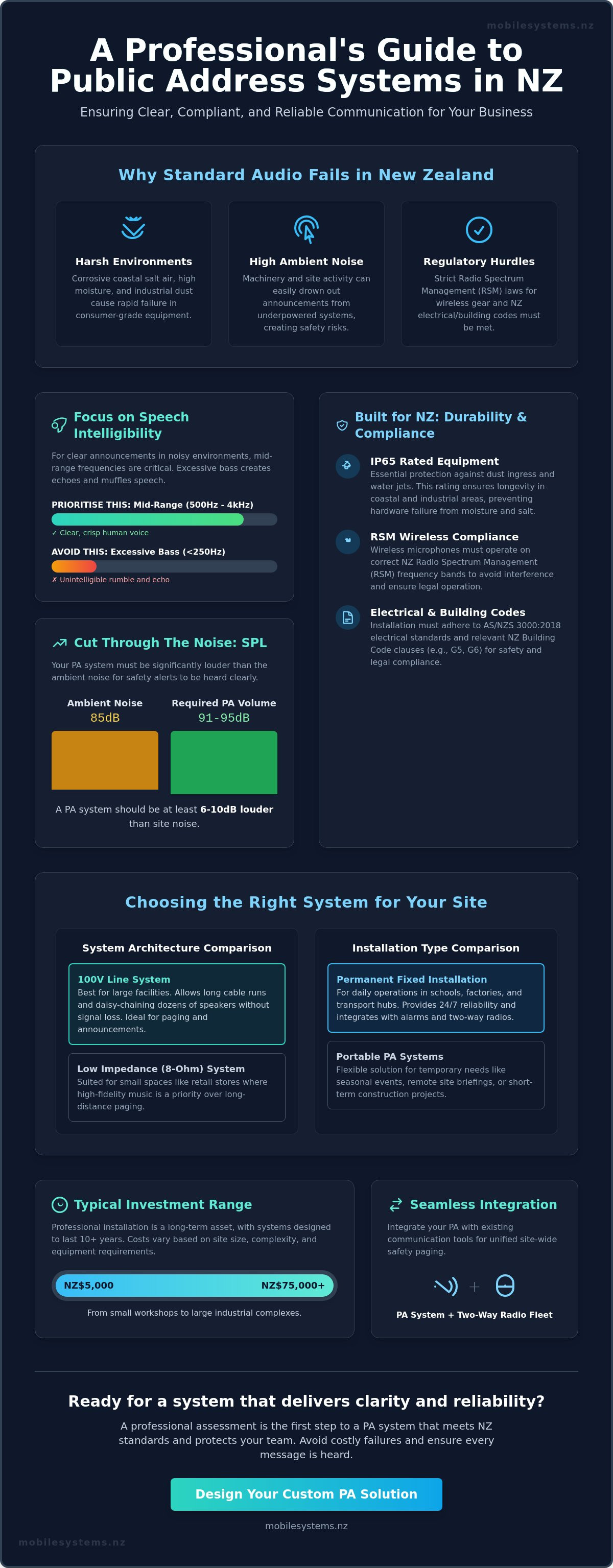
Most commercial sites require a 100V line system. This technology allows long cable runs without signal loss, making it possible to daisy-chain dozens of speakers across a large facility. In contrast, low-impedance (8-ohm) setups are usually reserved for small retail spaces where high-fidelity music is the priority over long-distance paging. Choosing the wrong architecture leads to distorted audio and blown amplifiers.
Permanent vs. Portable PA Solutions
Fixed installations provide 24/7 reliability for schools, retail hubs, and manufacturing plants. These systems integrate with fire alarms and paging consoles for seamless operation. For temporary needs, such as seasonal events or remote construction briefings, portable PA solutions offer flexibility. While hire units are useful for short-term projects, permanent systems reduce long-term costs by eliminating setup time and recurring rental fees.
For those planning high-profile occasions like weddings, you can learn more about Nate Dunn | Wedding Celebrant & MC to see how professional hosting ensures your ceremony runs as smoothly as the audio.
Common Use Cases in the New Zealand Market
In the New Zealand market, industrial sites like forestry mills or construction zones use high-output horns to cut through heavy machinery noise. Transport hubs rely on these systems for scheduled passenger announcements. In hospitality, modern installations provide background music that can be instantly overridden by paging for staff or safety alerts. A tailored assessment helps identify which configuration fits your specific operational environment.
Technical Specifications: Prioritising Speech Intelligibility and Coverage
A common mistake in public address system installation nz is treating the setup like a high-end home stereo. For commercial paging, mid-range frequency response, specifically between 500Hz and 4kHz, is far more important than deep bass. Excessive bass creates acoustic reflections in large steel-clad warehouses or concrete hubs, which turns clear speech into an unintelligible rumble.
Achieving the correct Sound Pressure Level (SPL) is a technical requirement for workplace safety. If your site’s ambient noise level sits at 85dB, your PA system must consistently reach 91dB to 95dB for announcements to be understood. Adhering to guidelines from Standards New Zealand ensures your system isn't just loud, but compliant with safety expectations for audible warnings in industrial settings.
Coverage is about managing "throw" and dispersion. Speakers have specific horizontal and vertical angles; if these aren't mapped correctly, you'll have "dead zones" where staff can't hear instructions. Modern Digital Signal Processing (DSP) acts as the brain of the system. It automatically adjusts volume levels and applies equalization to ensure every announcement remains crisp, regardless of who is speaking into the microphone.
Calculating Wattage and Speaker Density
We recommend a high density of speakers running at lower individual volumes rather than a few speakers at maximum power. This creates a uniform sound field where people at the back hear as clearly as those at the front without deafening staff directly under a speaker. 100V line technology is the NZ industry standard for large-scale paging because it allows for high-voltage, low-current transmission over long distances without significant signal loss.
Microphone Selection for Clarity
Choosing the right input device is just as critical as the speakers. Dedicated paging microphones often include built-in compression to level out shouting or quiet voices. For high-chatter environments like transport hubs or busy factories, noise-cancelling capsules are essential to strip away background hum. Advanced feedback suppression technology is also a standard feature we include to prevent the ear-piercing howls that occur when a microphone gets too close to a speaker.
Selecting the right hardware for these technical demands requires hands-on expertise. A professional site assessment ensures your system is engineered for your specific acoustic environment and operational needs.
Permanent Installation vs. Portable PA Hire
Deciding between a permanent fixture and a portable unit depends on the frequency of use and your site's operational requirements. A fixed public address system installation nz is the gold standard for daily paging and safety protocols. These systems are always ready, integrated into the building's fabric, and require minimal daily intervention once commissioned.
Permanent systems involve significant infrastructure. We use fire-rated cabling to ensure the system remains operational during emergencies, a critical factor for compliance with New Zealand safety standards. Rack-mounted amplifiers are typically housed in a central comms room, often integrating with existing IT networks via IP audio. This allows for wide-area distribution across multiple floors or buildings using standard LAN infrastructure, which can reduce cabling costs by up to 50% compared to traditional analog wiring.
For seasonal events, beach weddings, or temporary site briefings, a fixed system is rarely practical. This is where portable PA solutions provide the necessary flexibility. These units are designed for rapid deployment by non-technical staff and often include high-capacity battery power for "off-grid" NZ locations where mains power isn't accessible.
Regardless of the system type, achieving high speech intelligibility and coverage is the primary goal. While portable units offer convenience, they must be positioned carefully to avoid the reverberation issues common in large, open NZ halls or outdoor spaces. Some businesses choose a "try before you buy" approach, hiring a system to test in their specific venue before committing to a permanent capital investment.
Infrastructure Requirements for Fixed Systems
Fixed systems require a dedicated equipment rack to house amplifiers, mixers, and network interfaces. Integration with existing IT networks is common, allowing staff to make announcements from their desktop phones or mobile devices. Using fire-rated wiring is not just a recommendation; it's a necessity for systems that double as emergency evacuation tools. This ensures that even if a fire occurs in one wing of a building, the rest of the facility still receives clear instructions.
The Flexibility of Professional Portable PA
Modern portable units are incredibly robust, often featuring IP-rated enclosures for outdoor use. Many systems allow for daisy-chaining, where multiple portable units are linked together via wireless or XLR cables to cover larger crowds. This is particularly useful for community events or construction site inductions where the audience size varies. Because they're designed for mobility, these units include features like telescopic handles and rugged wheels to handle New Zealand’s varied terrain.
Fixed systems require less daily setup but need regular signal testing to ensure every speaker in the chain is functional. Portable units require more hands-on management, including diligent battery charging and physical inspection before every event to prevent failure in the field. A professional consultation can help determine which path offers the best long-term value for your specific site.
Navigating NZ Regulations and Environmental Challenges
New Zealand’s regulatory landscape and harsh climate present unique hurdles for any public address system installation nz. Beyond just choosing speakers, you must ensure your hardware is legal to operate and built to survive local conditions. Understanding the PA system meaning in a commercial context involves accounting for these external factors from the design phase.
RSM Compliance for Wireless Audio
In 2015, New Zealand underwent a significant "digital dividend" where the 700MHz frequency band was reassigned to 4G mobile services. This change made many older wireless microphones illegal to use. Today, professional systems must operate within the 500 to 600 MHz bands to avoid interference with local radio and TV signals. Professional installation ensures your wireless system remains RSM compliant.
Frequency coordination is vital for sites with multiple wireless units, such as large conference centres or industrial hubs. Using the wrong frequencies can lead to signal dropouts or fines from Radio Spectrum Management. We conduct site surveys to identify clear channels, ensuring your safety announcements aren't interrupted by outside chatter.
Ruggedisation for Industrial and Coastal Sites
Environmental factors often cause premature equipment failure in New Zealand. Sites in Mount Maunganui or other coastal areas face constant salt air, which corrodes standard speaker components in months. We specify IP65-rated speakers or higher for these environments. These units feature treated cones and stainless steel brackets to resist rust and moisture ingress.
In the Waikato, high dust levels in manufacturing plants can clog standard drivers, while Taranaki’s heavy rainfall requires robust weatherproofing. Wind noise is another factor for outdoor NZ environments. We select microphones with high-rejection patterns and specialized windscreens to ensure speech remains clear during a southerly gale. Professional public address system installation nz also considers shock protection for units mounted on mobile platforms in forestry or construction.
Failing to account for these variables leads to frequent repairs and safety gaps. If you're unsure if your current equipment meets legal or environmental standards, contact our technical team for a compliance audit.
Custom PA Solutions from Mobile Systems Limited
Mobile Systems Limited approaches public address system installation nz from a communications-first perspective. While many installers focus purely on audio playback, we understand that a PA system is a mission-critical tool for safety and daily operations. Our expertise allows us to bridge the gap between traditional audio and advanced communication networks, ensuring your message is heard every time.
One of our primary advantages is the ability to link your PA hardware directly to your two-way radio fleet. This integration allows supervisors or safety officers to make site-wide announcements directly from their handheld radios from anywhere on the property. This capability is essential for large-scale industrial sites where immediate paging can prevent accidents or streamline complex logistics.
Based in Mount Maunganui, we provide nationwide service for businesses across New Zealand. Whether you're managing a single warehouse or a multi-site transport network, our team handles the entire lifecycle of the project. We manage everything from the initial acoustic design to the final commissioning and long-term technical support.
Our Design and Installation Process
We don't believe in "one size fits all" audio solutions. Our process begins with on-site acoustic surveys to identify echo points and "dead zones" within your facility. We then create a custom system design that prioritises speech clarity and durability, specifically accounting for the environmental challenges discussed in previous sections.
Before we hand over any system, we perform professional commissioning. This includes testing the signal-to-noise ratio to ensure that every speaker provides clear, intelligible audio even during peak operational noise. This rigorous testing phase ensures your public address system installation nz meets both your performance expectations and local safety standards.
Why Partner with Mobile Systems?
Partnering with us gives you access to Tier-1 commercial brands specifically chosen for their reliability in New Zealand’s climate. We don't just sell equipment; we provide ongoing technical support through our fleet of mobile service vehicles. This ensures that if your system requires maintenance or adjustment, we can provide on-site assistance quickly to minimise operational downtime.
A tailored assessment of your site's audio needs often prevents costly mistakes in complex NZ environments. By choosing a partner who understands both the technical "why" of acoustics and the legal requirements of RSM compliance, you ensure a long-term communication solution that truly works for your business.
Securing Your Site with Professional Audio Design
Reliable communication is the foundation of a safe and efficient workplace. Successful public address system installation nz depends on managing technical factors like speech intelligibility and environmental ruggedisation. Whether you're dealing with the corrosive salt air of Mount Maunganui or the high-noise floor of a busy Waikato factory, your equipment must be engineered to perform under pressure.
Mobile Systems Limited provides a comprehensive approach that includes frequency management for RSM compliance and seamless integration with your existing two-way radio fleet. Our team offers NZ-wide installation and ongoing mobile support to keep your systems operational. Choosing a specialist who understands the technical requirements of acoustic design prevents the costly errors often associated with generic audio setups.
Ready to upgrade your facility's communication tools? Request a professional PA system installation quote for your NZ business. We look forward to helping you design a solution that provides crystal clear clarity for years to come.
Frequently Asked Questions
Do I need a licence to use a wireless microphone for a PA system in NZ?
You don't need an individual licence if your equipment operates within the 502 to 606 MHz or 622 to 698 MHz bands under the General User Radio Licence (GURL). However, using older gear in the 700 MHz range is illegal in New Zealand. Professional public address system installation nz ensures your wireless hardware complies with these Radio Spectrum Management (RSM) standards.
What is the difference between a 100V line system and a standard home stereo?
A 100V line system uses transformers to send high-voltage audio over long distances without signal loss, whereas home stereos use low-impedance signals that degrade quickly. This technology allows you to connect dozens of speakers to a single amplifier across a large facility. It's the industry standard for commercial paging due to its efficiency and simplified wiring requirements.
Can a public address system be integrated with my office phone or radio system?
Yes, modern PA systems can integrate with VoIP phone systems via SIP paging or with two-way radio networks using dedicated gateways. This setup allows authorised staff to make announcements from their desk extensions or handheld radios. We specialise in these cross-platform integrations to improve communication speed and safety response times across your entire site.
How many speakers do I need for a 1000-square-metre warehouse?
A typical 1000-square-metre warehouse with a 6-metre ceiling usually requires 8 to 12 high-output horn or pendant speakers for clear coverage. The exact number depends on your ambient noise levels and the height of your storage racking. We use acoustic mapping to ensure uniform sound pressure levels so that every staff member hears announcements clearly.
What happens if my wireless PA system gets interference from other devices?
Interference usually results in static or audio dropouts, often caused by overlapping frequencies from nearby sites or illegal hardware. We prevent this by performing frequency coordination and using digital wireless systems with encrypted signals. If issues arise, we can retune your hardware to a clear, legal channel within the approved New Zealand frequency range.
Are portable PA systems loud enough for outdoor construction site briefings?
Professional portable PA units are designed to produce high sound pressure levels specifically for outdoor environments and noisy sites. High-quality battery-powered units can provide clear speech for crowds of up to 200 people without needing mains power. They are an excellent solution for morning toolbox talks or temporary site inductions where a permanent public address system installation nz isn't practical.
What are IP ratings, and why do they matter for NZ PA installations?
IP (Ingress Protection) ratings define how well equipment resists dust and water ingress. For New Zealand installations, an IP65 rating or higher is essential for outdoor or coastal speakers to prevent damage from heavy rain and salt air. Using equipment with inadequate ratings often leads to hardware failure within 12 to 18 months in our harsh local climate.
Do you provide on-site technical support after the PA system is installed?
Yes, we provide ongoing technical support through our fleet of mobile service vehicles across the country. This service includes regular system health checks, signal testing, and emergency repairs to ensure your safety protocols remain functional. We don't just install the hardware; we provide the long-term maintenance required to protect your investment and ensure site-wide reliability.
Related posts

- June 08, 2026
In New Zealand’s vertical terrain, the network constellation matters more than the device features. When you're deep in the Southern...

- June 05, 2026
Transport & Logistics Fleet-wide communication that actually works: digital radio for NZ transport and logistics Transport & Logistics 8 min...

- June 04, 2026
URL Handle: adventure-tourism-comms-nz Key Takeaways Understand how New Zealand's unique topography creates signal propagation challenges and why a single-device strategy...