
Walkie-Talkies to help your hospitality and tourism team: Boost service in NZ
Walkie-Talkies to help your hospitality and tourism team deliver faster service, improve safety, and boost efficiency across NZ operations.
In New Zealand's bustling hospitality and tourism sectors, flawless team coordination isn't just a nice-to-have—it's the secret ingredient behind every five-star guest experience. This is where professional walkie-talkies come in. They are built for one job: providing instant, reliable, and group-wide communication that turns good operations into unforgettable service.
Elevating Guest Experiences With Flawless Team Communication
Picture the daily dance of a busy hotel, a sprawling vineyard wedding, or an adventure tour deep in Fiordland. How do you instantly let housekeeping know a VIP has arrived early? How does your event team coordinate security, catering, and logistics across a massive venue without missing a beat? These are the moments where a communication breakdown leads straight to service delays, frustrated staff, and a guest experience that falls flat.
Sure, smartphones seem like the modern answer, but they often buckle under the pressure of a demanding hospitality environment. We see the same pain points time and again:
- Unreliable mobile coverage, especially in our stunning but remote tourism hotspots.
- Distracting personal notifications that pull staff away from the guest in front of them.
- Slow, one-to-one calling that leaves the rest of the team completely in the dark.
- Fragile designs that simply weren't built for the rigours of a commercial kitchen, a rocking boat, or a muddy track.
The Professional Two-Way Radio Advantage
This is exactly where a dedicated professional two-way radio system makes all the difference. Unlike the walkie-talkies you might see in large department stores, commercial radios from proven brands like Motorola, Hytera, Tait, and Entel are engineered for the realities of business. It’s crucial to seek advice from communications specialists who understand your specific needs, rather than general retailers who often lack in-depth product knowledge and carry a limited range.
A professional radio system creates a robust, private communication channel, ensuring every key team member gets the message instantly, all with a single push of a button.
That immediate group communication changes everything. A front desk manager can alert all housekeepers about a room change at the same time. A tour guide can coordinate with their driver and home base without fumbling with a phone in a no-reception area. Event managers can oversee multiple teams with total clarity, ensuring the whole operation runs like a well-oiled machine. If you want to dive deeper, check out the key reasons to use two-way radios to run your event.
More Than Just Talk
Of course, creating a world-class guest experience is about more than just chatter. A truly slick operation often brings in a range of innovative hospitality technologies to streamline every touchpoint.
But at the end of the day, the foundation of any great team is clear, reliable dialogue. The right portable radio for your NZ operation is the one that empowers your people to work as one cohesive unit, turning potential problems into moments of exceptional, seamless service.
Why Two-Way Radios Are Essential For NZ Tourism And Hospitality
Let's move past the theory and talk business. A professional two-way radio system isn't just a gadget—it's a powerful tool that delivers real, measurable returns in efficiency, safety, and guest satisfaction. For anyone running a dynamic hospitality or tourism operation in New Zealand, these devices are foundational. The benefits hit your bottom line and build your brand reputation from day one.
The magic is in the instant, one-to-many communication. Forget fumbling with a smartphone—unlocking it, finding a contact, then hoping you have a signal. A walkie-talkie connects your entire team with a single push of a button. It's that simple function that transforms disjointed tasks into a smooth, synchronised workflow.
Dramatically Improved Efficiency
Imagine this: a front-of-house manager needs to flag a last-minute room change. With a radio, they can instantly alert the entire cleaning crew. Or picture a big outdoor festival where the coordinator can direct security, parking attendants, and vendors all at the same time. That’s the kind of operational power a professional radio network delivers.
- Faster Response Times: Staff can act immediately, whether it's a maintenance issue that needs fixing or a guest requesting extra towels.
- Reduced Downtime: When a piece of equipment fails or a spill happens, the right person can be on their way in seconds, keeping disruptions to a minimum.
- Smoother Operations: Teams just work better together. They can anticipate needs and support each other without delay, creating a much calmer, more controlled environment for everyone.
This kind of coordination is non-negotiable. With New Zealand's tourism market projected to hit $45.5 billion in 2025, the pressure is on. Overseas arrivals for the year to September 2025 are expected to reach 3.43 million—that's an increase of 197,000 from the previous year. Professional two-way radios are the answer to managing this pressure, providing rock-solid communication where mobile phones often fail, especially in rugged spots like Fiordland.
Elevated Guest Satisfaction
At the end of the day, happy guests are the lifeblood of your business. Their satisfaction is almost always tied to how quickly and effectively you can meet their needs. Walkie-talkies give your team the power to provide that seamless, five-star experience.
When a guest at a remote lodge needs a hand, or a diner has a specific request, a quick radio call ensures the message gets through and is acted on instantly. This rapid response makes guests feel truly looked after, turning a simple stay into something they'll remember and talk about. It's worth taking a moment to understand the broader Travel industry's communication demands to see just how critical this is.
The difference between a good review and a great one often boils down to those little moments—the speed at which a problem was solved or a request was met. Reliable team communication is the engine that powers those moments.
Enhanced Safety And Security
Beyond great service, the safety of your guests and staff is paramount. In an emergency, a dedicated radio channel is your most reliable lifeline. It’s a closed, private network that won’t get clogged up with public traffic during a major event or crisis.
Whether you're coordinating a medical response in a hotel, managing a lost child at a busy attraction, or guiding guests to safety during a sudden storm, radios provide a clear, unambiguous line of command. This isn't just best practice; it's a fundamental part of your health and safety obligations. For a deeper dive, check out our guide on the fundamentals of 2-way radio communication.
Professional gear from brands like Motorola, Hytera, and Tait is built tough for the New Zealand environment. With high IP ratings for water and dust resistance, they’re right at home on a wet boat tour in the Marlborough Sounds or during a dusty farm-to-table experience in Central Otago. This durability means they work when you need them most, unlike a fragile smartphone.
Selecting The Right Radio For Your Operation
Choosing the right communication gear for your hospitality or tourism team is a big deal, and let's be honest, the options can feel a bit much. The first step is to look beyond what you'd find on the shelf at a generic supplier. To get a system that actually adds value to your operation, you need to understand a few key differences that directly affect performance in a busy New Zealand hotel, resort, or tour business.
Getting this right from the start means you'll have a reliable system that works flawlessly, from the hotel basement to the top-floor suite or across a sprawling vineyard during a major event. It’s all about matching the tech to your specific environment and what you need your team to do.
Understanding UHF vs VHF Frequencies
The first fork in the road is deciding between Ultra High Frequency (UHF) and Very High Frequency (VHF) radios. They might look the same, but they use different radio waves, which makes each one suited for very different environments.
- UHF (Ultra High Frequency): These radios use shorter wavelengths, which gives them fantastic power to punch through solid stuff like concrete walls, steel beams, and multiple floors. This makes UHF the clear winner for most hospitality settings, like hotels, conference centres, and large indoor restaurant complexes.
- VHF (Very High Frequency): VHF radios use longer wavelengths that travel further over open, clear spaces. They’re perfect for outdoor tourism operations—think guided hikes, jet boat tours, or coordinating staff across wide, open-air festival grounds where there aren't many buildings in the way.
In short, if your team is mostly indoors or in a dense urban spot, UHF is almost always the way to go. If your work is spread out across open land or water, VHF will give you that extra reach.
Digital (DMR) vs Analogue Radios
Next up is the technology that actually carries your voice. The choice between digital and analogue radios has a huge impact on how clear you sound, how private your conversations are, and how long your batteries last.
Analogue is the old-school, traditional tech. It can be a cost-effective choice for really basic needs, but it's prone to interference and background noise. Plus, anyone with a simple scanner can listen in on your frequency. Not ideal.
Digital Mobile Radio (DMR) is the modern standard for professional teams, and for good reason. DMR radios turn your voice into digital data, which brings some serious advantages for a professional hospitality crew:
- Superior Audio Clarity: Digital tech is brilliant at filtering out background noise. That means messages come through crystal clear, even in a noisy kitchen, a bustling lobby, or on a windy vineyard tour.
- Enhanced Privacy: Digital signals can be encrypted, which stops unauthorised eavesdropping and keeps your team's communications secure.
- Longer Battery Life: Digital radios are up to 40% more efficient with their batteries compared to analogue models. That’s a massive plus for teams working long shifts.
- Greater Functionality: Digital systems open the door to advanced features like text messaging, GPS tracking, and calling individual radios directly—things you simply can't do with analogue.
While analogue radios might look cheaper upfront, the superior performance, security, and battery life of digital radios from trusted brands like Motorola, Hytera, Tait, and Icom deliver a much better return on your investment. Exploring the full range of professional portable radios in NZ is a great way to see which models fit your operation best.
Comparing Digital and Analogue Radios for Hospitality Teams
To make the choice clearer, it helps to see the two technologies side-by-side. For a busy hospitality or tourism operation, the small details in performance can make a big difference to your daily workflow and guest experience.
| Feature | Digital (DMR) Radio | Analogue Radio |
|---|---|---|
| Audio Quality | Excellent. Filters out background noise for crystal-clear voice communication. | Fair. Prone to static and background noise, especially at the edge of range. |
| Coverage | Maintains consistent audio quality across the entire coverage area. | Audio quality degrades as you move further from the signal source. |
| Battery Life | Up to 40% longer than analogue due to more efficient transmission. | Shorter battery life due to continuous transmission signal. |
| Privacy & Security | High. Offers digital encryption to prevent eavesdropping. | Low. Unencrypted signals can be easily monitored with a scanner. |
| Advanced Features | Supports GPS tracking, text messaging, individual/group calling, and data apps. | Generally limited to basic push-to-talk voice communication. |
| Initial Cost | Higher upfront investment. | Lower initial cost. |
| Best For | Professional teams needing clear, secure, and reliable communication. | Basic operations on a tight budget with minimal security needs. |
While analogue might seem tempting for its lower price point, for any serious professional operation, the benefits of digital—clearer sound, better security, and longer-lasting batteries—make it the smarter long-term investment.
This decision tree gives you a simple visual guide to help narrow down the options based on what matters most to your operation.
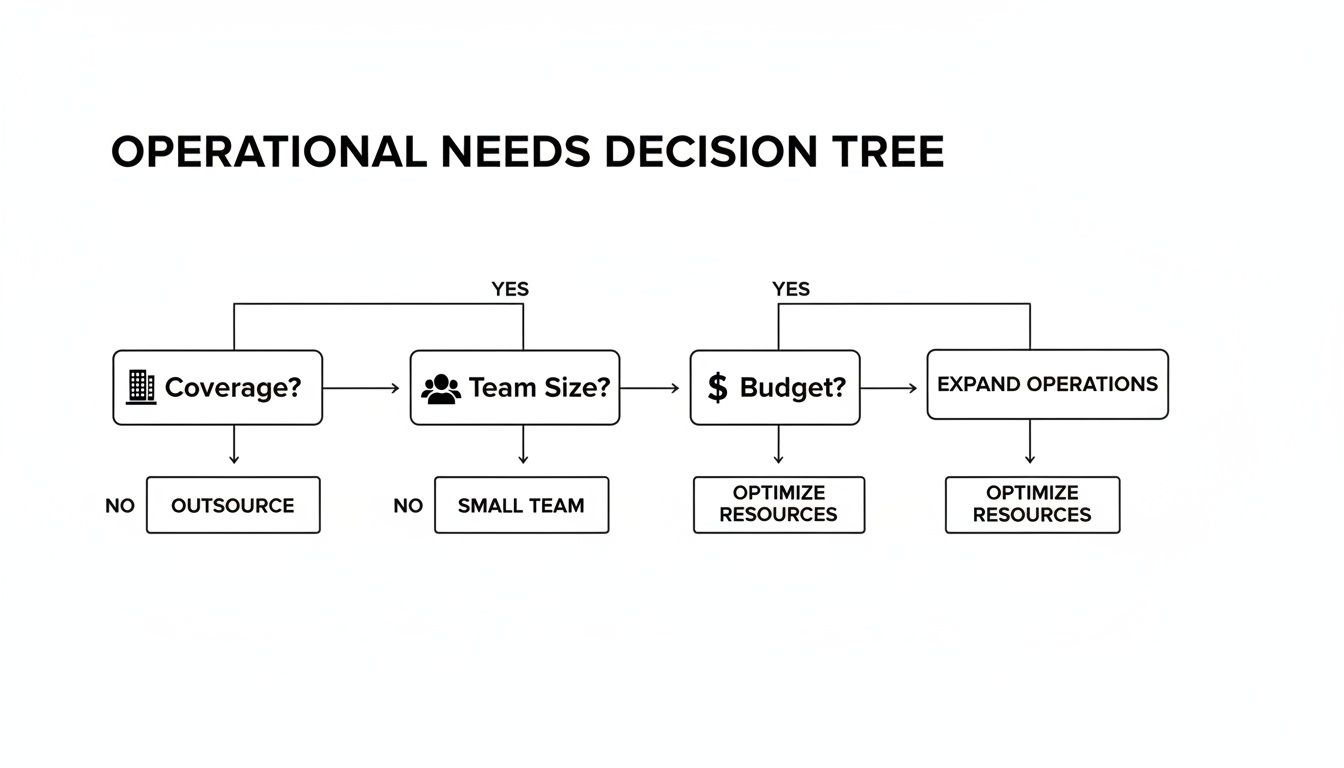
By starting with your main coverage needs and the size of your team, you can quickly figure out which radio technology and features are going to be non-negotiable for your business.
Real-World Scenarios In NZ Hospitality And Tourism
All the features and specs in the world don't mean much until you see how they work on the ground. Let's put the theory aside and look at the real-world situations where professional walkie-talkies become absolutely essential for New Zealand's hospitality and tourism teams.
These are the moments where the right communication tool turns a daily headache into a chance to deliver incredible service. From a busy city hotel to a remote adventure lodge, the goal is always the same: get multiple teams working together in real-time to create an experience guests won't forget. This is where professional-grade radios from brands like Motorola, Hytera, and Entel really prove their worth.
Hotels And Resorts: Seamless Coordination
In a large hotel or resort, a guest's journey touches dozens of staff across multiple departments. If communication breaks down between any one of them, service standards can quickly fall apart.
Picture this: a guest arrives early, and their room isn't quite ready. Instead of a flustered apology, the front desk uses their radio to speak directly to the housekeeping supervisor. They get an instant, exact status update and can give the guest a precise wait time.
At the same time, the concierge is radioed to store the luggage, and the bar staff are told a complimentary drink has been offered. The whole interaction takes seconds. What could have been an awkward delay is transformed into proactive, impressive service.
- Front Desk & Concierge: Instantly coordinate arrivals, departures, luggage handling, and VIP requests.
- Housekeeping & Maintenance: Dispatch staff to rooms needing service or urgent repairs without delay, keeping guest disruption to a minimum.
- Food & Beverage: Connect restaurant hosts, kitchen staff, and servers to manage table turnover and respond to dietary needs on the fly.
Event And Conference Management
Running a big conference, a wedding, or a festival is a high-stakes logistical puzzle. Staff, security, vendors, and emergency services all need to be perfectly in sync across what is often a huge, complex venue.
Think of a corporate event at a Hawke's Bay winery. The organiser can use one channel to direct parking attendants, a second to coordinate with caterers about serving times, and a third just for the security team monitoring the gates. If the AV equipment suddenly fails, a single call brings the right technician running. That level of control is simply impossible when you're relying on individual mobile phone calls.
Adventure Tour Operators
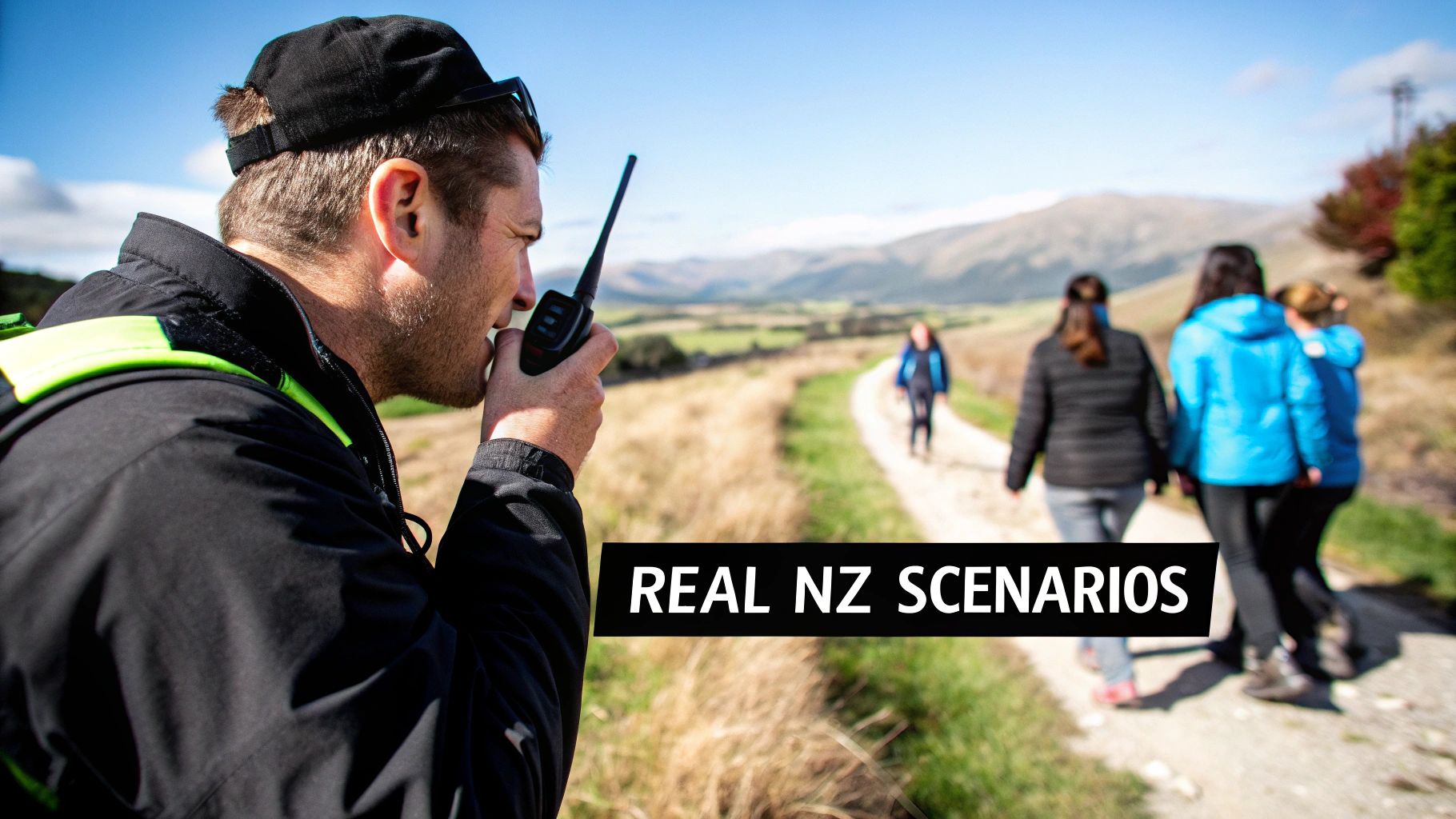
For guides leading tours in places like Queenstown, Abel Tasman, or the Coromandel, communication is much more than just efficiency—it's a critical safety lifeline. Out there, mobile reception is often patchy or completely non-existent.
A lead guide on a multi-day hike can stay in constant touch with the base camp, giving updates on their progress and any changing weather conditions. If a hiker twists an ankle, the guide can immediately radio for help, giving precise location details to coordinate a response. This reliable link ensures that no matter how remote they are, the team is never truly out of reach.
Restaurant And Bar Operations
In the controlled chaos of a popular restaurant or bar, smooth communication is the secret ingredient for profitability and happy customers. Radios help orchestrate the frantic ballet of service.
A host can quietly let servers know their next table is ready, cutting down wait times and turning tables faster. In the kitchen, the head chef can alert the front-of-house team just before a large order is plated, ensuring every dish arrives hot and fresh. It kills the need for shouted instructions and creates a calmer, more professional atmosphere for everyone.
These scenarios highlight a clear truth for New Zealand's booming tourism sector, which saw overseas visitor arrivals hit a record 3.45 million in the year to October 2025. This surge in visitors makes walkie-talkies essential for managing the influx. Tools like these have been shown to cut response times by up to 40% in high-traffic situations, giving operators the confidence to manage growth effectively. You can discover more insights about New Zealand's tourism recovery on Travel and Tour World.
Navigating NZ Compliance And Best Practices
Getting a professional two-way radio system up and running in your hotel or tourism operation is about more than just unboxing some new gear. To make sure you’re operating legally and getting the most from your investment, you need a handle on New Zealand’s specific regulations and some solid best practices for day-to-day use.
Getting this part right is what makes the difference between a reliable, secure communication system and a frustrating mess.
Lots of businesses are surprised to learn that professional-grade radios actually need a licence to operate. This isn't just bureaucratic red tape; it’s a critical step that secures your team a clear, private channel, free from the chatter and interference of other users nearby. A good comms partner will manage this whole process for you, ensuring you're compliant right from day one.
Understanding RSM Licensing
In New Zealand, the airwaves are managed by Radio Spectrum Management (RSM), and they're a finite resource. While you can buy basic consumer radios off the shelf and use them on public Public Radio Service (PRS) channels, these are shared, completely unsecured, and often clogged with noise. For any professional operation, that’s simply not going to cut it.
A private radio licence from RSM gives your business exclusive use of specific frequencies in your area.
- No More Interference: It guarantees your critical messages about guest arrivals or security alerts aren't cut off by truck drivers or local hobbyists.
- Better Security: A private channel is far more secure, which is essential when discussing sensitive operational details or guest information.
- More Power, Better Range: Licensed radios can legally operate at higher power, giving you the grunt you need for better range and signal strength through walls.
Applying for an RSM licence can be a bit of a maze, but a specialist like Mobile Systems handles it all. We figure out the best UHF channels NZ or VHF channels NZ for your site, sort the paperwork, and programme your system to be completely legal. For the nitty-gritty, you can check out the official RSM General User Radio Licence page.
Strategic Coverage Planning
One of the most common mistakes we see is businesses assuming a portable radio NZ will work perfectly everywhere on-site, straight out of the box. Hotels with thick concrete walls, sprawling resorts with hills and valleys, and multi-level conference centres all create unique headaches for radio signals.
Proper coverage planning always starts with a thorough site assessment. We walk your property, analysing the building's layout and outdoor spaces to hunt down potential dead spots. If we find them, we can design a solution, which often involves a strategically placed repeater. Think of a repeater as a signal booster—it picks up a weak transmission and blasts it out again with more power, ensuring you get seamless comms from the basement car park right up to the penthouse suite.
Don't leave your team's communication to chance. A proper site survey and coverage plan is the difference between a frustrating radio system and one that works flawlessly everywhere your staff need to be.
Staff Training and Radio Etiquette
The final piece of the puzzle? Your people. A radio is only as good as the person holding it. Proper training on simple radio etiquette is vital for keeping communications professional and efficient.
It really boils down to a few key rules:
- Keep it Clear and Concise: The radio channel is for short, sharp operational messages, not long-winded chats.
- Identify Yourself: Kick off every message by saying who you are and who you’re trying to reach (e.g., "Front Desk to Maintenance, come in.").
- Wait Before You Talk: Pause for a second after pressing the push-to-talk (PTT) button before you start speaking. This stops the first part of your message from getting cut off.
By putting these simple protocols in place, you build a communication culture that’s efficient, professional, and dead easy for new staff to pick up.
Partnering With a New Zealand Communication Specialist
Choosing the right walkie-talkie is just the beginning. To get the most out of your investment, you need a partner who genuinely understands the unique pressures of New Zealand's hospitality and tourism sectors. Relying on a general retailer simply won't cut it—you need a complete solution designed for your site, programmed for your teams, and supported for the long haul.
This is where a dedicated New Zealand provider makes all the difference. Unlike suppliers with generic stock and limited product knowledge, a true communications partner brings the expertise to build a system that solves your real-world problems.
Beyond The Box: A Full-Service Approach
Based in Mount Maunganui, we at Mobile Systems have spent nearly two decades helping Kiwi businesses get connected. As a 100% NZ-owned company, we live and breathe the local environment. We know all about the coverage black spots in a remote Fiordland lodge and the signal interference you get in a busy Auckland hotel.
Our entire approach is built around creating a complete, practical solution, not just shifting hardware. Here’s what you can expect when you work with a specialist like us:
- Expert Consultation and Site Assessment: It all starts with a conversation. We take the time to understand your daily frustrations, walk your property to map out any dead zones, and then recommend the right gear from world-class brands like Motorola, Hytera, and Tait.
- Custom Programming and Installation: Forget crackle and crossed wires. We programme your radios for crystal-clear, private communication, setting up dedicated channels for each team—from housekeeping to security. Our technicians then handle the full installation, whether it’s fitting radios in vehicles or setting up a repeater to boost your signal.
- Mobile On-Site Support: Problems don't stick to a 9-to-5 schedule, and neither do we. Our mobile support fleet is ready to deliver prompt on-site servicing and repairs, keeping downtime to an absolute minimum so your team stays connected when it matters most.
- Long-Term Aftercare and Hire Options: We’re in this with you for the long run, offering ongoing maintenance, support, and advice. And for those one-off events or seasonal peaks, our flexible radio hire service is a smart, cost-effective way to scale up without the big capital spend.
Choosing a communication partner is a long-term decision. The right specialist doesn't just sell you a radio; they deliver a reliable, ongoing service that helps your business run smoother, safer, and more profitably.
At the end of the day, our goal is simple. We build robust, reliable communication systems that empower your hospitality and tourism teams to deliver an exceptional guest experience, every single time. Ready to see how? Speak with one of our NZ-based communication specialists today for friendly, no-obligation advice tailored to your business.
Got Questions? We’ve Got Answers.
Stepping into the world of professional radio systems can bring up a few questions. It’s a significant investment, and you want to get it right. To help you make a confident decision, we’ve put together some straight-up, practical answers to the questions we hear most from hospitality and tourism managers across New Zealand.
Do We Actually Need a Licence for Our Walkie-Talkies in NZ?
For any serious business use, the short answer is yes, you almost certainly do. The cheap walkie-talkies you can buy off the shelf at a general retailer operate on public Public Radio Service (PRS) channels. Think of these as a party line – they're shared, completely unsecure, and often clogged with chatter from other users. Not ideal when you're trying to coordinate a guest's request or a security alert.
For a professional operation, you need a private radio licence from Radio Spectrum Management (RSM). This gives your team exclusive access to specific frequencies in your immediate area. It's your private, dedicated channel, guaranteeing clear, interference-free communication. A specialist provider like Mobile Systems handles this entire licensing maze for you, so you don't have to worry about the paperwork.
What’s the Real-World Range of These Radios?
The range advertised on the box is a bit like a car's fuel economy sticker – it's based on perfect, flat, open-air conditions with no obstructions. The real world, especially in a bustling hotel or across varied tour terrain, is a different story.
Range really boils down to three key things:
- Frequency Band: UHF radios are brilliant at punching through solid objects like concrete walls and steel frames, making them the go-to for hotels, conference centres, and resorts. VHF signals, on the other hand, travel further over open spaces, which is perfect for outdoor tour operators or managing teams across a large vineyard.
- Terrain: Hills, dense native bush, and even a cluster of large buildings will absorb and block radio signals, reducing your effective range.
- Obstructions: Inside a hotel, every single wall, floor, lift shaft, and piece of kitchen equipment can weaken the signal.
Honestly, the only way to know for sure is with a professional site assessment. This is how you accurately map out coverage, identify any dead spots, and determine if you need a repeater to guarantee a clear signal everywhere from the basement car park to the rooftop bar.
Are Digital Radios Really Worth the Extra Money?
Absolutely. It’s one of the clearest upgrades you can make. While older analogue radios have a lower sticker price, modern digital (DMR) radios from brands like Motorola or Hytera deliver a massive return on investment through sheer performance.
For a professional team, the three biggest wins are:
- Crystal-Clear Audio: Digital tech is smart. It actively filters out background noise, so a message from a loud kitchen or a windy wharf comes through crisp and clear. No more "say again?"
- Longer Battery Life: They are up to 40% more efficient with their battery usage. That means a single charge is far more likely to last a full, hectic 12-hour shift without someone’s radio dying mid-service.
- Proper Privacy: Digital signals can be encrypted. This is a game-changer, preventing anyone with a cheap scanner from eavesdropping on your operational or security chatter.
For any serious hospitality or tourism business, the boost in performance, reliability, and security makes digital the obvious choice.
Can We Just Hire Radios for a Big One-Off Event?
Yes, and it’s a very smart move for short-term needs. If you're running an annual food festival, a large wedding, or a multi-day conference, hiring a professional-grade radio fleet is far more cost-effective than buying a whole system.
When you hire from a specialist, you’re not just getting a box of radios. You're getting a complete solution:
- The exact number of high-quality, fully-charged radios you need.
- Custom programming so your teams have clear, private channels.
- All the right accessories, like discreet earpieces for front-of-house and multi-unit chargers to keep everything running smoothly.
- Expert advice and on-call support for the duration of your event.
This gives you all the power of a professional communication system without the long-term capital outlay, making it the perfect plug-and-play solution for seasonal peaks or special events.
Ready to build a communication system that empowers your team and elevates your guest experience? The experts at Mobile Systems Limited are here to help with tailored advice, site assessments, and solutions from the world's leading brands. Get in touch with our NZ-based specialists today for a no-obligation chat about your needs.
Related posts

- December 08, 2025
As NZ extends PSN Cellular Services, learn what this critical upgrade means for your team's safety and operational efficiency. Get...

- December 02, 2025
Discover rugged communication solutions for New Zealand's gas and mining industries, from two-way radios and satellite tech to critical IoT...