
Choosing the Best Rugged Smartphone NZ Workers Can Depend On
Discover the top rugged smartphone NZ options for demanding jobs. This guide covers durability, connectivity, and essential features for Kiwi worksites.
Is there a worse sound than a smartphone skittering across the workshop floor? For any New Zealand business operating in agriculture, construction, or transport, a dropped phone isn't just an inconvenience—it's a critical failure of an essential tool. Your standard-issue smartphone is designed for a carpeted office, not the demanding reality of a muddy Canterbury farm, a drizzly Auckland building site, or a remote forestry block in the Bay of Plenty.
Why is reliable communication so crucial for your team's safety and efficiency? And how can you be sure the device you choose won't become another cracked-screen statistic? For any NZ business that takes productivity and health and safety seriously, a rugged smartphone isn't an optional extra; it's mission-critical equipment.
The True Cost of Using Fragile Phones in NZ Workplaces
The moment a standard smartphone falls from a ute tray or gets caught in a downpour, it becomes a liability. The real cost of relying on fragile, consumer-grade devices goes far beyond a simple screen repair. These failures create a domino effect, leading to lost productivity, operational delays, and significant safety risks. A phone dying halfway through a remote shift isn't just frustrating; it's a communication breakdown when it's needed most, especially for a lone worker.
At Mobile Systems, we see the consequences firsthand across numerous NZ industries, from agriculture and construction to transport and security. The operational pain points are always the same:
- Downtime During Critical Tasks: A dead or broken phone stops work. Jobs can't be dispatched, safety checks can't be completed, and urgent calls can't be made.
- Compromised Lone Worker Safety: For remote field teams in forestry or energy exploration, a failed device eliminates their primary lifeline in an emergency.
- Constant Replacement Costs: The cycle of repairing and replacing fragile phones adds up, hitting your bottom line with unplanned expenses.
- Lost Data and Inefficiency: When a device fails, so does access to job management apps, digital forms, and vital project data.
A Tough Case Is a Temporary Fix, Not a Solution
Putting a bulky case on a standard phone is like putting a plaster on a serious wound—it might cover the problem, but it doesn't solve it. A case can’t reinforce the internal chassis, properly seal the charging ports against fine dust and moisture, or protect delicate components from the constant vibration inside a truck cab.
A rugged device is engineered from the ground up to be survivable. It features a reinforced internal frame, shock-absorbent materials, and hermetically sealed ports. It’s the difference between wearing a raincoat and being fully submersible.
That's why savvy NZ businesses are moving to purpose-built technology. According to industry analysis, a significant 53% of organisations in New Zealand are already using rugged devices—a higher adoption rate than the Asia-Pacific average. This proves our unique and challenging work environments demand tougher, more reliable communication solutions. You can review the full report on rugged device adoption to see the data for yourself.
Decoding Durability: IP Ratings and MIL-STD-810 Explained
When you start researching a rugged smartphone NZ teams can trust, you’ll encounter codes like 'IP68' and 'MIL-STD-810H'. This isn't just technical jargon; these ratings are your best guide to how a device will perform in the real world, from a dusty timber yard to a wet dairy shed. Understanding these standards is the first step in choosing a device that won't fail when it matters most.
IP Rating: Your Defence Against Dust and Water
An IP (Ingress Protection) rating tells you precisely how well a device is sealed against solids (like dust and dirt) and liquids. It’s a two-digit code where higher numbers mean better protection.
- First Digit (Solids): Ranges from 0 (no protection) to 6 (completely dust-tight). For any serious Kiwi worksite—be it construction, agriculture, or manufacturing—a rating of 6 is non-negotiable.
- Second Digit (Liquids): Ranges from 0 (no protection) to 9K (resists high-pressure, high-temperature jets). A rating of 8 is an excellent benchmark, meaning the phone can handle being fully submerged in water for extended periods.
For New Zealand conditions, a device rated at IP68 is the gold standard. It’s completely sealed against dust and can survive being dropped in water, making it ideal for our unpredictable weather and demanding work environments.
The infographic below highlights the common device failures that these durability ratings are designed to prevent.
This really drives home why a strong IP rating isn't just a "nice-to-have"—it directly counters the main reasons phones fail out in the field.
MIL-STD-810H: Built for Real-World Punishment
While IP ratings cover dust and water, the MIL-STD-810H is a U.S. military standard that tests a device’s resilience against a checklist of environmental hazards. This is about surviving physical abuse.
The rigorous testing protocol simulates a device's entire lifecycle in the harshest conditions, including:
- Drops and Shock: Repeated drops onto hard surfaces from a typical working height.
- Vibration: The ability to withstand constant shaking inside heavy machinery, trucks, or on a quad bike.
- Extreme Temperatures: Reliable operation in the freezing cold of a South Island winter and the direct sun of a Hawke's Bay summer.
- Humidity and Salt Fog: Built to resist the corrosive air common in our maritime, marine, and fishing industries.
A MIL-STD-810H rating is your guarantee that a phone has been purpose-built for physical punishment. It’s not about surviving one accident; it’s about enduring the daily grind of a tough Kiwi workplace without giving up.
Independent reviews of military-grade smartphones often detail the brutal tests these devices endure. To understand the specifics of this critical benchmark, learn more about what makes the military standard MIL-STD-810 so important for commercial-grade devices.
Staying Connected: From Remote Farms to Busy Work Sites
A tough device is useless if it can't get a signal. For teams working in remote forestry blocks, sprawling agricultural properties, or cellular fringe areas, reliable connectivity is a matter of safety and operational continuity.
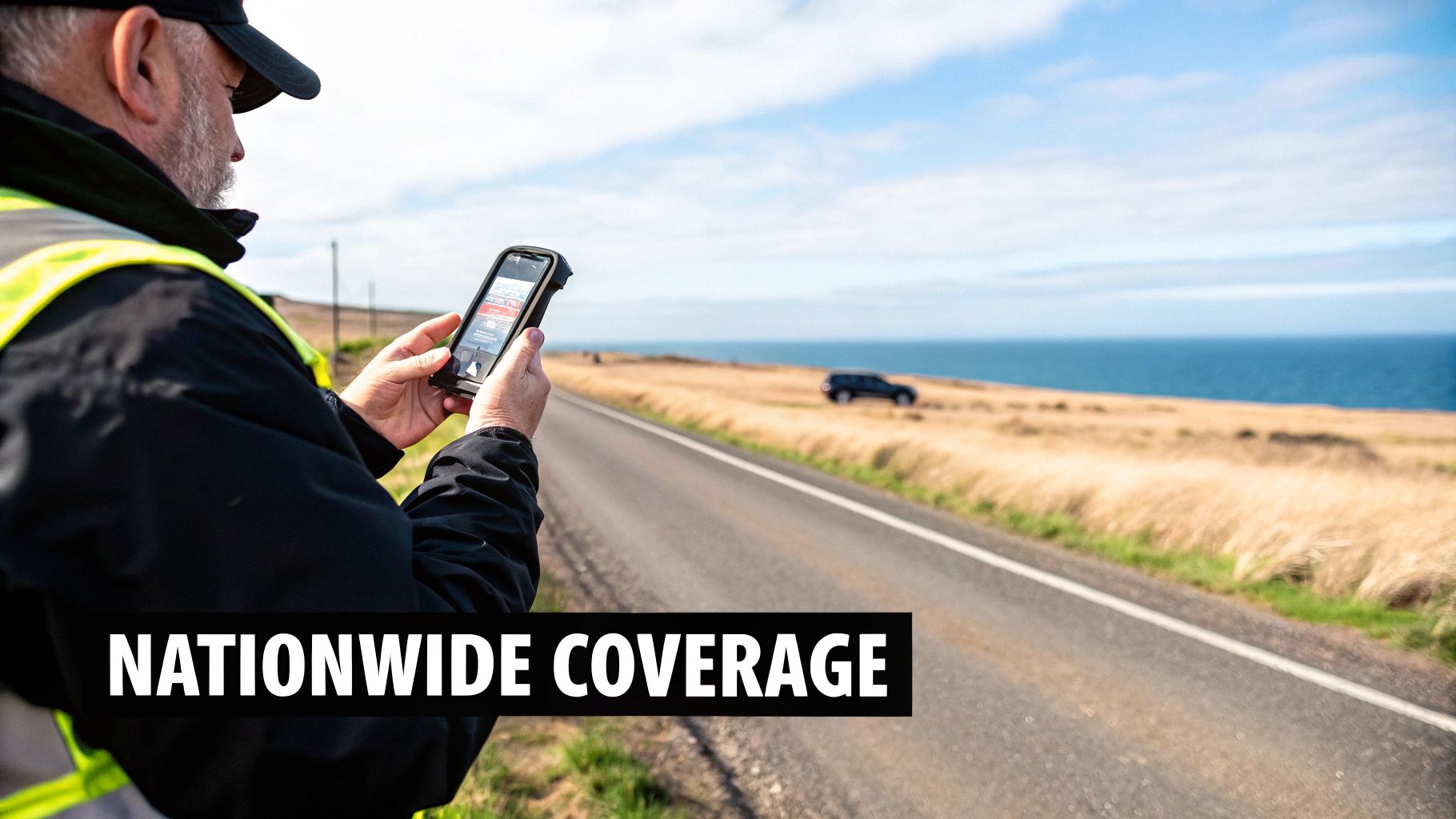
Ensuring your rugged smartphone is fully compatible with the 4G and 5G bands used by Spark, One NZ, and 2degrees is essential. This is where specialist knowledge is key, as not all devices perform equally in New Zealand's unique network environment.
More Than a Phone: The Power of Push-to-Talk over Cellular (PoC)
For many NZ industries, the most transformative feature of a modern rugged smartphone is Push-to-Talk over Cellular (PoC). This technology turns the device into a powerful two-way radio that leverages the 4G/5G mobile network for instant, wide-area communication. It's the best of both worlds: the immediate, one-to-many communication of a traditional UHF radio with the nationwide coverage of the cellular network.
With the press of a single button, a transport manager in Christchurch can speak to their entire fleet of drivers across the South Island. A construction foreman can coordinate multiple teams across a large-scale infrastructure project. It's that simple and that effective.
Leading brands like Hytera and Motorola offer powerful PoC solutions built directly into their rugged devices. The operational advantages are immense:
- Nationwide Coverage: Unlike traditional two-way radios limited by terrain and distance, PoC works wherever there is cellular coverage.
- Instant Group Communication: No dialling, no waiting. Broadcast critical safety alerts or operational instructions to your entire team instantly.
- Improved Safety & Coordination: In an emergency, a single PoC broadcast alerts everyone simultaneously. This is far faster and more reliable than making individual phone calls when seconds count.
- Consolidated Devices: One device acts as both a smartphone and a two-way radio, reducing the amount of gear your team needs to carry, charge, and manage.
For industries like transport, logistics, security, forestry, and traffic management, PoC delivers the disciplined, immediate communication needed for safe and efficient operations.
And for teams working in known black spots, that's not a deal-breaker. A professionally installed Cel-Fi booster can amplify weak cellular signals, ensuring your PoC, voice, and data connections remain strong and reliable.
Powering Productivity Through the Longest Shifts
A dead battery is a critical point of failure. For a lone worker in a remote location, it's a serious safety hazard. When choosing a rugged smartphone NZ businesses can rely on, battery performance and charging strategy are just as important as physical durability. A large mAh number is a good start, but true operational reliability comes from a device's ability to last an entire shift—and be ready for the next one without delay.
The Critical Advantage of a User-Replaceable Battery
For multi-shift operations in manufacturing, security, or logistics, a user-replaceable battery is a non-negotiable feature. You cannot afford to have essential communication tools tethered to a charging cable for hours. A swappable battery means a device never has to be taken out of service. As one shift ends, the user simply pops in a fresh, fully charged battery and passes the device to the next team member. This ensures 100% uptime, something a sealed consumer phone can never offer.
This practical design philosophy is at the core of devices from specialist brands. You can learn more about how ultra-rugged Sonim smartphones are built from the ground up to support continuous, 24/7 operations.
Smart Charging for Your Entire Fleet
Managing power for dozens of devices requires a smart, organised approach.
- Fast Charging: Modern rugged devices support fast charging technology, dramatically reducing downtime. A quick charge during a lunch break can provide more than enough power to last the rest of the day.
- Multi-Bay Charging Docks: For managing a fleet, POGO pin charging docks are the ultimate solution. These stations allow you to charge multiple devices simultaneously without fumbling with cables. This not only prevents wear and tear on fragile USB ports but also ensures your entire fleet is charged, organised, and ready for the next shift.
A well-planned power strategy ensures every team member has a reliable communication lifeline from the start of their shift to the very end. It is a fundamental component of your health and safety plan.
Essential Accessories to Maximise Your Investment
A rugged smartphone in NZ is more than just a phone; it's the central hub for your mobile workforce. By pairing it with the right accessories and software, you transform it from a simple communication device into a powerful tool for safety, productivity, and workflow management.
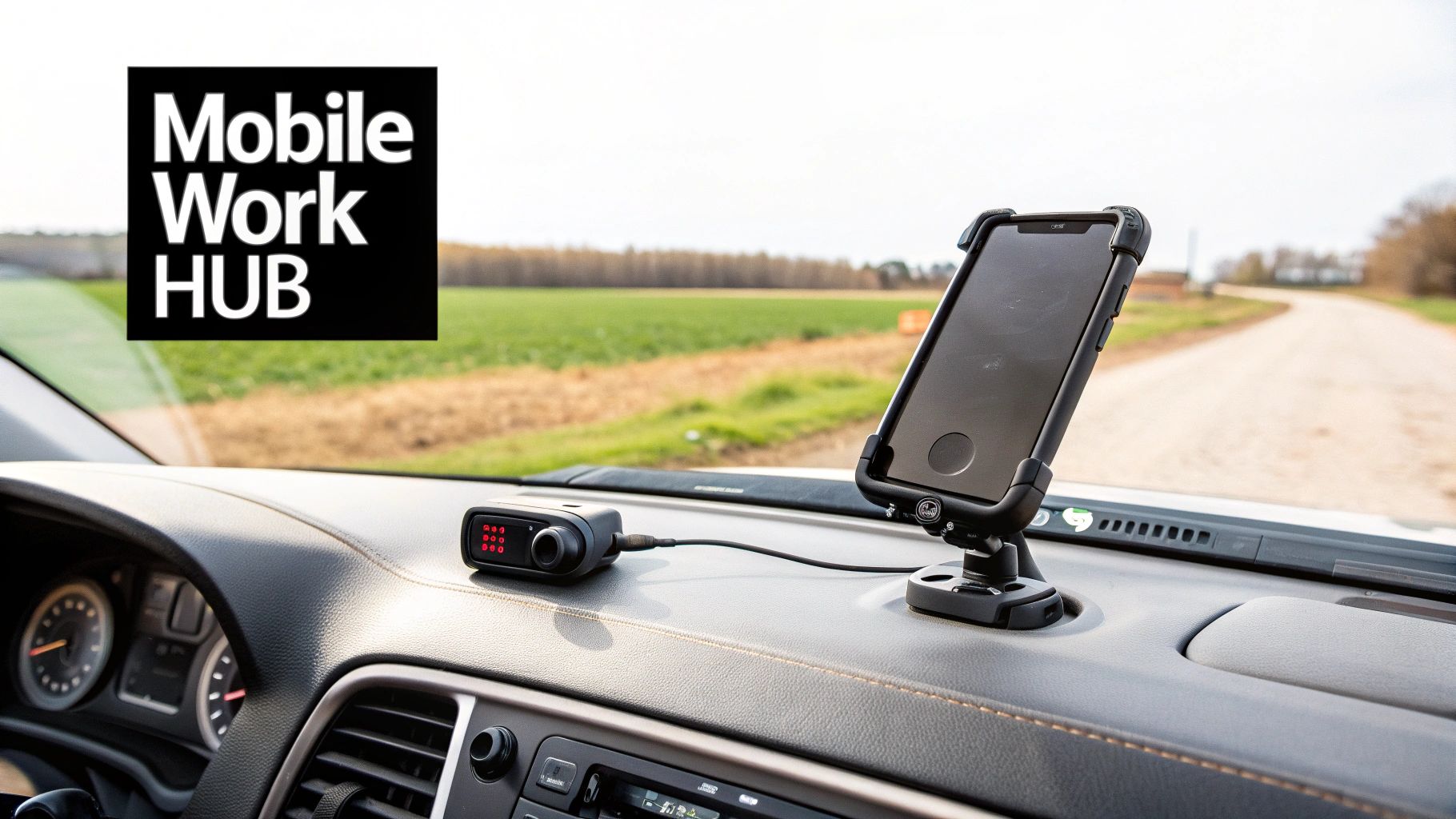
This is where you see the true return on your investment, as the device becomes integral to every aspect of your field operations.
Secure Vehicle Mounting for NZ's Demanding Roads
For any business in transport, logistics, contracting, or agriculture, a phone sliding around the cab is a serious OHS hazard. Secure vehicle mounting is essential. Specialist providers like RAM Mounts offer robust, vibration-dampened mounting solutions designed for New Zealand's roads and worksites. A professional mount keeps the device secure yet accessible for navigation, job dispatch, and hands-free communication, turning the vehicle into a safe and efficient mobile workstation.
Clear Audio in High-Noise Environments
Communication fails when you can't hear over the roar of machinery on a construction site, in a manufacturing plant, or a noisy packhouse. The phone's built-in speaker is simply not enough.
Specialised audio accessories from brands like Otto and Sensear are critical for these environments.
- Noise-Cancelling Earpieces: Ensure your team can hear instructions clearly while also protecting their hearing from industrial noise.
- Remote Speaker Microphones (RSMs): Clip an RSM to a vest or lapel, allowing workers to communicate without ever touching their device, keeping their hands free and their focus on the task.
Investing in professional audio accessories is a fundamental safety requirement in any loud NZ workplace. It ensures every message is heard, preventing costly and dangerous misunderstandings.
Why Partner with a NZ Communications Specialist?
Choosing a rugged smartphone for your business is completely different from buying a personal phone. This is a strategic investment in your team's safety, productivity, and operational efficiency. To get it right, you need to partner with an experienced, New Zealand-based communications provider—not a generalist electronics retailer.
The real value of working with a specialist like Mobile Systems Limited isn't just about the device itself. It's about gaining a long-term partner who understands the unique challenges of NZ work environments, from the corrosive salt spray in our marine industries to the extreme vibrations on a forestry track.
Expertise Tailored to NZ Conditions
A specialist communications provider brings deep, field-tested knowledge that a big-box store simply cannot offer. We provide:
- Local Network Knowledge: We recommend devices proven to perform reliably on NZ's cellular networks, especially in rural and remote areas where a strong signal is critical.
- Custom Configuration: We pre-configure devices with essential features like Push-to-Talk over Cellular (PoC), lone worker safety apps, and device management software before they even arrive on your site.
- End-to-End Fleet Management: We help you plan every detail, from multi-bay charging solutions to seamless software integration and user training, ensuring a smooth and successful rollout.
NZ-Based Support When It Matters Most
Perhaps the most important benefit is having reliable, local support right here when you need it. If a device needs servicing or a warranty claim, you can't afford to wait for an overseas response. You need a responsive partner in New Zealand who understands that device downtime costs you money.
Mobile Systems Limited is a 100% NZ-owned company based in Mount Maunganui, and we've been serving New Zealand businesses for nearly two decades. With our mobile on-site support fleet, expert programming and installation services, and long-term commitment to aftercare, we are the safe, dependable partner for serious commercial buyers.
Frequently Asked Questions About Rugged Smartphones
Making the switch to rugged devices is a significant decision. Here are straight-up answers to the most common questions we hear from NZ businesses.
What’s the real difference between a rugged phone and a tough case?
A tough case is surface-level protection. It's like wearing a raincoat—it helps with a bit of bad weather but won't save you if you fall in the water. A case adds a bumper for drops but does nothing to protect the device's internal components from dust, moisture, or vibration. A rugged device is engineered to be tough from the inside out, with a reinforced chassis, sealed ports, and shock-mounted electronics. It’s the difference between temporary protection and true survivability.
Can a rugged smartphone actually replace our two-way radios?
For many NZ businesses, the answer is a resounding yes. Using Push-to-Talk over Cellular (PoC), a rugged smartphone delivers instant, radio-style communication over New Zealand's nationwide 4G and 5G networks. You get the immediate group communication of a traditional UHF radio but with far superior coverage, eliminating the need for expensive repeaters and overcoming the limitations of terrain. For teams in transport, logistics, and security, it's a more powerful and versatile solution.
Are rugged smartphones a good long-term investment?
Absolutely. While the initial purchase price may be higher than a standard consumer phone, the total cost of ownership (TCO) is significantly lower. The real savings come from drastically reducing your expenses on frequent repairs, device replacements, and lost productivity caused by downtime. For any serious commercial operation, a rugged smartphone is a smarter, more reliable long-term investment that pays for itself many times over.
Ready to equip your team with communication tools built for the realities of New Zealand's work environments? The experts at Mobile Systems Limited are here to provide practical, field-tested recommendations tailored to your industry's unique challenges.
Related posts

- December 31, 2025
Explore satellite phones nz and how reliable satellite comms can keep NZ businesses connected, compare networks, pricing, and coverage.

- December 30, 2025
Is Starlink New Zealand the right fit for your business? Explore real-world performance, plans, pricing, and expert insights for rural...