
A Complete Guide to 2degrees Data Plans in New Zealand
Find the right 2 degree data plans for your business. Our guide covers plans for GPS trackers, mobile CCTV, and remote teams across New Zealand.
Picking the right 2degrees data plan isn't just an IT decision—for Kiwi businesses with teams and assets out in the field, it's a critical operational choice.
At a glance, 2degrees has a whole range of options, from a simple SIM for a manager’s phone right through to sophisticated Machine-to-Machine (M2M) plans designed for IoT devices. This guide will help you cut through the noise and find the plan that actually works for your business.
Matching Your Business Needs to 2degrees Data Plans
For industries like construction, logistics, and agriculture, solid connectivity isn't a nice-to-have; it's the very backbone of how things get done. Your gear—from Hytera two-way radios to Dahua mobile CCTV systems—is only as good as the data plan that powers it. Getting this match right is the secret to boosting efficiency and keeping a lid on your operational costs.
When you’re trying to find the right 2degrees data plan, remember that reliable connectivity is what allows you to improve business productivity. A dropped signal on a GPS tracker or a laggy data feed from a remote security camera can cause serious delays and even create safety risks.
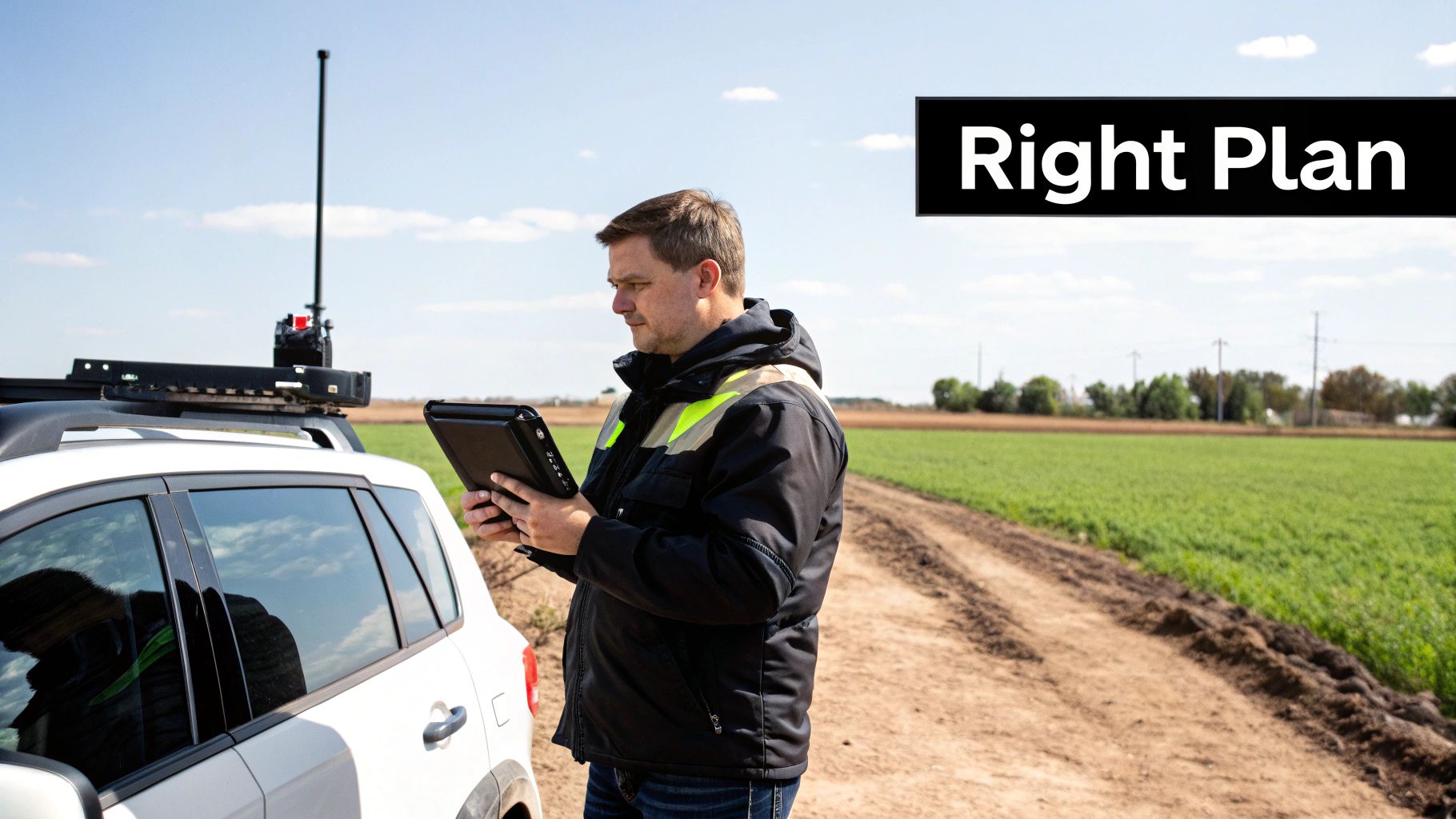
Assessing Your Operational Requirements
Before you start comparing gigabytes and prices, take a step back and look at your own hardware. What does it actually need to do its job? A fleet of vehicles with GPS trackers has completely different data demands than a site manager using a tablet for video calls and pulling up blueprints.
Start by asking yourself a few key questions:
- What devices are we connecting? Is it smartphones, tablets, GPS trackers, Cel-Fi boosters, or mobile security cameras?
- How much data do they use? Does a device send tiny, frequent pings of data (like a tracker), or does it need to stream huge amounts of data (like a CCTV camera)?
- How many devices are there? Are we talking about a handful of assets or a whole fleet? A group plan might make more sense than managing dozens of individual SIMs.
- Where will they be operating? Will your teams be in central areas with strong 5G, or are they heading into rural spots where coverage can be patchy?
The goal isn't just getting your gear online. It's about doing it with a plan that's reliable, scalable, and makes financial sense. This means shifting from a consumer mindset to a strategic one.
By thinking about these practical applications first, you can skip the generic advice and pick a plan that fits your day-to-day reality. For a wider view on mobile connectivity, check out our complete guide to NZ mobile plans for business for more insights.
Ultimately, the right plan ensures your communication and tracking systems from brands like Tait and Uniden just work, no matter where the job takes you.
Understanding the Core Types of 2degrees Data Plans
When you dive into the world of 2degrees data plans, you quickly realise that one size definitely doesn't fit all. Every plan is engineered for a specific job, and matching the right one to your business hardware is the key to getting great performance without blowing your budget.
Let’s break down the main categories to see exactly where your gear fits in.
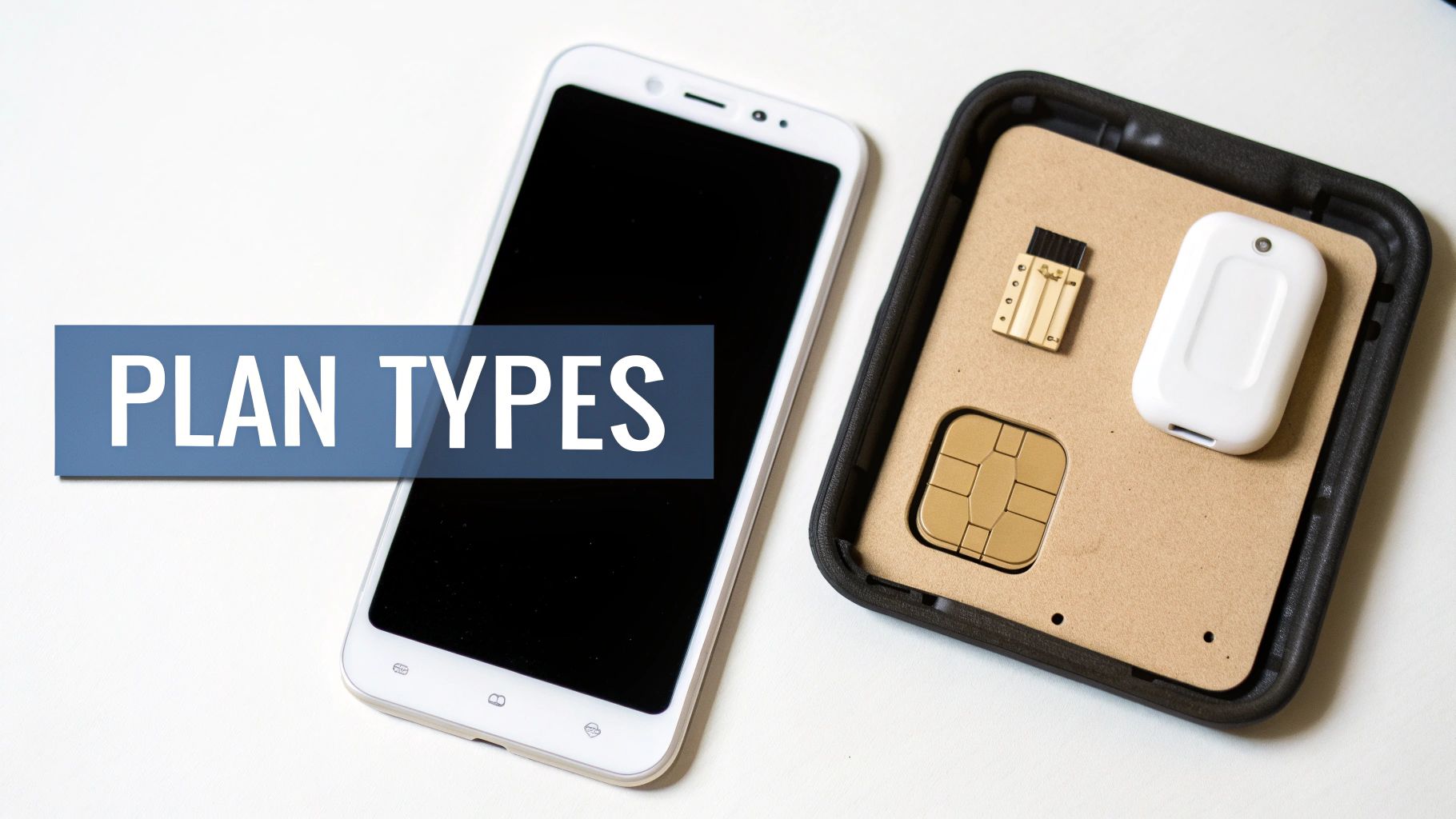
Standard Consumer and Business SIMs
These are the plans most of us know. Built for smartphones and tablets, they bundle everything you need for personal communication—calls, texts, and a healthy serving of data for browsing and emails.
For your business, this is the perfect setup for keeping your people connected. Think field managers, site supervisors, and mobile sales teams who need the flexibility to call clients, check plans, and send updates while on the move.
Data-Only Plans for Mobile Workspaces
Sometimes, you just need a clean, reliable internet connection without the bells and whistles of calls and texts. This is where data-only plans come into their own. They're the workhorses for devices that simply need to get online.
You'd use these for:
- Mobile hotspots that create a Wi-Fi bubble for your team at a temporary worksite.
- Laptops or tablets used purely for data-heavy jobs, like pulling up large schematics or running point-of-sale software.
- In-vehicle routers that keep an entire crew connected while travelling between jobs.
These plans are streamlined to do one thing and one thing only: deliver data, and do it well.
The core difference is all about the application. A business SIM is for a person's device, built for broad communication. A data-only plan is for a dedicated internet device, acting as a mobile connectivity hub for other gear.
M2M and IoT Specialised Plans
Now we get to the really critical category for businesses that rely on specialist hardware like ours at Mobile Systems. Machine-to-Machine (M2M) or Internet of Things (IoT) plans are a completely different beast. They aren't designed for binge-watching Netflix or scrolling through social media.
Instead, they’re optimised for devices that send and receive small, frequent packets of data with MAXIMUM RELIABILITY. It’s all about a constant, stable link.
Think about the equipment you depend on every single day:
- GPS trackers on your fleet vehicles, from trusted brands like Tait or Motorola.
- Remote security cameras from Dahua or Viewtech keeping an eye on a valuable asset.
- Telemetry sensors reporting back on equipment health or environmental conditions.
These devices don't need huge data caps; they need an "always-on" connection that you can count on. M2M plans provide this low-data, high-uptime link, ensuring your crucial operational data always gets through. This focused approach makes them far more cost-effective and dependable for asset tracking and remote monitoring than a standard mobile plan ever could be.
To make it even clearer, here’s a quick breakdown of how these plans stack up for typical business use cases.
2degrees Data Plan Types and Best Business Use Cases
| Plan Type | Primary Use Case | Ideal Devices (Mobile Systems) | Key Feature |
|---|---|---|---|
| Business SIM | All-in-one communication for staff. | Smartphones, Tablets for managers. | Includes calls, texts, and data. |
| Data-Only Plan | Providing internet to other devices. | In-vehicle routers, mobile hotspots. | High data allowance, no calls/texts. |
| M2M/IoT Plan | Sending small data packets reliably. | GPS trackers, CCTV, telemetry sensors. | Low data, high uptime, cost-effective. |
Choosing the right plan type from the get-go prevents headaches down the line. Using a standard mobile SIM for a GPS tracker, for example, is not only wasteful but can also be less reliable for the kind of mission-critical data you need.
What to Look For: Key Features and Inclusions
Picking the right type of 2degrees data plan is a solid first step, but the real devil is in the detail. It’s the fine print that ultimately decides whether a plan will be a perfect fit for your business or a source of frustrating downtime and surprise bills.
Let's break down these critical features in a practical, jargon-free way, focusing on what they really mean for businesses running specialised gear in New Zealand’s often-demanding environments.
Data Caps and Overage Charges
Think of a data cap as the maximum amount of data you can use in your monthly billing cycle. Once you go over that limit, you can get hit with overage charges. These are often steep and can quickly blow out your communication costs, turning a predictable expense into a nasty surprise.
For instance, a simple GPS tracker might only sip a few megabytes a month. On the other hand, a Viewtech CCTV camera streaming live video from a remote farm or construction site could chew through gigabytes. Understanding this difference is fundamental to choosing a plan that’s cost-effective and won’t leave you with bill shock.
The real trick isn't just about avoiding overages, but about right-sizing your plan. Paying for a massive pool of data you never touch is just as inefficient as constantly getting stung with extra fees.
Network Speeds and Throttling
Network speed is simply how fast your gear can send and receive information. A GPS tracker sending tiny location pings every few minutes doesn't need a super-fast connection. But a high-definition security camera? That needs some serious upload bandwidth to push out clear, real-time video.
You also need to watch out for throttling. This is where, after hitting your data cap, the network doesn't cut you off completely but slows your connection to a crawl. For a remote camera, a throttled connection is as good as useless—it could cripple your security monitoring right when you need it most, at least until the next billing cycle kicks in.
Tethering and Hotspot Capabilities
Tethering is a brilliant feature that lets you share a device's mobile data with other nearby devices, essentially turning it into a portable Wi-Fi hotspot. For teams out in the field, this is an absolute game-changer.
Picture a project manager arriving at a new worksite. With a single data-enabled device, they can spin up a temporary connectivity hub. This lets their crew access digital blueprints, file reports, and stay connected without needing a separate SIM card and plan for every single laptop and tablet. It’s a simple, powerful way to keep an entire team productive.
Roaming Options for Operations Beyond NZ
For any business operating near or beyond New Zealand's borders—think maritime, international freight, or even rural outfits near coastal limits—roaming is non-negotiable. Roaming allows your devices to connect to other mobile networks when they're outside of the 2degrees coverage area.
Without the right roaming package, data charges can become astronomical. If your assets, like vessels fitted with McMurdo beacons or vehicles on international routes, are going to travel, you have to check the roaming inclusions and costs. Making sure your plan matches your operational footprint is essential for seamless connectivity, wherever your business takes you.
How to Assess 2degrees Network Coverage Across NZ
A 2degrees data plan is only ever as good as the network it runs on. It’s a simple truth. For businesses out in remote forestry blocks, across sprawling Kiwi farms, or on coastal waters, a solid connection isn't a nice-to-have, it's the backbone of your safety and operational efficiency.
Before you even think about committing to a plan, you have to do your homework. Assessing the network's reach in the specific zones you operate in is a non-negotiable first step. Don't just look at a map and assume you'll have a signal. You need to get out there and verify it.
From 3G to 5G: What It Means for Your Gear
Getting your head around the different network generations, the "G's", is key to setting realistic expectations for how your devices will perform. Each jump represents a leap in speed and capability, directly impacting how your equipment actually works out in the field.
- 3G Network: This is pretty much old news now, but some older M2M devices might still cling to it for very basic, low-data jobs. Think simple text-based data and not much else.
- 4G Network: This is the current workhorse for almost every business application in New Zealand. It delivers the speed and reliability you need for everything from live GPS tracking on Tait radios to streaming clear footage from a Viewtech security camera.
- 5G Network: The new kid on the block, offering blazing-fast speeds and next-to-no lag. While the rollout is still expanding, it’s a genuine game-changer for heavy-duty tasks like high-definition video feeds or real-time drone monitoring, but only in areas where it's available.
The strength of the 2degrees network is vital for businesses navigating New Zealand's challenging terrain. They currently provide 4G coverage to 98.5% of the places Kiwis live and work, powered by over 2,200 cell sites dotted across Aotearoa. This isn't just piggybacking off someone else's towers; it represents a direct investment of more than $1 billion into building their own network. For sectors like construction and logistics that absolutely depend on connectivity across far-flung job sites and rural routes, this kind of footprint is invaluable. You can learn more about the 2degrees network expansion and reach on their site.
Practical Ways to Test Coverage
Official coverage maps are a fantastic starting point, but let’s be honest—they don’t always tell the full story. A map can’t account for that big hill, that patch of dense bush, or the new shed that just went up. On-the-ground testing is the only way to be 100% certain.
A really effective way to do this is to get a trial SIM and pop it into the actual device you plan to use. Then, take it to your most challenging spots—that back paddock, the far corner of the construction site, or out on the boat—and see what happens.
This is also where talking to a specialist provider like Mobile Systems pays off. We have direct, real-world experience deploying communication gear all over New Zealand. We can offer insights and advice that a map simply can't.
If you do find the signal is a bit dodgy in a critical area, don't panic. It doesn’t necessarily mean you're out of options. You might find our guide on how a cell phone reception booster in NZ can amplify a weak signal is just what you need, turning a frustratingly unusable connection into a reliable one.
How to Optimise Data Plans for Specialist Equipment
Picking the right 2degrees data plan isn't just about getting your gear online; it's about matching the plan's DNA to the specific job your equipment needs to do. A one-size-fits-all approach just doesn't cut it with specialist hardware. A plan that’s perfect for a GPS tracker, for example, will completely fall over when paired with a high-definition CCTV camera.
Let's dig into the right strategies for the kind of advanced communication equipment that Kiwi businesses rely on every single day.
GPS Trackers and Low-Data Devices
For assets like GPS trackers or other telemetry sensors, the name of the game is constant, reliable connectivity—not massive data buckets. These little devices are chatty but efficient, sending tiny packets of data (just a few kilobytes at a time) at regular intervals.
This is where a Machine-to-Machine (M2M) or IoT plan is the undisputed champion. Slapping a standard business SIM in one of these would be like using a fire hose to water a pot plant—incredibly wasteful. You'd be paying for a huge data allowance you’ll never even get close to using. An M2M plan gives you that cost-effective, "always-on" connection that’s built for exactly this purpose.
Mobile CCTV and High-Bandwidth Systems
On the other end of the spectrum, mobile CCTV systems from brands like Viewtech or Dahua are data-hungry beasts. Their entire job is to push out clear, high-resolution video footage, often in real time, which demands a serious amount of upload bandwidth.
For this kind of equipment, you need a data-only plan with a very generous data cap. Throttling is your worst enemy here; a slowed-down connection could render your security feed completely useless. It's absolutely crucial to choose a plan with enough data to handle your streaming needs without hitting a speed wall halfway through the month.
Signal Boosters and Failover Connections
It’s a common misunderstanding that devices like signal boosters don't need their own data plan. While a booster like a Cel-Fi amplifies an existing network signal, it’s the underlying 2degrees data plan that provides the actual connectivity it's strengthening. If there's no data plan to begin with, the booster has nothing to work with. You can learn more about how these systems function in our in-depth guide to Cel-Fi solutions.
This network flow chart is a great way to visualise the very first step in figuring out your connectivity needs before you even think about a plan.
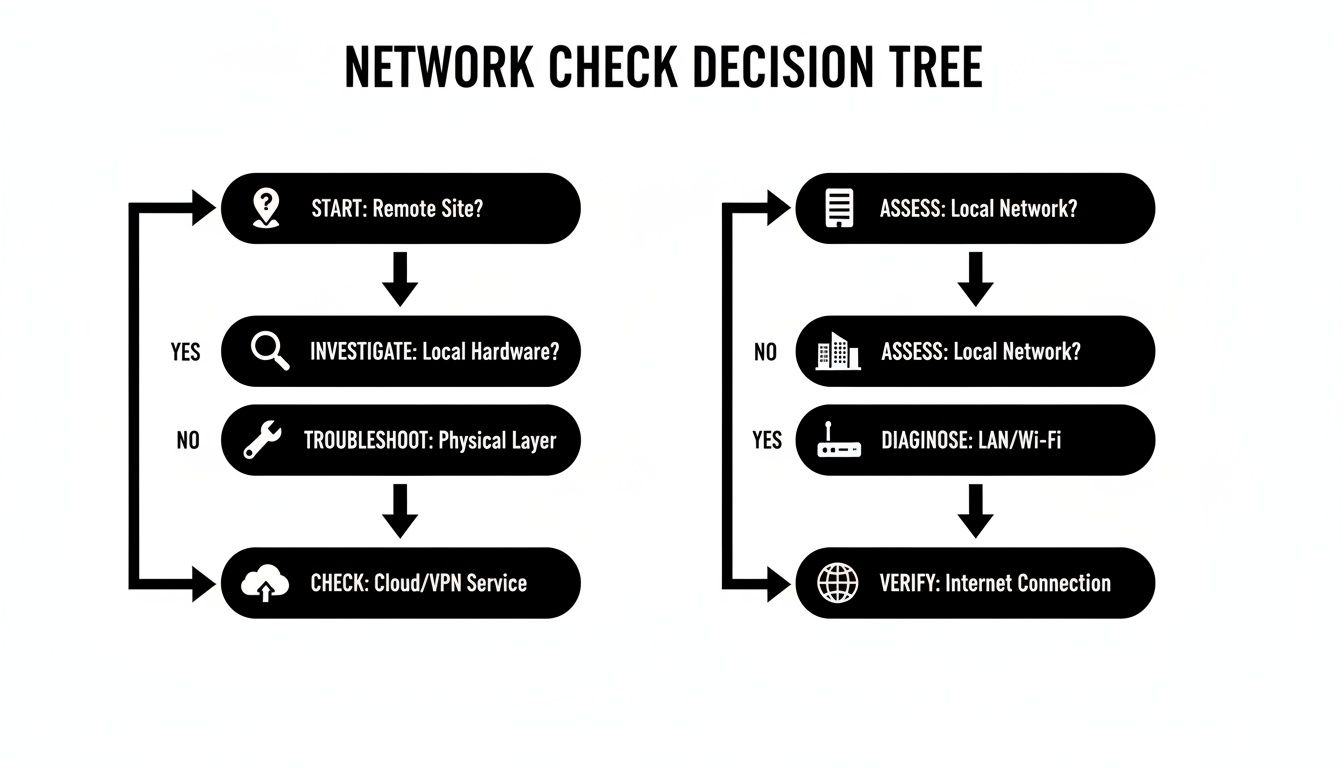
The chart really drives home a critical point: your physical location—whether you’re out in the wop-wops or in the middle of town—is the number one factor that should dictate your network strategy.
Plus, for advanced two-way radios from Hytera or Motorola, a cellular data plan can act as a vital failover. If the main radio network becomes unavailable, the device can automatically switch to the cellular network to ensure communication lines never go down. It's the ultimate reliability for mission-critical operations.
To make things even clearer, here’s a quick guide to matching our hardware with the right type of 2degrees plan.
Data Plan Recommendations for Mobile Systems' Hardware
| Equipment Type | Recommended Plan Type | Key Data Consideration | Example Mobile Systems Brand |
|---|---|---|---|
| GPS & Asset Trackers | M2M / IoT Plan | Low, consistent data usage; reliability over speed. | Trackunit, Digital Matter |
| Mobile CCTV Cameras | Data-Only Plan (High Cap) | High upload bandwidth; avoiding speed throttling. | Viewtech, Dahua |
| Two-Way Radios (PoC/Failover) | Business SIM (Shared Pool) | Consistent uptime for voice; medium data usage. | Motorola, Hytera |
| In-Vehicle Routers & Modems | Business SIM or Data-Only | High data cap for fleet-wide use; tethering support. | Teltonika, Peplink |
This table should help you quickly pinpoint the best starting point for your specific gear, ensuring you're not paying for features you don't need or, worse, underpowering your critical systems.
Choosing and Managing Your Business Data Plans
Getting your 2degrees data plans right is more than just an admin task—it's a practical skill that directly hits your bottom line. It’s all about building a smart roadmap that stops you from paying for data you don't use, while making sure you never run out when it really counts.
The whole process kicks off with a simple but critical first step: an audit. Before you even think about signing up for a plan, take a close look at your team's past data usage. How much data did each device actually chew through over the last few months? This real-world information is your best friend for forecasting what you'll need next, helping you dodge those nasty surprise overage fees.
The Power of Pooled Data Plans
For any business juggling multiple devices—from your team's smartphones to the routers in your vehicles—pooled data plans are a total game-changer for your budget. Instead of trying to manage separate data allowances for every single SIM, a pooled plan throws it all into one big, shared bucket for the whole team to dip into.
This approach brings some serious cost savings and makes life a whole lot simpler.
- High-users are balanced out by low-users, which means your data allowance gets used far more efficiently across the entire fleet.
- Admin becomes a breeze, since you're now managing one master plan instead of dozens of individual ones.
- Costs become much more predictable, smoothing out the monthly ups and downs that come from a few devices having a busy month.
This model is a perfect fit for teams with unpredictable data needs, like construction crews or logistics fleets. One truck might be streaming CCTV footage all day, while another is just sending out tiny GPS pings—a pooled plan handles it all without a fuss.
Activating and Provisioning Your SIMs
Once you’ve settled on the right plan, the next job is provisioning. This is where we get the SIM cards activated and configured to work properly with your specialist devices. It’s not always a simple plug-and-play affair, especially when you’re dealing with M2M/IoT gear like trackers from Uniden or GME.
Getting the provisioning spot-on from day one is absolutely crucial. The wrong settings can lead to connectivity dropouts that bring your operations to a halt, which is why working with a specialist who knows the ins and outs of your equipment is so valuable.
At the end of the day, being proactive, from that first data audit to keeping an eye on things month-to-month, is what gives you control over your mobile costs and guarantees a smooth, cost-effective rollout across all your business assets.
Got a Question About 2degrees Data Plans?
You're not alone. When it comes to specialist gear like GPS trackers and remote cameras, figuring out the right data plan can feel tricky. Here are a few of the most common questions we hear from New Zealand businesses, with some straight-up answers to help you get it right.
Can I Pool Data Between My Phone and My GPS Tracker?
It’s a great question, but in almost all cases, the answer is a firm no, and for very good reason.
Think of it this way: your business phone SIM is built for browsing, emails, and calls, while an M2M/IoT SIM in your GPS tracker is designed for one critical job, sending small, vital packets of location data, reliably and efficiently. Mixing the two is a recipe for disaster. One big software update on your phone could accidentally chew through the data your entire fleet of trackers needs for the month.
It's always best practice to keep them on separate, purpose-built plans. This ensures your essential hardware always has the connection it needs to do its job without interruption.
What Happens if I Go Over My Data Limit on an M2M Plan?
This is where M2M plans really show their value compared to standard mobile plans. Instead of slapping you with eye-watering overage fees, most 2degrees data plans designed for M2M devices have built-in safeguards to prevent bill shock.
Typically, one of two things will happen, depending on your specific plan:
- Throttling: The connection speed is dialled right back until your next billing cycle. The device stays online, but its data usage is capped.
- Data Blocks: You can often purchase a small, inexpensive block of extra data to get you through to the end of the month.
The whole point is to keep your devices online and your costs predictable, even if usage unexpectedly spikes.
How Can I Test 2degrees Coverage on a Remote Site?
While coverage maps give you a good idea, nothing beats a real-world test. The only way to be 100% sure is to get your hands on a trial SIM from a specialist provider like Mobile Systems.
Put that SIM into the actual device you'll be using—whether that’s a Cel-Fi booster or a Dahua security camera—and take it to your toughest locations. Go to that back paddock, that basement workshop, or that remote construction site. This hands-on approach cuts through the guesswork and proves the connection will hold up where it matters most.
The need for this kind of reliable mobile data has never been greater for Kiwi businesses. In fact, New Zealand had a staggering 6.22 million cellular mobile connections active at the start of 2024—far more than our actual population. This just goes to show how many businesses and individuals now rely on multiple connections for everything from phones to specialised IoT gear. You can explore the full digital report on New Zealand's connectivity landscape for a deeper dive into these trends.
Ready to find the perfect data plan for your specialist equipment? The expert team at Mobile Systems Limited can analyse your needs and match you with a reliable, cost-effective solution that keeps your business connected.
Related posts

- July 04, 2026
Most 3G-era phone boosters stopped doing their job when NZ's 3G networks switched off in March 2026. Here's what actually...

- May 24, 2026
Our expert Starlink review NZ looks at speed, pricing, and reliability for business, farm, and maritime use. See if it's...

- May 23, 2026
Approximately 40% of New Zealand's landmass remains outside the reach of traditional mobile networks. For professional teams operating in remote...