
Vehicle Radio Installation Cost NZ: A Professional 2026 Guide
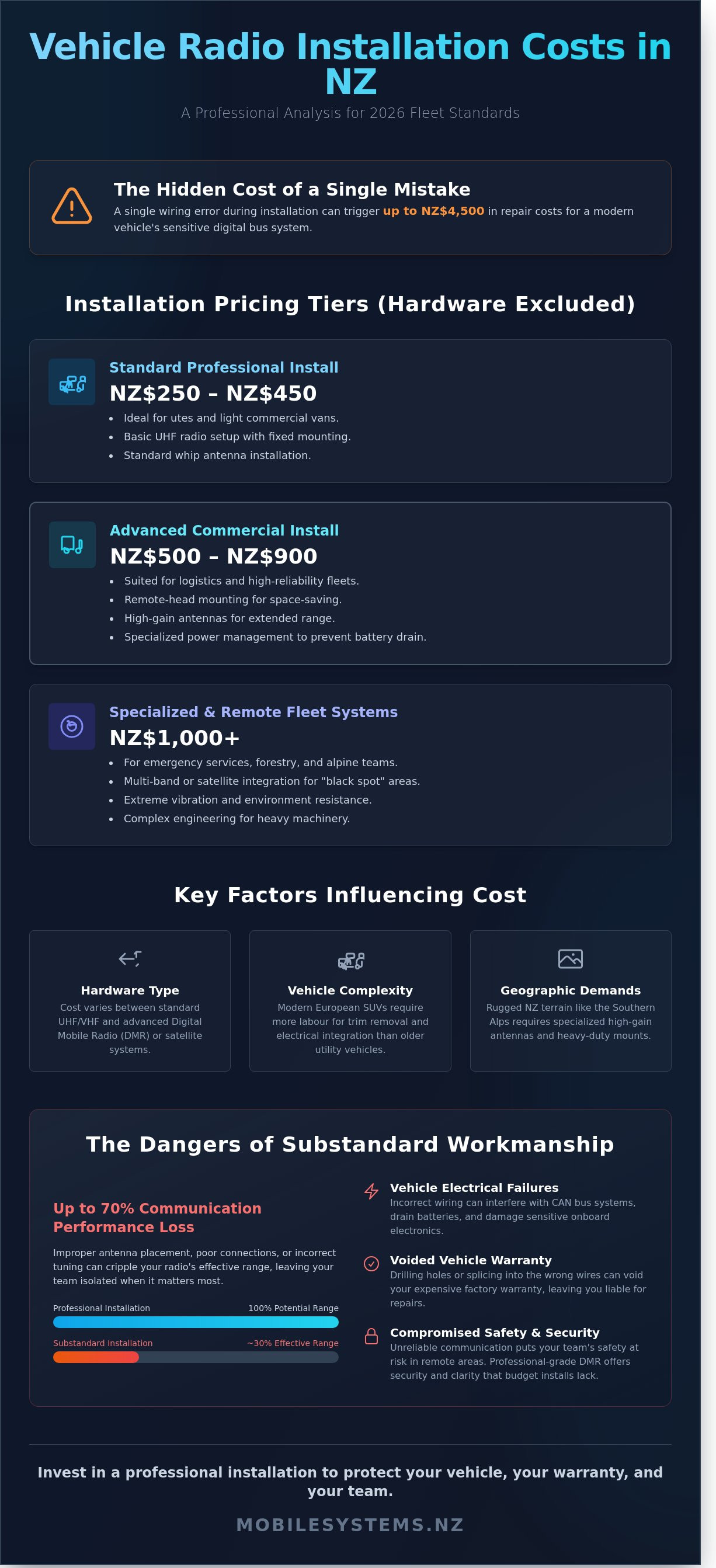
A single wiring error during a radio install can trigger NZ$4,500 in repair costs for a modern vehicle’s digital bus system. You likely understand that reliable communication is essential for safety.
A single wiring error during a radio install can trigger NZ$4,500 in repair costs for a modern vehicle’s digital bus system. You likely understand that reliable communication is essential for safety, but finding a transparent breakdown of the vehicle radio installation cost nz is often a frustrating exercise in vague estimates. It's common to receive quotes that vary by hundreds of dollars without a clear explanation of the technical differences involved.
This guide provides a professional 2026 analysis of the pricing landscape, moving beyond simple hardware tags to include technical labor and fleet considerations. You'll gain a clear understanding of hardware tiers, the impact of New Zealand's rugged terrain on signal range requirements, and why expert integration is vital for protecting your vehicle's warranty. We'll also examine how specific antenna placements and high-gain hardware affect your total investment in remote regions.
By the end of this article, you'll have the knowledge to evaluate providers based on technical merit rather than just the bottom line. This ensures your fleet remains connected across the most challenging Kiwi landscapes while avoiding the hidden costs of DIY failures or substandard workmanship. A tailored assessment from our team at Mobile Systems Limited often prevents these costly mistakes before they happen.
Key Takeaways
- Learn how the vehicle radio installation cost nz typically ranges from NZ$250 for standard setups to over NZ$900 for advanced commercial fleet systems.
- Understand the technical importance of professional antenna placement and power management to ensure maximum signal range and electrical safety.
- Identify the hidden risks of substandard installations, such as vehicle electrical failures and up to a 70% reduction in communication performance.
- Discover how a customized assessment helps businesses design scalable radio systems that meet specific operational requirements and environmental challenges.
Factors Influencing Vehicle Radio Installation Cost in New Zealand
Professional radio installation in New Zealand involves more than simply mounting a bracket to a dashboard. It's a technical process that ensures electrical safety and maximizes signal range through precise antenna tuning. When calculating the vehicle radio installation cost nz, business owners must account for the integration with modern vehicle electronics. Poorly executed wiring can interfere with safety sensors or drain batteries, making professional expertise a necessity for fleet longevity.
To better understand the general variables involved in mobile electronic setups, watch this helpful video:
The total vehicle radio installation cost nz depends heavily on the chosen hardware, such as UHF, VHF, or Digital Mobile Radio (DMR) units. Labor costs fluctuate based on the vehicle's complexity. A late-model European SUV requires significantly more time for trim removal and electrical integration than an older utility vehicle. Additionally, geographic demands play a role. A forestry crew in the central North Island or an alpine team in the Southern Alps requires high-gain antennas and heavy-duty mounts that exceed the requirements of a standard urban courier.
Commercial Communication vs Consumer Audio
Installing professional devices and two-way radios differs significantly from standard car stereo work. While consumer audio focuses on internal cabin sound, commercial two-way radio technology prioritizes external signal transmission and reception under stress. Professional installation protects your vehicle's factory warranty by using non-invasive mounting techniques and dedicated power circuits. This attention to detail maintains the vehicle's resale value, as it avoids permanent damage to the interior trim or dashboard plastics.
The Role of Hardware Quality
Tier 1 brands like Tait or Hytera typically involve a higher initial quote, but they offer superior long-term reliability compared to budget alternatives. Entry-level CB radios might suffice for casual hobbyists, but professional-grade DMR systems provide the encryption and clarity needed for business operations. In rugged New Zealand environments, cheap hardware often leads to higher maintenance costs. Dust, vibration, and moisture quickly degrade low-quality units, resulting in frequent downtime and replacement expenses that far outweigh the initial savings of a premium system. A tailored assessment often prevents these costly mistakes before they impact your operations.
Understanding the vehicle radio installation cost nz requires categorizing the complexity of the hardware and the vehicle itself. Costs vary based on the time required for cable routing, mounting, and system calibration.
Pricing Tiers: From Standard UHF to Complex Fleet Systems
Standard Professional Install (NZ$250 to NZ$450). This tier covers basic UHF setups in utes or light commercial vans. It typically involves mounting a fixed radio and a standard whip antenna using existing factory holes or simple brackets. This is the baseline for most transport and trade vehicles in New Zealand.
Advanced Commercial Install (NZ$500 to NZ$900). These projects often include remote-head mounting where the radio body is hidden under a seat or behind the dash to save space. We use high-gain antennas and specialized power management systems to ensure the radio doesn't drain the vehicle battery during downtime. This level of service is common for logistics firms requiring high reliability.
Specialized or Remote Fleet Systems (NZ$1,000+). For 2026 fleet standards, this includes multi-band systems or satellite integration. These are essential for heavy forestry machinery or emergency service vehicles operating in "black spot" areas. The cost reflects the specialized engineering needed for extreme environments and vibration resistance.
It's vital to remember that these pricing tiers exclude the cost of the physical radio unit and any ongoing licensing fees. Every vehicle has a unique internal architecture that influences the final labor total.
What Is Included in a Professional Quote?
A professional quote isn't just a labor estimate. It details specific high-quality cabling, fused power leads, and stainless steel mounting brackets. A critical component is SWR (Standing Wave Ratio) testing. This technical calibration ensures the antenna is tuned correctly to prevent damage to the radio's transmitter and maximize range. If a provider offers a flat-fee for every vehicle type, it's often a red flag. Modern vehicles with complex trim and curtain airbags require significantly more care and time to navigate safely than older models.
Hidden Costs to Consider
Beyond the physical install, you must consider the regulatory side. The Radio Spectrum Management (RSM) governs frequency use in New Zealand. You'll need to account for annual licensing fees if you're using private commercial frequencies. Custom bracket fabrication is another factor for non-standard mounting. If an "off-the-shelf" mount won't fit your heavy machinery or a new EV dashboard, bespoke engineering adds to the total. Regional businesses in areas like the Bay of Plenty or Waikato should also factor in travel costs for on-site installations. A tailored assessment often prevents these unexpected expenses from surfacing mid-project.
The Technical Components That Drive Installation Complexity
The technical precision required for a reliable setup directly influences the vehicle radio installation cost nz. While a basic approach might seem cheaper initially, it often leads to signal failure or electrical issues in modern vehicle architectures. Professional installers focus on long term reliability by addressing four core technical areas.
Antenna placement is the primary factor in transmission performance. While clip-on mounts exist, drilling a permanent hole in the vehicle roof remains the most cost-effective solution for maximizing signal gain. This provides a consistent 360-degree radiation pattern that magnetic bases cannot match. For power management, installers must navigate the sensitive electronics of Euro-6 or Electric Vehicles (EVs). Drawing power incorrectly can trigger dashboard error codes or cause parasitic battery drain.
High-quality cabling is another non-negotiable component. Using double-shielded RG-58 or LMR-240 cable minimizes signal loss, ensuring the 25 watts of power from your radio actually reaches the antenna. When integrating these systems with existing fleet tracking or PA systems, technical expertise is required to prevent electromagnetic interference. Following guidelines from the Australasian Fleet Management Association helps ensure that communication upgrades meet regional safety and operational standards.
Mounting Challenges in Modern Vehicles
Modern vehicle interiors aren't designed with bulky radios in mind. Installers must carefully route cables to avoid interfering with curtain airbags, which can deploy with explosive force. Many 2024 and 2025 model vehicles require "remote head" configurations. This involves hiding the main radio chassis under a seat or behind the dash, while only the small control faceplate is mounted ergonomically for the driver. This approach maintains safety and preserves the vehicle's resale value.
Antenna Selection for NZ Terrain
New Zealand's geography requires specific hardware choices. A 6dB high-gain antenna is ideal for the flat Canterbury Plains, providing maximum distance on level ground. However, for the hilly terrain of the North Island or the Southern Alps, a 3dB elevated feed antenna is superior because it has a wider vertical radiation pattern. A solid metal ground plane is essential for these antennas to function at their rated capacity. SWR testing is the critical final step in any professional NZ radio installation to ensure the equipment won't overheat or fail during use.
Avoiding the Hidden Costs of Substandard Radio Installation
Selecting a provider based solely on the lowest vehicle radio installation cost nz often creates significant financial liabilities. Professional installation isn't just about making the radio turn on. It's about protecting a NZ$60,000 to NZ$100,000 vehicle asset from electrical damage and ensuring the communication tool actually performs when needed. A low-cost quote often omits critical safety components like high-amperage circuit protection or specialized shielding.
- Fire Hazards: Improperly fused power lines are a leading cause of vehicle fires. A professional installer uses high-quality, correctly rated fuses to prevent electrical surges from melting wire insulation or damaging the vehicle's primary battery system.
- Signal Degradation: Poor antenna placement or incorrect cable termination can reduce your effective range by up to 70%. This leaves drivers unable to communicate in remote areas of the North or South Island where signal strength is already marginal.
- System Interference: Unshielded wiring often creates electromagnetic noise that disrupts vehicle GPS, Bluetooth connectivity, or sensitive engine management systems. This can trigger false dashboard warnings or intermittent sensor failures.
- Mechanical Failure: Cheap crimp connectors frequently vibrate loose on New Zealand's unsealed rural roads. Professional soldering and heat-shrinking are standard for high-reliability environments to ensure the connection survives thousands of kilometers of corrugated surfaces.
The Value of RSM Compliance
In New Zealand, Radio Spectrum Management (RSM) regulates frequency use to prevent interference with emergency services. Professional installers ensure your hardware is "type-approved" and operating within legal power limits. Using unapproved frequencies or overpowered hardware can lead to heavy fines or equipment seizure under the Radiocommunications Act 1989. Mobile Systems prioritizes Tait communications equipment because it meets the highest compliance standards for government and heavy industry users.
Long-Term ROI of Professional Work
A professional setup reduces vehicle downtime significantly. If a radio fails during a critical harvest or construction project, the lost productivity costs far more than the initial vehicle radio installation cost nz. High-quality installs also offer better transferability. When it's time to upgrade your fleet, a clean, documented installation is easier to remove and relocate without leaving damage behind. For more on selecting durable hardware for New Zealand conditions, see our Walkie Talkie NZ Professional Buyer's Guide.
A tailored assessment often prevents these costly mistakes. Contact our technical team to discuss your fleet requirements.
Strategic Fleet Communication Planning with Mobile Systems
Effective fleet management requires more than just buying hardware. We start every project by analyzing your specific work environment. A forestry operation in the Central Plateau faces different terrain challenges than a logistics firm in Auckland. By assessing these variables first, we ensure your vehicle radio installation cost NZ reflects a system that actually performs when your team needs it most.
Scalability is a core component of our design philosophy. We build communication frameworks that grow alongside your business. Whether you're starting with a fleet of 5 vehicles or managing an enterprise of 500, the infrastructure remains robust. This foresight prevents the need for expensive "rip and replace" upgrades as your headcount increases. Our systems are designed to be modular, allowing for easy additions without compromising signal integrity.
Our New Zealand-based technical team provides ongoing support long after the initial setup. Having local experts means you won't deal with international call centers or delayed response times. We understand the local RF environment and New Zealand's specific regulatory requirements; this ensures your fleet stays compliant and connected. A tailored assessment often prevents costly technical mistakes that generic providers might overlook.
Why Choose Mobile Systems Limited?
- Over 25 years of experience in New Zealand's unique commercial communication landscape.
- A strict commitment to professional standards and technical excellence in every project.
- On-site installation capabilities designed to minimize your fleet's downtime by working at your location.
We've spent over two decades refining our processes to suit NZ conditions. Our technicians don't just "plug and play"; they calibrate every unit to ensure maximum range and clarity. This hands-on expertise is why 90 percent of our commercial clients remain with us for their long-term fleet upgrades.
Getting Your Tailored Assessment
To provide an accurate vehicle radio installation cost NZ, we need specific details about your operation. Please have the following information ready for our consultants:
- Vehicle types (e.g., light commercials, heavy trucks, or specialized plant).
- Primary industry and typical work environments.
- Required communication range and any known "dead zones" in your area.
There's a significant difference between a generic estimate and a firm, professional quote. A generic estimate often misses the cost of specialized brackets or high-gain antennas required for rural NZ. A firm quote from us accounts for every cable, mount, and tuning hour required. Contact our Mount Maunganui team for a professional consultation to secure your fleet's communication future.
Maximising Your Investment in Fleet Connectivity
Understanding the variables behind vehicle radio installation cost nz ensures your business avoids the high failure rates often seen in uncertified setups. Professional integration protects your hardware and guarantees compliance with New Zealand Radio Spectrum Management standards. Since 1998, Mobile Systems has provided local businesses with robust communication solutions that withstand the unique rigours of our terrain.
Our RSM Accredited Technicians specialise in Tait and Hytera systems, ensuring every install meets the highest technical benchmarks. Whether you're managing a small local team or a nationwide logistics fleet, a precise installation prevents the costly downtime associated with signal interference or power drainage. A tailored assessment often prevents expensive mistakes before they impact your bottom line.
Ready to optimise your mobile communication? Request a professional installation quote from Mobile Systems to ensure your fleet remains connected and compliant. Expert planning today builds a more resilient operation for the years ahead.
Frequently Asked Questions
How long does a professional vehicle radio installation take?
A standard professional vehicle radio installation typically takes between 2 and 4 hours to complete. Complex setups in modern SUVs or heavy commercial machinery can extend to 6 hours if custom brackets or extensive cable routing through firewalls are required. Our technicians ensure every connection is fused and secure to prevent future electrical failures.
Can I install a commercial UHF radio myself to save on costs?
You can technically install your own radio, but DIY attempts often lead to poor performance or vehicle damage. Commercial UHF radios require precise antenna grounding and specialized programming to operate on specific frequencies. Incorrectly installed wiring can interfere with sensitive vehicle electronics, which often results in repair bills exceeding the initial vehicle radio installation cost NZ savings.
Do I need a license to use a two-way radio in my vehicle in NZ?
It depends on the frequency you intend to use. General users on the 80 UHF Citizen Band (PRS) don't need an individual license as they operate under a General User Radio License (GURL). However, businesses using private frequencies must hold a specific license from Radio Spectrum Management (RSM) to ensure legal compliance and avoid interference with other operators.
What is the difference between a fixed-mount and a handheld radio for a vehicle?
Fixed-mount radios offer 5 watts of transmission power and utilize an external antenna for maximum range and clarity. Handheld units provide portability but are limited by smaller internal batteries and lower-gain antennas. For consistent communication in remote NZ terrain, a fixed-mount unit is the superior choice for vehicle-based teams. A tailored assessment from Mobile Systems Limited often prevents costly mistakes when choosing between these formats.
Will installing a radio void my new vehicle's warranty?
Installing a radio won't void your entire vehicle warranty if the work meets professional standards. Under NZ consumer law, a manufacturer can only deny a warranty claim if the aftermarket installation directly caused the fault. We use non-invasive mounting techniques and dedicated power circuits to protect your vehicle's factory electrical systems and maintain warranty integrity.
Why is my radio range shorter than what was advertised on the box?
Advertised ranges are based on perfect line-of-sight conditions over flat ground or water. In the hilly or forested terrain common across New Zealand, physical obstacles significantly reduce signal strength. A 50-kilometre range claim might drop to 5 or 10 kilometres in dense bush or deep valleys where signals can't penetrate geological barriers.
Can you install radios in electric vehicles (EVs)?
Yes, we can install communication systems in electric vehicles like the Tesla Model Y or LDV eDeliver 9. These installations require specialized knowledge to avoid the high-voltage drivetrain components and prevent electromagnetic interference. We tap into the 12V auxiliary system using isolated circuits to ensure the radio doesn't drain the main traction battery or trigger error codes.
Does the cost of installation include the radio and antenna?
Most quotes for vehicle radio installation cost NZ cover the labor and small consumables like fuses or cable ties. The physical radio unit and the antenna are typically priced separately. A basic labor-only install starts around NZ$180, while a complete package including a high-quality GME or Tait radio can range from NZ$600 to NZ$1,200 depending on the hardware selected.
Related posts

- June 05, 2026
Could a single corroded antenna connection result in a NZ$3 million fine? For New Zealand fleet operators working in forestry,...

- May 28, 2026
NZ police scanner frequencies are changing. Learn why & discover reliable communication solutions for NZ businesses in 2026. Authoritative guide.

- May 21, 2026
Most common two-way radio faults aren't caused by internal electronic failure but by physical degradation and environmental stress. In remote...