
GPS Tracking for Employee Safety: A Guide for NZ Businesses in 2026
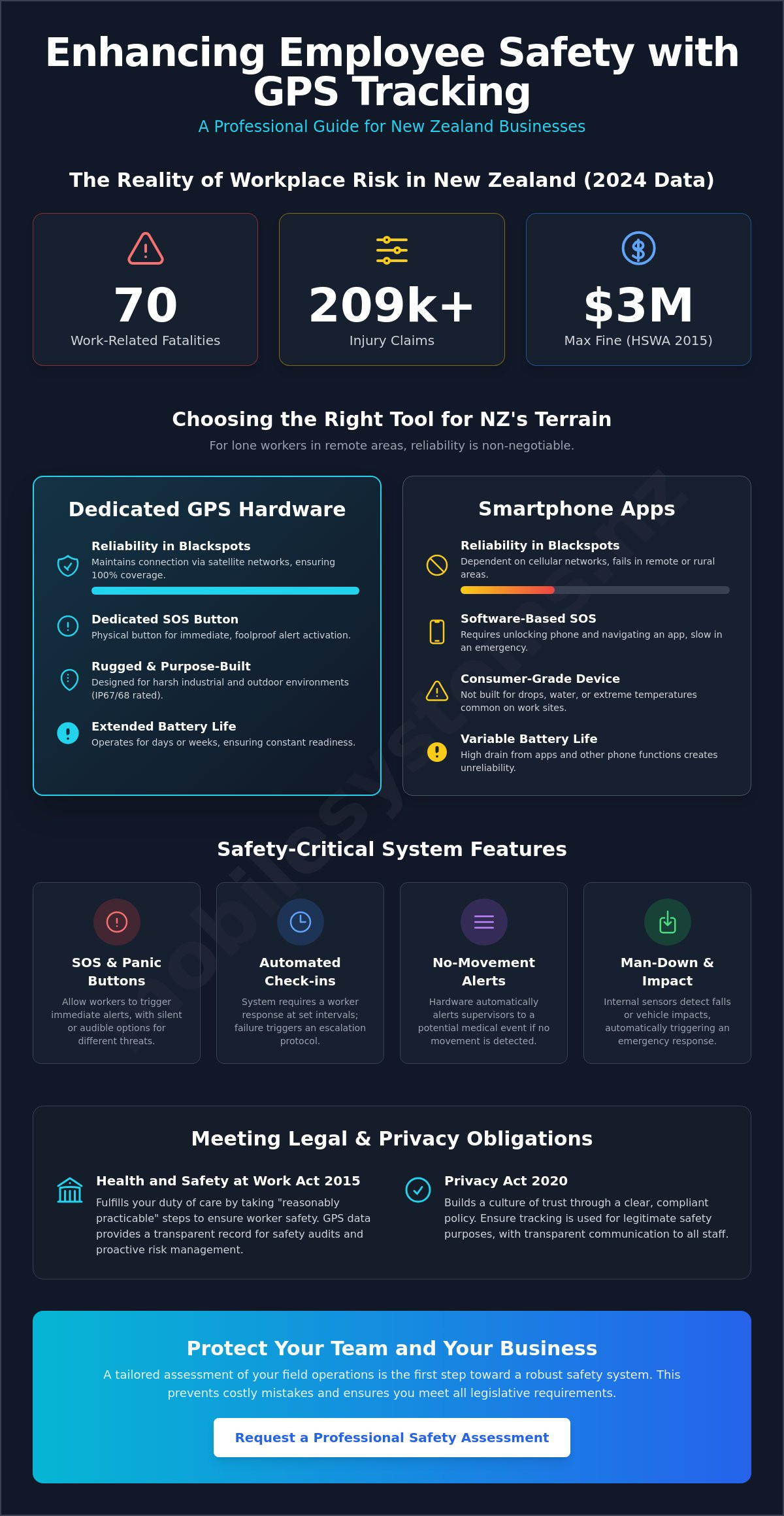
In 2024, New Zealand recorded 70 work-related fatalities and more than 209,000 injury claims. These statistics underscore the heavy responsibility business owners face when managing remote or mobile teams.
In 2024, New Zealand recorded 70 work-related fatalities and more than 209,000 injury claims. These statistics underscore the heavy responsibility business owners face when managing remote or mobile teams. You likely understand that implementing gps tracking for employee safety is a critical step in meeting your "reasonably practicable" obligations, but concerns about rural blackspots and staff pushback often create hesitation.
It's possible to protect your workforce while maintaining a culture of trust and full compliance with the Privacy Act 2020. This guide provides a direct path to deploying tracking systems that work in our unique landscape. We'll show you how to move beyond simple mobile apps toward hardware solutions that offer 100% reliability in the field.
We will outline the essential safety features your system must include, provide a framework for a privacy-compliant policy, and recommend hardware suited for New Zealand's harshest environments. This professional approach ensures your business remains compliant with the Health and Safety at Work Act 2015 while keeping your most valuable assets safe.
Key Takeaways
- Understand how to fulfill your legal obligations under the Health and Safety at Work Act 2015 by implementing reliable location-based safety tools.
- Identify the critical features required for effective gps tracking for employee safety, including high-frequency location updates and dedicated SOS functionality.
- Learn why dedicated GPS hardware is a superior choice over mobile applications for ensuring connectivity in New Zealand’s rugged terrain and cellular blackspots.
- Develop a framework for a privacy-compliant tracking policy that meets the requirements of the Privacy Act 2020 and builds trust with your workforce.
- Discover how to integrate safety tracking with broader communication systems to create a robust, unified response network for your mobile team.
GPS Tracking and the New Zealand Health and Safety Landscape
GPS tracking for employee safety serves as a primary tool for real-time risk mitigation in New Zealand's mobile workforce. It provides a digital safety net for staff who operate outside the immediate supervision of a physical office. By utilizing a high-quality GPS tracking unit, businesses can monitor worker status and location, ensuring that assistance is dispatched immediately during an incident.
To better understand how these systems function in a practical environment, watch this instructional video on building tracking workflows:
Duty of Care for Lone and Remote Workers
In industries like forestry, transport, and agriculture, workers often face environmental hazards without immediate support. Relying on manual check-ins via phone or radio is often insufficient. If a worker is incapacitated, they can't call for help. According to 2024 data, New Zealand saw 70 work-related fatalities, highlighting the high stakes for remote operations.
The legal implications for failing to provide reliable monitoring are significant. Under the Health and Safety at Work Act (HSWA) 2015, corporations can face fines of up to $3,000,000 for serious breaches. Implementing gps tracking for employee safety reduces emergency response times and provides verifiable evidence that a business is actively managing its risks in high-risk environments.
The HSWA 2015 Framework
The HSWA 2015 requires employers to take all "reasonably practicable" steps to ensure worker safety. GPS tracking data provides a transparent record for safety audits and incident reporting. This data proves that a company has established a proactive monitoring system rather than a reactive one. It moves the business from simple compliance toward a culture of active protection.
Under the HSWA 2015, employers must provide remote staff with the same level of health and safety protection as those in a fixed office, ensuring risks are minimized so far as is reasonably practicable. Utilizing professional GPS trackers allows businesses to meet this standard even in areas with limited infrastructure.
Using location data to improve safety audits allows management to identify high-risk patterns before an accident occurs. This proactive approach is exactly what New Zealand regulatory bodies expect from modern businesses. A tailored assessment of your current field communications often prevents costly mistakes and ensures you meet all legislative requirements.
Safety-Critical Features of an Employee Tracking System
Effective gps tracking for employee safety requires more than basic location markers. Technical precision determines the speed of an emergency response. Systems that utilize "breadcrumbing" only update location at fixed intervals, which can leave a significant gap in data if an incident occurs between pings. For safety-critical roles, real-time updates are the standard, ensuring that the last known position is accurate within meters.
While management must consider the pros and cons of employee monitoring regarding workplace culture, the functional benefits of specific hardware features are clear. High-risk environments demand dedicated tools that perform when standard mobile devices fail.
Key safety features include:
- SOS and Panic Buttons: These allow workers to trigger immediate alerts. Silent alarms are suitable for security threats, while audible alerts help search teams locate a worker in dense bush or noisy industrial sites.
- Automated Welfare Check-ins: Systems can be programmed to require a response from the worker at set times. Failure to "check-in" triggers an escalation protocol.
- No-Movement Alerts: If the hardware detects a lack of movement for a defined period, it can automatically alert supervisors to a potential medical event.
Man-Down and Impact Detection
Modern GPS hardware often includes integrated accelerometers. These sensors detect sudden changes in velocity or orientation, such as a fall from height or a vehicle collision. When the device identifies a high-impact event, it initiates an automated alert sequence. This is vital when a worker is unconscious or otherwise incapacitated and unable to press a panic button. Intelligent calibration is necessary to ensure that standard work movements don't trigger false alarms.
Geofencing for Hazard Management
Geofencing allows managers to create virtual boundaries around specific geographical areas. In New Zealand, this is frequently used to mark high-voltage zones, unstable terrain, or prohibited areas on forestry sites. When a worker enters or exits these pre-defined zones, the system sends an immediate notification to the worker and the dispatcher. This feature also assists with site-specific safety inductions by ensuring workers are only active in areas where they've been cleared to operate.
Historical movement data within these geofenced areas helps safety officers identify high-risk patterns. By analyzing where workers spend the most time or where "near-miss" entries occur, businesses can refine their safety protocols. Selecting the right GPS trackers for these tasks ensures that these virtual boundaries remain accurate even in challenging weather conditions.
A tailored assessment of your current field requirements often prevents costly hardware mistakes. You can reach out to our technical team through our contact page for specific advice on system integration.
Dedicated Hardware vs. Mobile Apps: The NZ Reality
Mobile apps offer a low entry cost for gps tracking for employee safety. However, they often fail the rigorous demands of New Zealand's field operations. Smartphones rely on internal antennas. These often lack the sensitivity of industrial-grade GPS trackers. In deep valleys or heavy forest cover, this hardware limitation results in significant location drift or total signal loss.
Durability is another critical factor. A standard smartphone is susceptible to screen damage, water ingress, and thermal shutdown. Professional hardware carries high IP (Ingress Protection) ratings. This ensures it remains operational in the rain and dust common to NZ worksites. These devices are purpose-built for survival. They provide a reliable link when a worker is most vulnerable.
When implementing these systems, businesses must follow the Office of the Privacy Commissioner guidelines to ensure data collection is necessary and transparent. Using reliable hardware supports this by ensuring the data collected is accurate. It serves its intended safety purpose without technical failure.
Reliability in Cellular Blackspots
Large portions of rural New Zealand lack reliable cellular coverage. This renders app-based tracking useless in an emergency. Hybrid trackers solve this by switching between cellular networks and satellite constellations like Iridium when the terrestrial signal disappears. Satellite redundancy is critical for NZ forestry and agriculture because it ensures a life-line remains active regardless of the terrain or proximity to a cell tower.
Battery Life and Device Longevity
Safety-critical tracking requires high-frequency pings to provide an accurate location during an incident. On a standard mobile phone, this level of activity exhausts the battery in a few hours. This leaves the worker without both a tracker and a communication device. Dedicated GPS hardware is designed for low power consumption. Some units offer battery life that spans weeks or even months on a single charge.
For vehicle-based teams, GPS trackers can be hard-wired directly into the vehicle's electrical system. This eliminates the risk of a worker forgetting to charge a device. Portable units remain an option for staff on foot. They provide a lightweight yet robust safety tool that outlasts any consumer phone.
Choosing the right hardware is a technical decision that impacts your overall risk profile. A tailored assessment of your operating environment often prevents costly mistakes. You can view our range of cellular and satellite devices to find a solution that matches your specific geographic challenges.
Addressing Privacy and Implementing a Safety Policy
Implementing gps tracking for employee safety requires a careful balance between the Health and Safety at Work Act 2015 and the Privacy Act 2020. Employers must ensure that the collection of location data is for a lawful purpose and is necessary for that specific goal. It's essential to define these safety objectives clearly before any hardware is deployed in the field.
Transparency is a legal requirement under New Zealand law. You must inform employees that they're being tracked and explain exactly how their data will be stored and used. Covert tracking is generally illegal in New Zealand, with very limited exceptions for investigations into serious misconduct. Open communication prevents compliance anxiety and fosters a culture of mutual respect.
A "Work-Time Only" tracking protocol is critical for protecting off-duty privacy. Tracking employees outside of their agreed-upon work hours is considered a significant breach of privacy and is not permitted without explicit, voluntary consent. Modern tracking systems can be programmed to disable location services automatically at the end of a shift, ensuring boundaries remain intact.
The "Safety vs. Surveillance" Debate
Successful implementation depends on shifting the narrative from micromanagement to life-saving technology. When workers understand that gps tracking for employee safety is primarily for emergency response, they're more likely to accept the system. Restricting access to real-time maps to only authorized safety officers or dispatchers further protects employee trust.
There are numerous instances in New Zealand where GPS data has enabled emergency services to reach injured workers in remote terrain where cellular signals were non-existent. Highlighting these practical safety outcomes helps staff view the technology as a vital tool for their own protection. Clear, safety-focused rationale is the best way to address employee pushback.
Policy Best Practices
A comprehensive written policy should outline data retention periods and identify who has the authority to view historical movement logs. It's best practice to consult with staff and unions during the policy drafting phase. This collaborative approach ensures that the final document addresses specific operational concerns while meeting all legal standards.
Handling disciplinary issues discovered through GPS data requires a "Safety-First" rule. If location data accidentally reveals a minor procedural breach, the primary focus must remain on the safety intent of the system. Using safety-critical data for aggressive punitive measures can quickly erode the trust required for a functional safety culture.
Developing a robust policy is just as important as choosing the right hardware for your environment. For assistance in aligning your safety technology with New Zealand regulations, contact our team through our contact page to discuss a tailored assessment for your business.
Integrated Safety Solutions from Mobile Systems
Mobile Systems Limited designs integrated safety ecosystems that address the specific geographic challenges of New Zealand. We move beyond standalone devices by creating a unified network where communication and location data work together. This holistic approach ensures that gps tracking for employee safety remains functional even when individual components face environmental stress.
Integrating your location data with fleet tracking systems provides a complete operational overview. This allows dispatchers to see vehicle positions alongside handheld safety units, streamlining the response during a critical incident. Professional installation ensures that these systems are correctly calibrated for New Zealand conditions and local network requirements.
Combining satellite technology with terrestrial GPS units provides a redundant safety net for staff working in deep rural areas. When cellular signals fail, our integrated solutions switch to satellite constellations to maintain a constant data stream. This ensures that a worker's location is always visible to the home office, regardless of their proximity to urban infrastructure.
Unified Communication and Tracking
Consolidating your safety tools onto a single dashboard reduces the complexity of monitoring a mobile workforce. Hard-wired vehicle trackers offer permanent reliability for the fleet, while portable units cover staff on foot. We can link GPS alerts directly to two-way radio dispatch systems, ensuring that a "man-down" or SOS alert reaches the supervisor instantly via multiple channels.
This level of integration prevents data silos and ensures that safety information is actionable. Whether your team is using vehicle-mounted radios or handheld devices, the location data is fed into a central management interface. This unified view is essential for coordinating search and rescue efforts or managing site-wide evacuations.
Why Partner with Mobile Systems?
Our expertise in satellite phones NZ ensures that your team has 100% coverage in off-grid areas. We provide on-site support and maintenance to ensure your safety infrastructure remains operational year-round. A tailored assessment often prevents costly mistakes in safety procurement by identifying the exact hardware mix required for your specific risk profile.
Effective gps tracking for employee safety is an investment in your people and your legal compliance under the HSWA 2015. We focus on providing hardware that survives the NZ environment while meeting all privacy standards. To begin building a robust safety network for your team, contact Mobile Systems for a safety-focused fleet assessment.
Strengthening Your Workplace Safety Network
Implementing robust gps tracking for employee safety is more than a technical upgrade; it's a fundamental commitment to your team's wellbeing and your legal duty of care. Prioritizing ruggedized hardware over consumer-grade apps ensures that your safety net remains intact across New Zealand's most challenging landscapes. This hardware-first approach provides the reliability required for high-risk industries like forestry and transport.
A successful deployment relies on transparent communication and a privacy-compliant policy that builds trust with your workforce. Mobile Systems Limited provides HSWA-compliant safety solutions, offering the technical expertise needed to navigate both regulatory requirements and geographic limitations. Our NZ-based technical support and on-site servicing ensure your systems remain reliable and mission-ready at all times.
A tailored assessment often prevents costly mistakes in safety procurement and ensures your equipment matches your specific operational risks. To secure your mobile workforce with a custom-designed tracking ecosystem, contact our team for a tailored safety assessment. Protecting your team is a proactive process, and the right partnership ensures your business meets its safety obligations with confidence.
Frequently Asked Questions
Is it legal to track employees via GPS in New Zealand?
Yes, it is legal to track employees provided the business complies with the Privacy Act 2020. You must have a lawful purpose, such as ensuring worker safety, and the collection of data must be necessary for that purpose. Employers are required to inform staff about the tracking and ensure data is stored securely.
What happens to GPS tracking when an employee is in a cellular blackspot?
Standard cellular trackers will stop transmitting location data once they leave a coverage area, though some units store data to upload later. For 100% reliability in rural New Zealand, hybrid devices are used. These units switch to satellite networks like Iridium when cellular signals are unavailable, ensuring continuous monitoring.
How does GPS tracking improve emergency response times for lone workers?
It provides emergency services with precise coordinates immediately, eliminating the need for a worker to describe their location. Automated features like Man-Down detection trigger alerts even if a worker is unconscious. This allows dispatchers to bypass manual check-in delays and send help directly to the incident site.
Can employees turn off GPS tracking outside of work hours?
Yes, and maintaining this boundary is a core requirement for privacy compliance. Tracking staff during their private time without explicit and voluntary consent is a breach of the Privacy Act 2020. Modern systems often include automated schedules or privacy buttons that disable location reporting at the end of a shift.
What is the difference between a mobile app and a dedicated GPS safety device?
Mobile apps rely on consumer smartphone hardware, which often lacks the antenna sensitivity and battery life needed for field work. Dedicated hardware is ruggedized for harsh environments and offers multi-week battery longevity. These professional devices are more reliable for gps tracking for employee safety because they function independently of a phone's limitations.
Does GPS tracking fulfill my obligations under the Health and Safety at Work Act?
Implementing gps tracking for employee safety is a significant step toward meeting the "reasonably practicable" standard required by the HSWA 2015. It demonstrates a proactive approach to risk management for mobile or lone workers. While it is not the only requirement, it provides essential evidence of a business's commitment to worker protection.
What are the most important safety features to look for in a tracker?
You should prioritize SOS/Panic buttons, Man-Down detection, and No-Movement alerts. High-frequency reporting is also critical for accuracy during an emergency. Ensure the hardware has an appropriate IP rating for dust and water resistance to survive New Zealand's outdoor work conditions.
How much does it cost to implement a GPS safety system for a small fleet?
The total investment includes upfront hardware costs, professional installation, and ongoing monthly service fees. Costs vary depending on whether you require basic cellular tracking or advanced satellite redundancy for remote areas. A tailored assessment often prevents costly mistakes by ensuring the hardware matches your specific operational environment.
Related posts

- June 11, 2026
New Zealand's workplace fatality rate is 1.7 times higher than Australia's, a stark figure that highlights the urgent need for...

- June 10, 2026
Did you know that approximately 15% of New Zealanders work in isolated conditions, with many operating entirely outside of reliable...