
Lone Worker Check In System: The Complete Guide for NZ Businesses (2026)
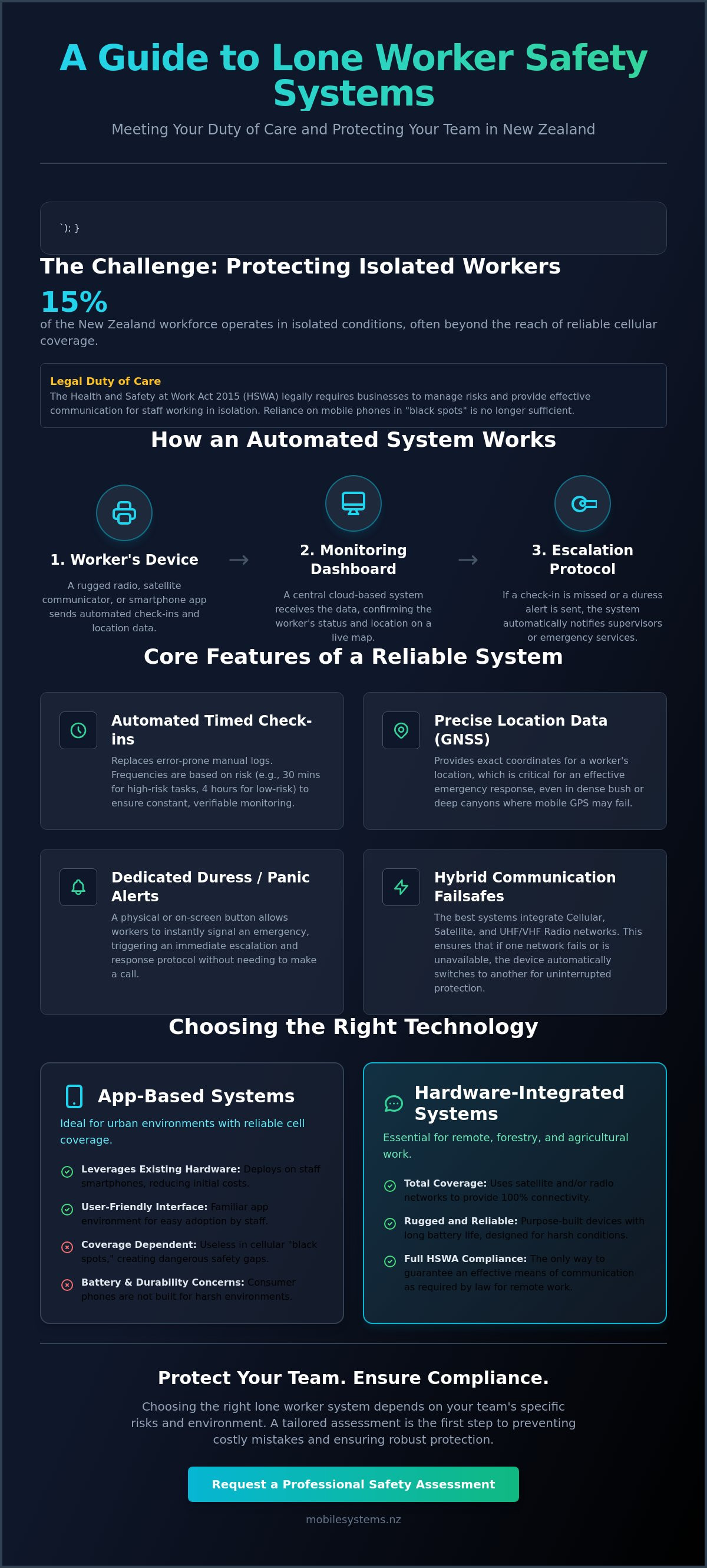
Did you know that approximately 15% of New Zealanders work in isolated conditions, with many operating entirely outside of reliable cellular coverage? If your staff work alone, a mobile phone is often insufficient to meet your legal duty of care.
Did you know that approximately 15% of New Zealanders work in isolated conditions, with many operating entirely outside of reliable cellular coverage? If your staff work alone, a mobile phone is often insufficient to meet your legal duty of care. Implementing a dedicated lone worker check in system is now a critical requirement for businesses operating within the updated 2026 health and safety framework.
It's a common challenge to manage the safety of remote staff when manual logs are prone to error and cellular "black spots" create dangerous communication gaps. You need a system that offers certainty without increasing your administrative workload or relying on inconsistent mobile signals.
This guide provides a practical roadmap for establishing a reliable, automated safety protocol that complies with the Health and Safety at Work Act 2015. We will examine the transition to hybrid communication technologies and explain how to build clear escalation protocols for missed check-ins. You will also learn how to choose hardware that ensures your team remains protected in New Zealand's most challenging terrain.
Key Takeaways
- Understand why transitioning from manual logs to an automated lone worker check in system is essential for accurate safety monitoring and regulatory compliance.
- Learn how to define check-in frequencies and escalation protocols based on the specific risk profile of your staff's tasks.
- Evaluate the trade-offs between app-based solutions for urban environments and hardware-integrated systems for remote locations without cellular coverage.
- Discover how integrating safety protocols into existing UHF/VHF radio networks provides a robust failsafe for workers in New Zealand's isolated regions.
- Identify the necessary steps to test your system regularly, ensuring hardware and software work seamlessly before every shift begins.
What is a Lone Worker Check-In System?
A lone worker check in system is a structured safety framework. It's more than just a software application. It integrates specialized hardware, such as two-way radios or satellite communicators, with cloud-based monitoring and predefined response protocols. Manual logs are often unreliable and prone to human error. Automation replaces these logs with timed, verifiable data points that ensure no staff member is forgotten during a shift.
The system operates through three primary components: the worker's device, a central monitoring dashboard, and a clear escalation pathway. If a worker fails to confirm their safety within a predetermined window, the system automatically alerts designated managers or emergency services. This removes the risk of a missed check-in going unnoticed due to a busy office environment or poor cellular coverage.
To better understand how these systems function in a practical workplace setting, watch this overview:
The Legal Context: HSWA 2015 and Duty of Care
In New Zealand, the Health and Safety at Work Act 2015 (HSWA) places a primary duty of care on the Person Conducting a Business or Undertaking (PCBU). You're legally required to manage risks for staff who work in isolation. Regulations from 2016 specifically mandate that PCBUs provide an effective means of communication and a system for regular contact. On February 9, 2026, the Health and Safety at Work Amendment Bill further emphasized the management of critical risks for remote staff.
With 70 work-related fatalities recorded in New Zealand in 2024, the interpretation of "reasonable practicability" has evolved. It's no longer acceptable to cite poor cellular coverage as a reason for safety failures. If technology like satellite communicators or radio-linked systems can bridge the gap, businesses are expected to implement them. Relying on a verbal "call me when you're done" protocol is rarely considered sufficient under modern New Zealand safety standards.
Identifying Your Lone Workers
Understanding What is a Lone Worker? is the first step in effective risk management. In the New Zealand context, isolation isn't just about physical distance from a town. It's about the ability to access immediate assistance. This definition covers a wide range of roles, including tradespeople in private homes, retail staff on solo shifts, and healthcare professionals on community visits.
An estimated 15% of the New Zealand workforce operates in isolated conditions. High-risk industries like agriculture, forestry, and transport require a robust lone worker check in system because help is often hours away. When assessing your risk levels, you should consider environmental hazards, task complexity, and the reliability of local communication networks. Modern systems now utilize Global Navigation Satellite Systems (GNSS) to provide precise positioning even in dense bush or deep canyons. A tailored assessment ensures your safety system matches the actual dangers your team faces daily.
Core Features of a Reliable Safety Monitoring System
A robust lone worker check in system relies on a suite of integrated features designed to mitigate specific workplace hazards. These features must function reliably across New Zealand's diverse geography, where cellular connectivity is often inconsistent. The system's primary goal is to provide a failsafe that operates even when a worker is unable to call for help manually.
Timed check-ins are the foundation of proactive safety. Instead of a fixed schedule for all employees, frequencies should be adjusted based on the risk profile of the task. High-risk activities, such as working at heights or in remote forestry blocks, might require 30-minute intervals. Lower-risk site visits might only require check-ins every four hours. This flexibility ensures that safety protocols remain practical without becoming a burden on the worker's productivity.
Location data provides the critical information required during an emergency. While real-time tracking offers the highest level of visibility, it can deplete battery life on handheld devices. A "breadcrumb" approach, which logs location at specific intervals or only when a check-in occurs, is often more practical for long shifts. If a device loses power or signal, rescuers have a refined search area based on the last known coordinates transmitted to the system.
Modern systems also incorporate automated sensors to detect emergencies without user intervention:
- Man Down and Fall Detection: Internal accelerometers detect sudden impacts or a lack of movement. If a worker is incapacitated, the device triggers an alert automatically.
- Panic Buttons: Dedicated SOS buttons provide an instant distress signal. Unlike a phone app that requires unlocking a screen, physical buttons on specialized hardware can be activated by touch alone, even through gloves.
In areas where cellular signals are intermittent, these features perform best when integrated with hardware that doesn't rely solely on 4G or 5G networks. Using store-and-forward technology or radio-linked repeaters ensures that alerts are transmitted the moment a connection is available.
Automated Reminders and Overdue Alerts
Automated systems solve the problem of alarm fatigue by using pre-alerts. A device will vibrate or beep several minutes before a check-in is due. This allows the worker to confirm their safety before a full-scale emergency response is triggered. It reduces the administrative burden on supervisors and ensures that alerts only reach management when a genuine risk exists. Customizing these alert windows is essential to prevent the system from becoming a distraction during complex tasks.
Journey Management and Geofencing
Transit between remote sites is one of the most dangerous phases of lone working. Integrating your safety protocol with fleet tracking systems allows for seamless journey management across your entire vehicle network. Geofencing can automate the check-in process by detecting when a vehicle enters or leaves a high-risk zone. This ensures compliance without requiring the driver to manually interact with a device while navigating difficult terrain. Requesting a technical assessment can help you determine which combination of these features best suits your specific operational environment.
Choosing Between App-Based and Hardware-Integrated Systems
Selecting the right lone worker check in system depends on your team's specific operational environment. While smartphone applications are popular for urban workers, they often fail in the rugged conditions typical of New Zealand industries. You must weigh the convenience of software against the reliability of dedicated communication hardware.
For areas without cellular access, UHF/VHF radio integration provides a dependable check-in method. These systems transmit safety data over dedicated frequencies, ensuring that a worker's status is logged even in deep valleys or dense bush. This infrastructure doesn't rely on third-party mobile networks, giving you total control over your safety coverage.
Satellite solutions represent the gold standard for comprehensive coverage in New Zealand. These devices utilize global networks to maintain a connection where terrestrial signals cannot reach. When evaluating these options, look beyond the initial purchase price. The total cost of ownership is a minor investment compared to the catastrophic legal and human costs of a safety system failure.
When an App is Not Enough: The NZ Cellular Gap
New Zealand's geography creates numerous "black spots" where cellular signals are non-existent. Relying on a smartphone app in these regions creates a false sense of security. If a worker enters a dead zone, their lone worker check in system effectively ceases to function. This is where satellite phones and communicators become essential. They ensure that help is always reachable, regardless of local tower proximity or terrain interference.
Hardware Durability and Battery Life
Industrial environments demand hardware that survives drops, moisture, and extreme temperatures. Professional IP-rated radios are built for these conditions, whereas consumer smartphones are notoriously fragile. Battery life is another critical factor for remote work. Cold New Zealand winters can deplete smartphone batteries rapidly, leaving a worker vulnerable. Dedicated safety devices often feature extended battery cycles and physical SOS buttons. These buttons are easy to operate with gloves or in low-light conditions, providing a tactical advantage during a crisis.
Implementing a Lone Worker Protocol: Best Practices
A lone worker check in system is only as effective as the response protocol that supports it. Technology provides the alert, but your internal policy determines the outcome. Without a documented "Missed Check-In" protocol, an emergency signal might be ignored or handled inconsistently, increasing the risk to your staff and your business's legal standing.
Regular system testing is the first step in a successful implementation. Every worker should perform a "First Shift" check before leaving their vehicle or home base. This brief verification ensures the device is powered, the signal is active, and the monitoring interface is receiving data. It's a simple habit that prevents equipment failure from becoming a safety failure in the field.
Balancing worker privacy with safety requires transparent communication. Staff often worry about "big brother" surveillance. You can mitigate this by establishing a clear policy that defines when tracking is active and who has access to the location data. Focus the training on the "why" behind the requirements. When employees understand how the system facilitates a rescue, they're more likely to maintain consistent check-in habits.
Contact Mobile Systems to design a protocol tailored to your specific site requirements and operational risks.
The Escalation Framework: Tiered Responses
A structured escalation framework prevents panic and ensures a measured response to every alert. Your protocol should follow three distinct levels:
- Level 1: Internal Notification. If a check-in is missed, the system alerts a supervisor or peer. They attempt to contact the worker via phone or the primary communication app to verify their status.
- Level 2: Secondary Verification. If the worker doesn't respond, the supervisor uses secondary hardware, such as two-way radios or satellite messaging, to reach them. This bypasses cellular network failures.
- Level 3: Emergency Services Activation. If all contact attempts fail within a set timeframe, the protocol triggers an external response. You must provide Police or Search and Rescue with the worker's precise GPS coordinates and last known activity.
Maintenance and Compliance Auditing
Compliance with the Health and Safety at Work Act 2015 requires more than just having a system; you must prove it works. Your lone worker check in system should maintain digital logs of every check-in, alert, and response. These logs are essential for health and safety audits and provide a factual record if an incident occurs.
Reviewing near-miss data allows you to refine your safety strategy. If certain areas consistently show missed check-ins due to signal drops, you may need to adjust your hardware or check-in frequencies. Ensure all devices receive regular professional servicing and firmware updates. Keeping your communication infrastructure current is a critical part of your ongoing duty of care.
Tailored Lone Worker Solutions for New Zealand
Mobile Systems designs communication networks for the unique New Zealand landscape. Our approach focuses on building a robust, failsafe ecosystem that integrates hardware, software, and local infrastructure. A generic lone worker check in system often overlooks the signal attenuation caused by dense bush or high-country terrain. We ensure your system is optimized for the specific environmental challenges your team faces daily.
Integrating safety protocols into existing two-way radio systems allows businesses to leverage their current investment while meeting 2026 safety standards. This unified approach ensures that safety alerts are transmitted over the most reliable path available, whether that's digital radio, cellular, or satellite. By consolidating these tools, we reduce the number of devices a worker needs to carry while increasing the overall reliability of the safety net.
Local support is a critical component of any safety strategy. Unlike international app providers, Mobile Systems provides on-site servicing and technical support across New Zealand. When dealing with life-safety equipment, having access to professional installation and rapid hardware replacement prevents dangerous downtime. Our team understands local regulations and can help you maintain the digital logs required for compliance.
Integrating Radio and Satellite Hardware
Bridging different technologies ensures a worker is never truly out of reach. For the forestry and marine sectors, we recommend satellite-integrated handhelds that provide global coverage. In construction or transport environments, vehicle-mounted radios with integrated GPS provide a high-power alternative to handheld devices. These systems are particularly effective for journey management, as they can transmit location data without relying on the worker's mobile phone battery.
Professional installation of these systems is essential for long-term performance. It ensures that antennas are correctly positioned for maximum gain and that power supplies are secured against the vibrations of heavy machinery. We specialize in configuring these hardware-integrated systems to trigger automatic alerts if a vehicle remains stationary for an unusual period in a high-risk zone.
Next Steps: Securing Your Workforce
A tailored assessment prevents costly mistakes in safety procurement. Many businesses discover too late that their chosen system doesn't work in their specific operational areas. Transitioning from manual logs to an automated lone worker check in system can be achieved with minimal disruption when the rollout is managed by experts. We guide you through the process, from initial risk assessment to staff training and system optimization.
We provide comprehensive safety communication audits to identify gaps in your current coverage. This process includes site testing and equipment trials to verify performance before a full-scale deployment. This hands-on approach ensures that the solution you implement is both practical for your workers and compliant with NZ health and safety law.
Speak with an expert about your lone worker requirements to ensure your team is protected by the most reliable technology available in New Zealand.
Securing Your Remote Workforce for 2026 and Beyond
Implementing a robust lone worker check in system is a critical operational requirement for modern New Zealand businesses. By moving away from unreliable manual logs and embracing automated, hybrid communication technologies, you'll ensure that help is always reachable. It's no longer sufficient to rely on inconsistent cellular signals when your team's safety is at stake.
Mobile Systems Limited brings decades of experience to managing communication in rugged New Zealand environments. We specialize in the integration of UHF/VHF radio and satellite systems, backed by NZ-based technical support and mobile servicing. Our expertise ensures your safety infrastructure remains compliant with the latest regulations while providing genuine peace of mind for your staff.
A tailored approach prevents the common failures associated with generic safety apps. Request a tailored safety communication assessment for your team to build a professional, failsafe ecosystem that protects your most valuable assets in any terrain.
Frequently Asked Questions
Is a lone worker check-in system legally required in NZ?
Yes, providing an effective means of communication and a regular contact system is a legal requirement under the Health and Safety at Work (General Risk and Workplace Management) Regulations 2016. New Zealand businesses, as PCBUs, have a primary duty of care to manage the risks associated with remote or isolated work. Recent legislative updates in 2026 emphasize that businesses must take all reasonably practicable steps to ensure staff can access help in an emergency.
How often should a lone worker be required to check in?
Check-in frequency is determined by the specific risk profile of the task rather than a generic company-wide rule. High-risk activities, such as working with heavy machinery or at height, often require check-ins every 30 to 60 minutes. Lower-risk roles in urban environments might only require a verification every four hours. A tailored lone worker check in system allows you to adjust these windows based on the environmental hazards and the worker's experience level.
What happens if a lone worker misses a check-in and there is no signal?
Modern cloud-based systems trigger an overdue alert on the monitoring dashboard even if the worker's device has lost signal. Because the system expects a "handshake" at a specific time, the absence of data is treated as a potential emergency. To prevent false alarms in New Zealand's "black spots," we recommend using hybrid hardware that utilizes satellite or UHF/VHF radio networks to maintain a connection where cellular signals fail.
Can I use a standard smartphone for lone worker monitoring?
Standard smartphones are suitable for urban workers with consistent 4G or 5G coverage, but they have significant limitations in industrial or remote settings. Consumer phones often lack the battery life required for long shifts and are easily damaged in rugged environments. For workers in forestry, agriculture, or marine sectors, dedicated hardware with physical SOS buttons and extended battery cycles provides a much higher level of reliability.
What is the difference between a panic button and a check-in system?
A panic button is a reactive tool that requires the worker to be conscious and mobile to trigger an alert. In contrast, a lone worker check in system is a proactive protocol that monitors for the absence of a safety confirmation. If a worker is incapacitated and unable to press a button, the check-in system will still initiate an emergency response once the timed window expires.
How does "Man Down" detection work in a remote area?
Man Down technology uses internal accelerometers to detect sudden impacts or prolonged periods of non-movement. In remote areas, the device first triggers a local pre-alert to allow the worker to cancel a false alarm. If the worker doesn't respond, the device transmits an emergency signal via the most reliable available network, such as a satellite link or a vehicle-mounted radio repeater, ensuring help is dispatched to their GPS coordinates.
Are these systems difficult to set up for a small business?
No, safety monitoring systems are highly scalable and can be implemented with minimal infrastructure. Small businesses can start with handheld satellite communicators or integrated radio units that don't require complex software installations. Mobile Systems provides full setup support and technical training to ensure your system meets NZ compliance standards without creating an administrative burden for your team.
Does a lone worker system track staff location at all times?
Not necessarily. Most systems can be configured to respect worker privacy by only logging "breadcrumb" locations at set intervals or only activating full GPS tracking during an emergency alert. You can define these parameters in your company's health and safety policy. Transparency about how and when data is collected helps encourage staff adoption and ensures the system is viewed as a safety tool rather than a surveillance device.
Related posts

- May 30, 2026
Could your business withstand a $3 million fine for a health and safety oversight? Under the Health and Safety at...

- May 28, 2026
In 2024, New Zealand recorded 70 work-related fatalities, a statistic that underscores the critical importance of protecting staff in isolated...