
Boosting Productivity: A Guide to New Zealand's Agricultural Communications Technology
Explore New Zealands agricultural communications technology and how it transforms farming with practical guides and tools to boost productivity.
In New Zealand's diverse and demanding farming landscape, effective communication technology is no longer a luxury—it's the critical backbone of a productive, safe, and efficient operation.
From a rugged handheld two-way radio for instant team updates to advanced satellite systems providing a lifeline in remote areas, the right tools are essential.
This guide explores the legal and practical communication solutions available in Aotearoa, focusing on how specialised technology helps overcome the unique challenges of rural life.
Why a Connected Farm is the Future of NZ Agriculture
On any Kiwi farm, reliable communication underpins safety, productivity, and profitability. The days of shouting across a paddock or hoping for a single bar of mobile reception are fading fast. Purpose-built technology, designed for the realities of rural New Zealand, is taking over.
The challenges are significant. From rolling hills to vast plains, standard cellular networks often fail, creating communication black spots that can disrupt everything from coordinating daily tasks to managing an emergency. This is where specialised New Zealands agricultural communications technology proves its worth.
The government and industry are actively supporting this shift through initiatives like the Agritech Industry Transformation Plan, aiming to build a fully digital ecosystem for farming.
Overcoming the Rural Communication Gap
Modern agriculture demands instant, clear communication. Whether you're moving livestock, coordinating machinery, or ensuring the health and safety of a lone worker, staying connected is vital.
Key technologies solving these challenges include:
- UHF/VHF Two-Way Radios: The undisputed workhorses for on-farm communication. Brands like Tait, Motorola, and Icom offer reliable, real-time contact without needing a cellular signal. These are often DMR (Digital Mobile Radio) for enhanced clarity.
- Satellite Communicators: Absolutely essential for areas with zero mobile reception. Systems from Iridium and Inmarsat provide a critical link for safety alerts, data transmission, and lone worker monitoring.
- Cellular Boosters: Devices like Cel-Fi are brilliant for amplifying a weak mobile signal around key buildings, turning one shaky bar into a solid, usable connection.
- Internet of Things (IoT) Networks: This is a web of smart sensors monitoring everything from soil moisture and water tank levels to biosecurity threats, sending data back to you in near real-time.
This technology fundamentally changes farm management. For instance, using a GPS tracker is a powerful way to manage vehicles and equipment across large properties. You can learn more about optimising your assets with our insights on agriculture GPS tracking.
The Digital Transformation of Farming
While the benefits are clear, adoption varies. The focus is now on creating a digital ecosystem where various farm management tools can communicate seamlessly. This requires robust infrastructure, both digital and physical. For a bit of guidance on planning and construction, you can find some great info on durable metal agricultural buildings.
Ultimately, implementing the right communication systems transforms a farm. It creates a safer environment, streamlines daily operations, and provides the data needed for smarter, more profitable decisions. This move towards the fully connected farm isn't just a trend—it's the future of agriculture in New Zealand.
Building Your Farm Communication Toolkit
Selecting the right communication gear for a New Zealand farm isn't about a quick trip to a big-box store. It’s about building a tough, reliable toolkit tailored to your specific environment.
The best solutions come from specialist providers who understand agricultural comms. They can guide you through the options, from a simple walkie talkie setup to a comprehensive radio network, ensuring your system won't fail when you need it most.
Let's explore the core hardware that forms the backbone of any modern farm communication network.
This image highlights a few of the classic challenges Kiwi farmers face, which is exactly why specialised communication tech is so crucial.
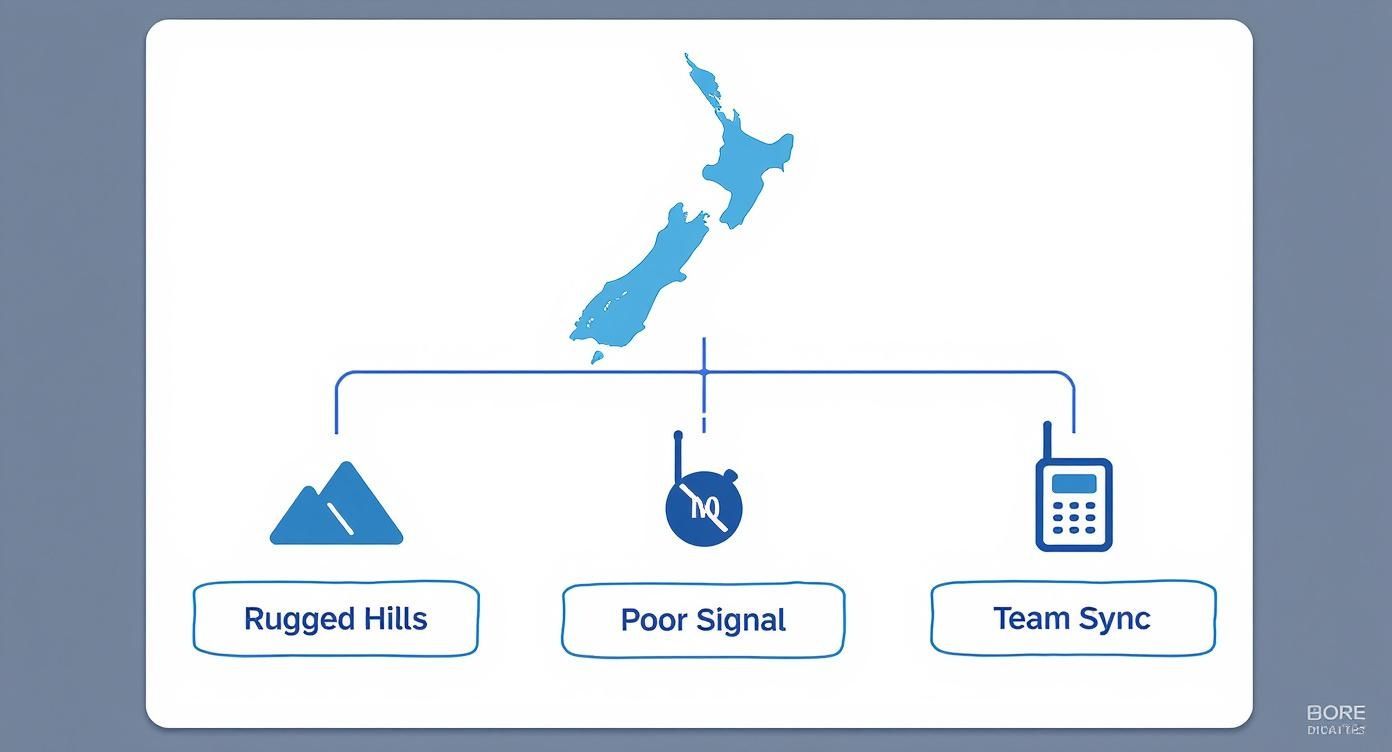
As you can see, the mix of rugged terrain, patchy signal, and the constant need for team synchronisation means a standard mobile phone often falls short.
To make sense of the options, it helps to see them side-by-side. Each technology solves a different problem, from instant team chat to connecting the most remote corners of your property.
Comparing Farm Communication Technologies
| Technology | Primary Use Case | Typical Range | Key Advantage |
|---|---|---|---|
| UHF/VHF Two-Way Radio | Instant, on-farm team coordination | 5-25 km (terrain dependent) | Independent of cellular; extremely reliable and rugged. |
| Satellite | Lone worker safety, data from remote sensors | Global | Works anywhere, providing the ultimate communication lifeline. |
| Cellular Booster (Cel-Fi) | Improving mobile signal in specific buildings | Up to 100m from internal antenna | Turns a weak signal into a usable one for calls and data. |
| Push-to-Talk over Cellular (PoC) | Nationwide communication for dispersed teams | Anywhere with cellular coverage | Combines radio-style chat with the reach of the mobile network. |
This table provides a quick overview, but the real value comes from understanding how each piece fits into your daily workflow. Let's dig deeper.
The Unfailing Workhorse: UHF and VHF Two-Way Radios
When you need instant, clear, and dependable communication across the farm, nothing beats a quality two way radio system. Operating on UHF (Ultra High Frequency) or VHF (Very High Frequency) radio frequencies, these devices are the champions of on-farm team coordination.
Top-tier brands like Motorola, Tait, and Icom engineer their gear for the toughest environments. They are seriously rugged and often carry an IP67 rating, meaning they are completely dust-tight and waterproof. This durability is essential for surviving the mud, rain, and daily grind of farm life.
The greatest advantage of a two-way radio network is its complete independence. It doesn't rely on cell towers, giving you a private, rock-solid communication line that works even in the deepest signal black spots on your land.
Whether it’s a handheld unit like a Tait TP9355 for staff on foot or a vehicle-mounted radio in the ute or tractor, these systems provide a direct link for immediate instructions and vital health and safety updates. For day-to-day jobs like shifting stock, coordinating machinery, or responding to an emergency, their reliability is unparalleled.
Lifelines Beyond The Grid: Satellite Solutions
For farms with areas truly off the grid—well beyond any cell tower or local radio network—satellite communication is non-negotiable. It’s the ultimate safety net for lone workers, guaranteeing a connection no matter how remote.
Systems from providers like Iridium and Inmarsat offer global coverage. This technology is a game-changer for:
- Lone Worker Safety: Devices like a Personal Locator Beacon (PLB) or an EPIRB for marine applications can send a distress signal with your exact GPS location to emergency services with one push.
- Data Transmission: Satellite enables remote IoT sensors—monitoring water tanks or soil conditions—to send critical data back to the farm office.
- Essential Contact: A Satellite Communicator or phone allows calls and texts, ensuring you can always reach staff, even in the most isolated locations.
Think of satellite technology as your farm's lifeline, ensuring help can be summoned and critical information can be relayed, regardless of terrestrial network availability.
Boosting Your Connection: Cellular Signal Boosters
While many farms have cellular black spots, there are often pockets of weak signal. A Cellular booster, such as a Cel-Fi unit, captures this faint signal, amplifies it, and rebroadcasts it across a specific area.
These are perfect for improving connectivity in key locations like the farm office, workshop, or house. A celfi booster can transform a useless one-bar signal into a strong, stable connection for both calls and data, allowing you to run the business side of your operation without interruption.
The Hybrid Solution: Push-to-Talk Over Cellular (PoC)
For managers of large or multiple properties, Push-to-Talk over Cellular (PoC) offers a powerful hybrid solution. These devices, like the Motorola TLK110, look and feel like a traditional two-way radio but use the cellular network for instant, nationwide communication.
With one press of a button, you can talk to an individual or a group anywhere in New Zealand, provided they have mobile coverage. This makes PoC an excellent tool for coordinating logistics, managing dispersed teams, or staying in touch with contractors on the road. It perfectly blends the simplicity of a portable radio with the vast reach of the country's cellular networks.
How Data and IoT Are Transforming Farm Management
Modern farms are becoming significantly smarter, moving beyond voice communication into a realm of data-driven decision-making, thanks to the Internet of Things (IoT).
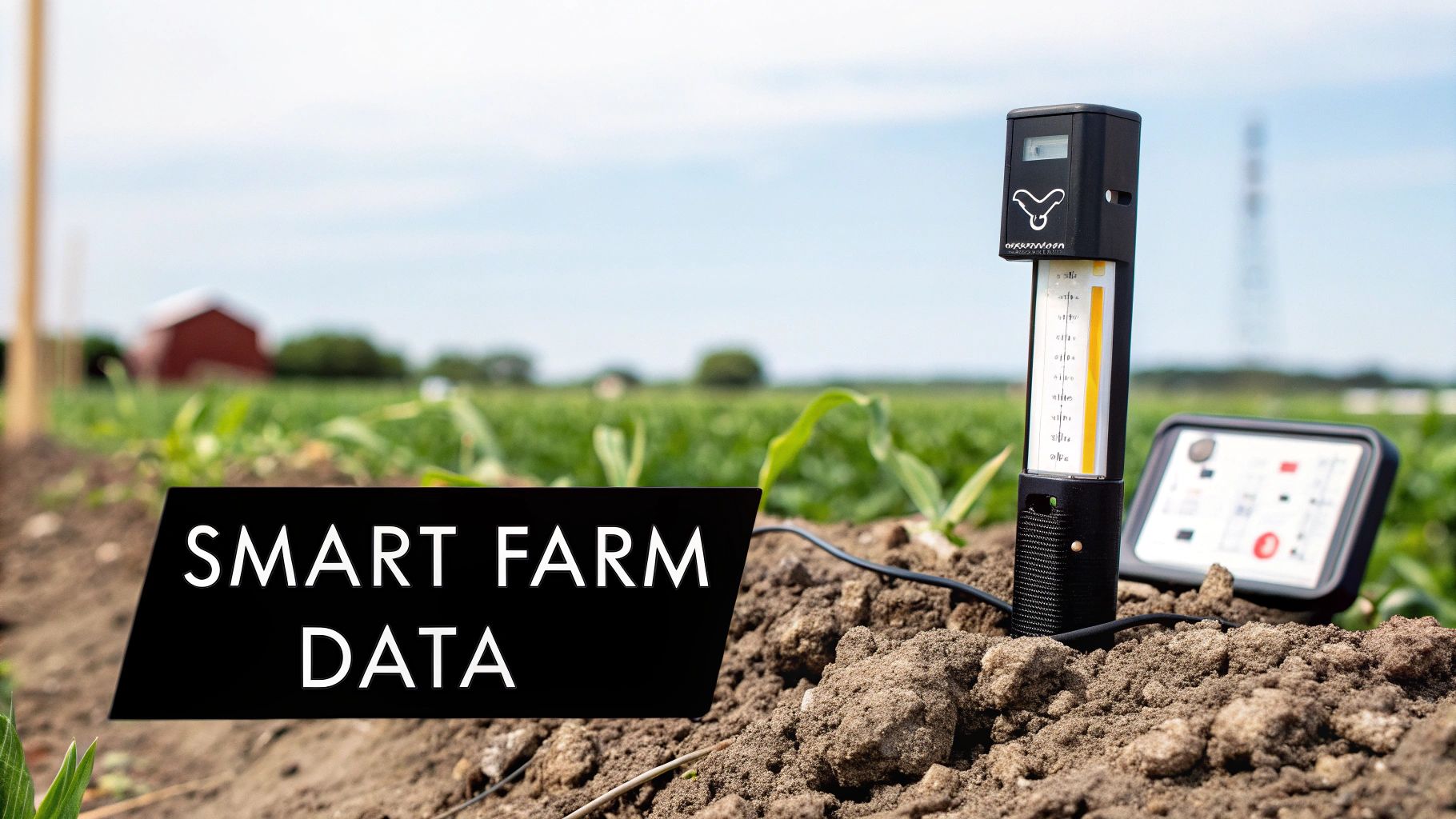
At its core, IoT is a network of connected sensors and devices distributed across your property, collecting crucial data. It’s like giving your farm a central nervous system. Instead of relying on guesswork, these smart sensors act as your eyes and ears, feeding you real-time information to manage resources, enhance security and camera systems, and boost productivity.
This network of devices uses available connections—cellular, satellite, or specialised radio networks—to deliver vital information directly to your phone or computer.
Practical Applications of IoT on the Farm
The true power of IoT lies in its practical applications. It’s about converting raw data into actionable insights that save time, money, and stress. Artificial Intelligence (AI) and machine learning are increasingly used to analyse this data for even deeper insights.
Here are a few ways Kiwi farmers are already using it:
- Precision Irrigation: Soil moisture sensors provide exact data on when and how much to irrigate, conserving water and ensuring crops get optimal hydration.
- Automated Monitoring: Receive instant alerts for low water tank levels, open gates, or drops in electric fence voltage, allowing for proactive management.
- Livestock Management: AI-powered solutions can assist with tasks like parasite management by providing fast and accurate analysis.
- Crop Management: Data from drones and sensors, analysed by AI, helps optimise planting, irrigation, and fertilisation.
This constant data stream enables a level of management control that was previously impossible. It's about making proactive decisions based on hard evidence. To see how this fits into the bigger picture, you can explore the role of AI, IoT, and edge computing in our detailed article.
Enhancing Security and Fleet Management
Data-driven technology is also a game-changer for asset security and operational awareness. GPS tracking and modern surveillance camera systems are leading this charge.
GPS tracking units fitted to your utes, tractors, and other machinery provide a live map of your entire fleet. This is invaluable for security and boosts efficiency by allowing you to dispatch the nearest vehicle to a job.
Modern surveillance technology, including CCTV camera systems from brands like Dahua, offers more than just recording.
Strategically placed CCTV cameras can monitor livestock, secure fuel stores, and ensure health and safety protocols are followed in busy areas. A dashcam in vehicles provides an objective record of events on the road.
Equipping staff with a body worn camera provides a clear record of events, which is invaluable for training, incident reporting, and maintaining a safe working environment.
The Growing Demand for AgriTech in New Zealand
The drive to adopt these smart technologies is accelerating nationwide. The Agritech Industry Transformation Plan and the Data Interoperability Working Group are creating a digital framework to support this growth.
Organisations like AgResearch are focusing on data science and digital tech to drive innovation, from predictive modelling to biosecurity. As a result, IoT and data-driven farming are now a present-day reality for competitive agricultural operations in New Zealand.
Choosing The Right Tech For Your Unique Farm
Finding the right communications solution is not about picking a single "best" gadget. It’s about building a complete, tailored system that meets the unique demands of your operation.
Every farm has different challenges, so the best solution starts with a thorough assessment of your needs. A specialist provider can guide you through this process, but thinking about these key questions beforehand will put you in a stronger position.
Key Questions To Guide Your Decision
Before investing in hardware, map out the core needs of your operation. Your answers will steer you towards the right mix of technology.
Ask yourself:
-
What is the primary goal? Is it instant team coordination for tasks like mustering? A robust UHF two way radio network is your likely starting point. Or is the main concern the health and safety of lone workers? This points towards satellite communicators or a PLB.
-
What is the terrain like? Hills and dense bush can block radio signals. You may need a repeater to boost coverage or a different technology entirely to fill in dead spots.
-
How large is the property? A small farm might be well-served by a simple set of handheld radios. A vast high-country station will likely need a more powerful vehicle-mounted radio system, potentially with satellite backup.
-
What is the budget? Investing in durable, rugged gear from trusted brands like Motorola or Tait pays off in the long run. Also consider flexible options like hire or lease agreements, especially for seasonal needs.
When you're looking at different solutions for your farm, it's worth checking out various small business internet and phone bundles to see how different options like VoIP, Fibre, and 5G stack up.
Building A Complete and Future-Proof System
A reliable communication system is more than just the main device; it’s an ecosystem of accessories and supporting gear. Skimping on these critical components is a false economy.
A specialist will help you select the right supporting kit to ensure your investment is tough, dependable, and future proof.
A world-class radio is useless if connected to a cheap antenna or powered by a failing battery. The supporting equipment is as important as the main device for clear, reliable communication.
Essential components include:
- Antennas: The right antenna is critical for maximising signal range. A flexible whip antenna is ideal for quad bikes, while a magnetic mount offers versatility. Brands like RFI and Pacific Aerials offer high-quality options.
- Durable Harnesses: A comfortable and secure radio harness, such as a Cactus harness, is essential for workers on foot, keeping the radio safe and hands free.
- Reliable Power Solutions: Keeping gear charged is non-negotiable. This means quality battery chargers for handhelds, a professionally installed vehicle power supply, and potentially solar solutions for remote equipment like repeaters or IoT sensors. A good lithium battery is a smart investment.
- Sturdy Mounting Systems: In a tractor or ute, equipment needs to be secured. Solid mounting systems, like Ram Mounts, protect your gear from vibration and impacts, using the right bracket and connector to ensure a firm fit.
Getting Your Radio System Licensed And Installed In NZ
You've chosen the hardware; now comes the crucial step of getting it licensed and properly installed. Getting this right from the start ensures a crystal-clear connection rather than an expensive paperweight.
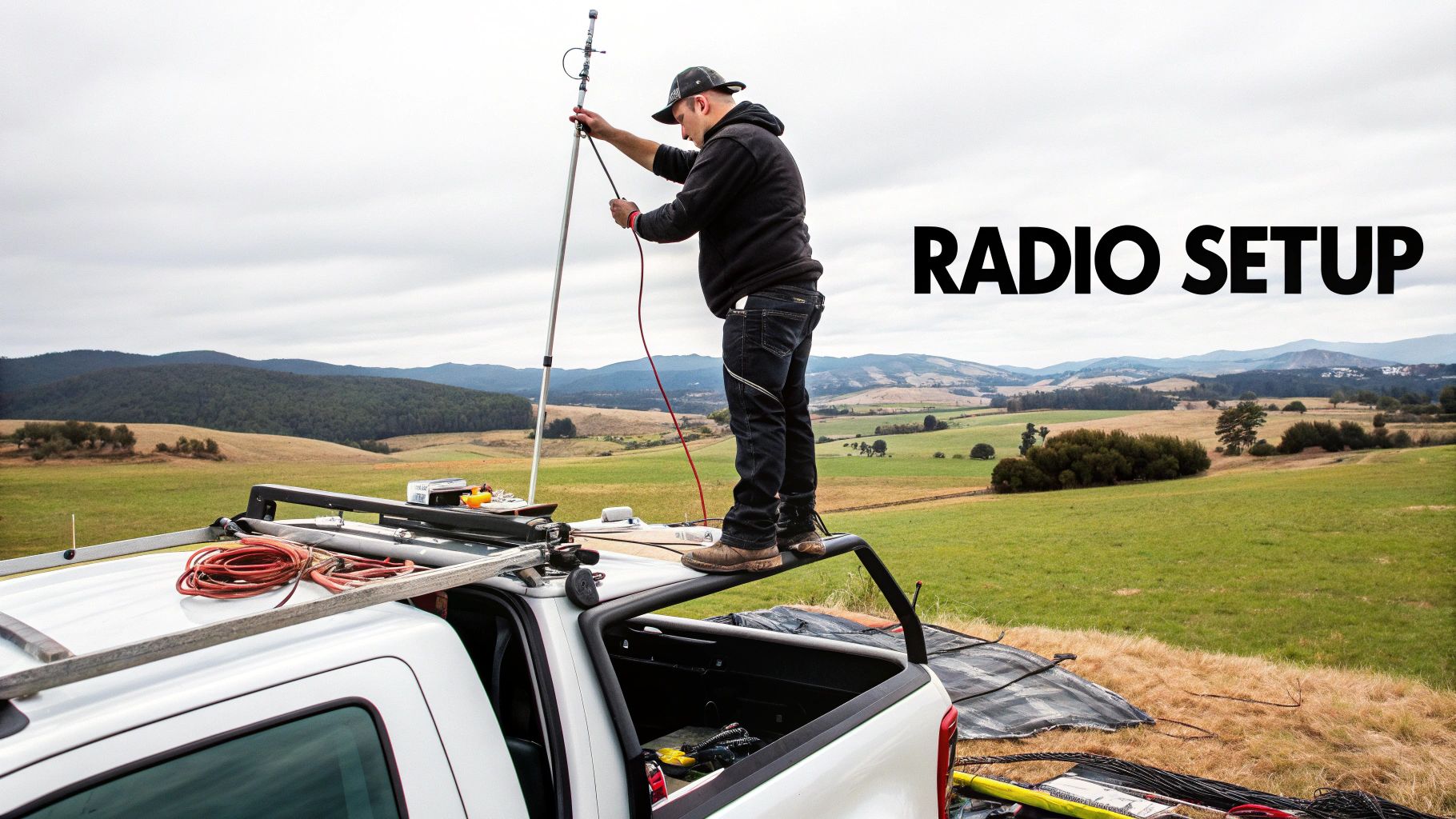
A professional setup is essential, especially when you're relying on it in remote locations.
Making Sense Of Radio Licensing
In New Zealand, understanding the difference between public and private radio frequencies is key to ensuring your farm communications are secure and free from interference.
-
Public UHF CB Channels: These are open to anyone with a compatible CB radio. No licence is needed, but you'll share the airwaves with others, meaning no privacy and potential for interference.
-
Licensed Private Frequencies: For any serious farming operation, this is the only way to go. You apply for a licence from Radio Spectrum Management (RSM), which allocates a private frequency exclusively for your use in your specific area. This guarantees clear, secure, and uninterrupted communication for your team.
A private radio licence from RSM is one of the smartest investments for your farm's communication. It gives you an exclusive, secure channel, so you'll never have to worry about public interference or having your business conversations overheard.
Working with a specialist provider is the easiest way to handle this. They will manage the RSM paperwork, making the process simple and ensuring you are fully compliant. For more on the technical side, our guide on radio communication basics is a great resource.
Best Practices For A Professional Installation
Even the best radio gear is useless if installed incorrectly. A professional installation maximises performance, range, and equipment lifespan—vital in a harsh farm environment.
A good installation focuses on:
- Optimal Antenna Placement: The antenna is the most critical part of your radio system. It should be mounted as high as possible with a clear line of sight, away from metal obstructions.
- Quality Cables and Connectors: Using high-quality coaxial cable and secure, weatherproof connectors is non-negotiable. A poor cable connector is a common cause of signal loss.
- Secure, Durable Mounting: All equipment must be tightly secured to withstand constant vibration. This protects the internal electronics and ensures your investment lasts.
- Serious Weatherproofing: Farm gear must be tough. Ensure your equipment is properly rugged and sealed. Look for an IP67 waterproof rating, meaning it can handle rain, mud, and high-pressure washing.
By getting the licensing and installation right, you build a communication network that is reliable, secure, and tough enough for New Zealand farming.
Keeping Your Comms Running: Maintenance, Support, and Hire Options
Your communication gear is only useful if it works reliably. Starting with quality equipment from trusted names like Tait, Motorola, or Icom is smart, but long-term reliability depends on a solid plan for maintenance and support.
Proper care protects your investment and ensures your gear is ready in an emergency, which is a massive plus for health and safety. In the demanding environment of a farm, routine maintenance is essential.
Smart Habits for Equipment Upkeep
A few simple, regular checks can prevent major issues and costly failures, keeping your communication network strong.
- Look After Your Batteries: Modern lithium batteries are powerful but require care. Avoid leaving radios on the battery charger 24/7 after they are full, and periodically inspect batteries for damage.
- Check Your Connections: Dust, moisture, and mud are enemies of clear audio. Regularly check that the antenna, microphone, and earpiece connectors are clean, tight, and free from corrosion.
- Give Them a Wipe Down: A quick clean of your handheld radios prevents dirt from damaging buttons and seals, extending the life of your rugged, waterproof equipment.
Why Expert Support and Hire Makes Sense
Having an expert to call on provides peace of mind. A specialist provider offers more than just sales; they provide expert repairs, programming adjustments, and sound advice on upgrades. This ongoing support keeps your technology performing at its best.
A very smart option for Kiwi farmers is equipment hire. It’s a cost-effective way to access the gear you need without a large upfront investment, fitting the practical realities of managing a farm budget.
Hiring gear is a brilliant solution for several scenarios:
- Seasonal Peaks: Need extra walkie talkies for harvest or shearing? Hiring is much more economical than buying gear that will sit unused for most of the year.
- Trying Before Buying: Unsure if a PoC system or new digital radios will work for your farm? Hire a setup for a few weeks to test it in your own environment before committing.
- One-Off Projects: For projects in remote areas, hiring a satellite communicator provides a crucial safety net without the long-term expense.
Quick Answers to Common Farming Comms Questions
Diving into new farm technology can feel complex. To help, here are straightforward answers to the questions we hear most from farmers across New Zealand.
What Is The Best Communication System For A Farm?
There is no single "best" system—the right solution is one that solves your specific problems. For reliable, instant chat across a few kilometres, a robust UHF two-way radio network from a brand like Motorola Radio is unbeatable.
However, if your main concern is a lone worker in an area with no mobile signal, a satellite communicator is essential for safety.
Do I Need A Licence For A Two-Way Radio In NZ?
You can use public UHF CB channels without a licence, but they are often crowded and offer no privacy.
For any professional farming operation, a private radio licence from Radio Spectrum Management (RSM) is highly recommended. It provides a dedicated, interference-free channel, ensuring your communications are clear and secure.
How Can I Get A Signal In A Mobile Black Spot?
If you have a weak or intermittent signal at a specific location, like the homestead or workshop, a cellular booster such as a Cel-Fi can make a huge difference. It captures that faint signal and amplifies it into a usable area of reception.
For true black spots with zero signal, satellite technology is the only reliable solution, as it operates independently of ground-based networks.
It's these coverage gaps that national data collection, like the Agricultural Production Census from 2017, helps to highlight. By tracking how technology is being used on farms across the country, the industry gets a clearer picture of where the challenges are. You can get a sense of the bigger picture from the full report on New Zealand's agricultural profile.
Ready to get your farm comms sorted? The team at Mobile Systems Limited lives and breathes this stuff. We design, install, and support practical solutions using the best gear from brands like Tait, Motorola, and Icom. Give us a call to chat about what your farm needs.
Related posts

- June 13, 2026
In 2024, New Zealand recorded 70 work-related fatalities and more than 209,000 injury claims. These statistics underscore the heavy responsibility...

- June 11, 2026
New Zealand's workplace fatality rate is 1.7 times higher than Australia's, a stark figure that highlights the urgent need for...

- June 10, 2026
Did you know that approximately 15% of New Zealanders work in isolated conditions, with many operating entirely outside of reliable...