
What Is Radio over IP (RoIP), and How Does It Actually Work?
Radio over IP takes the audio and the push-to-talk signal from a two-way radio system and turns it into data that can travel across an ordinary IP network, the same kind of network your internet connection, office WiFi, or company WAN already runs on. Once that signal is in IP form, it behaves like any other bit of network traffic. It can cross town on your existing internet connection, or cross the country over a private WAN, without needing its own dedicated wireless link or leased copper line.
Think of it as the radio equivalent of what VoIP did for phone calls. A phone call used to need a dedicated copper line running to the exchange. VoIP proved you could carry that same call over the internet instead, using far cheaper, far more flexible infrastructure. RoIP applies the same logic to two-way radio, letting you connect repeater sites, base stations, and control rooms over IP rather than a purpose-built radio link.
Hardware and Software Gateways
There are two broad ways to get a radio system onto IP. Some digital radio equipment, including newer DMR base stations, has IP connectivity built in natively, so the base station itself is already a node on your network. Older analogue systems typically need a separate RoIP gateway box sitting between the radio and the network, converting the analogue audio and signalling into IP packets and back again at the other end.
Either way, the principle is the same. Instead of running a dedicated physical or wireless path between two radio sites, you're using an IP network that's shared with everything else your business already does online.
The Real Benefits of RoIP for NZ Businesses
Why would a forestry operation, transport fleet, or multi-site business bother switching? Three reasons come up again and again, and only one of them is really about money.
Lower Ongoing Costs
The biggest saving isn't the radios themselves, it's what you stop paying for every month. Leased telephone lines and dedicated microwave links both carry ongoing rental costs that never go away, whether you're using the link heavily or barely at all. RoIP uses network capacity you're likely already paying for, so linking a second or third site often costs little beyond the initial setup. Standard networking hardware such as routers and switches is also cheap and gets cheaper every year, unlike the specialised gear a microwave link needs.
Better Reliability Through Redundancy
A dedicated microwave link is a single path. If the dish gets knocked out of alignment in a storm or the line goes down, that link is gone until someone fixes it. An IP network, particularly one built with the resilience in mind, can route around a failure. If one path drops out, traffic can often find another way through, rather than the whole connection going dark.
Genuine Interoperability
Once radio audio is in the IP domain, it's no longer locked to a single frequency band or radio type. UHF, VHF, and even different digital protocols can be bridged together, and the same network can carry radio traffic alongside other systems like phone extensions or dispatch consoles. For an operation juggling UHF handhelds in the field and a VHF marine base at the depot, this is the difference between two separate silos and one connected system.
RoIP vs Microwave Links and Leased Lines
So how does RoIP actually stack up against the two traditional ways of linking radio sites? Here's the straightforward comparison.
| Method | Ongoing Cost | Setup Complexity | Best Suited To |
|---|---|---|---|
| Leased telephone line | High, fixed monthly rental regardless of use | Low, but dependent on telco provisioning | Legacy systems not yet due for an upgrade |
| Point-to-point microwave | Moderate to high, plus tower or mast access | High, needs line-of-sight and precise alignment | Sites where no suitable IP network exists at all |
| Radio over IP | Low, uses existing network capacity | Moderate, depends on IT infrastructure already in place | Multi-site operations with a reasonable internet or WAN connection |
Microwave links still earn their place where there's genuinely no usable IP path between two sites, such as a remote hilltop repeater with no internet service at all. But for the majority of NZ businesses running sites in towns, industrial parks, or anywhere with a decent broadband or 4G connection, RoIP is now the more sensible default.
Who's Actually Using RoIP in NZ Right Now?
Surf Life Saving New Zealand gives a genuinely useful, home-grown example of RoIP solving a real problem. With lifeguards and volunteer crews patrolling thousands of kilometres of coastline through dozens of separate clubs, the organisation needed a way to unify radio traffic from clubs, Coastguard New Zealand, and the NZ Police Maritime Unit into a single, nationally coordinated picture, without locking everyone into one radio brand or one type of hardware.
Watch: How SLSNZ Unified Its Radio Networks Over IP
The result was a national operations centre able to monitor and coordinate radio traffic from multiple agencies and regions at once, with operators able to work from fixed consoles or, if needed, a laptop somewhere else entirely. That's the practical value of RoIP in action: not a novelty, but a working solution to a genuine coordination problem across a large, geographically spread NZ organisation.
The same logic scales down. A forestry contractor running crews across two blocks, or a transport company with a depot in Tauranga and another in Rotorua, faces a smaller version of exactly the same challenge, and the same technology applies.
Does RoIP Change Your RSM Licensing?
Here's a common misconception worth clearing up straight away: RoIP is a backhaul method, not a licensing category. Radio Spectrum Management, under the Radiocommunications Act 1989, licenses the radio frequency your handhelds and base stations actually transmit on. How you link the repeater sites together behind the scenes, whether by microwave, leased line, or IP network, doesn't change that requirement one bit.
If your business already holds a land mobile radio licence, moving your site linking to RoIP doesn't add a new fee or a new category. You'll still need the same RF licence you'd need with any other backhaul method.
| Licence Category | Covers | Annual Fee (effective 1 July 2026) |
|---|---|---|
| Standard individual licence | A single frequency assignment for general commercial use | $190 |
| Land mobile (up to 5 locations) | Up to five repeater locations on a common frequency | $800 |
| Land mobile (unlimited locations) | Unlimited repeater locations on a common frequency | $1,800 |
These are the RSM fees effective from 1 July 2026. If you're planning to link several repeater sites over IP, it's the land mobile category that matters, not anything specific to RoIP itself. Mobile Systems Limited can talk you through which category actually fits your setup before you commit to a network design.
Is RoIP the Right Fit for Your Radio Network?
RoIP isn't the answer for every radio system, and it's worth being honest about that upfront.
RoIP Is Likely Worth Investigating If You:
- Operate two or more sites already connected to a reasonably reliable internet or private WAN connection
- Are currently paying ongoing rental on a leased line or microwave link you'd like to retire
- Need to bridge different radio types, brands, or bands into one coordinated system
- Are planning a move to a new DMR base station and want IP connectivity built in from the start
RoIP Is Probably Not Worth It If You:
- Operate a single site with no need to link to anywhere else
- Have no reliable internet connection at one or more of your sites, and no realistic way to get one
- Run a small analogue system that's working fine and isn't due for replacement
Figure out where your operation sits on that list and you've got a genuine answer, not a sales pitch.
Practical RoIP and IP-Connected Radio Networks from Mobile Systems
Mobile Systems Limited has been supplying, installing, and servicing radio communications for New Zealand businesses from Mount Maunganui for over 25 years. When it comes to RoIP-style networking, we take a straight-up approach: we tell you honestly whether IP linking suits your sites, and we won't sell you a network upgrade you don't need.
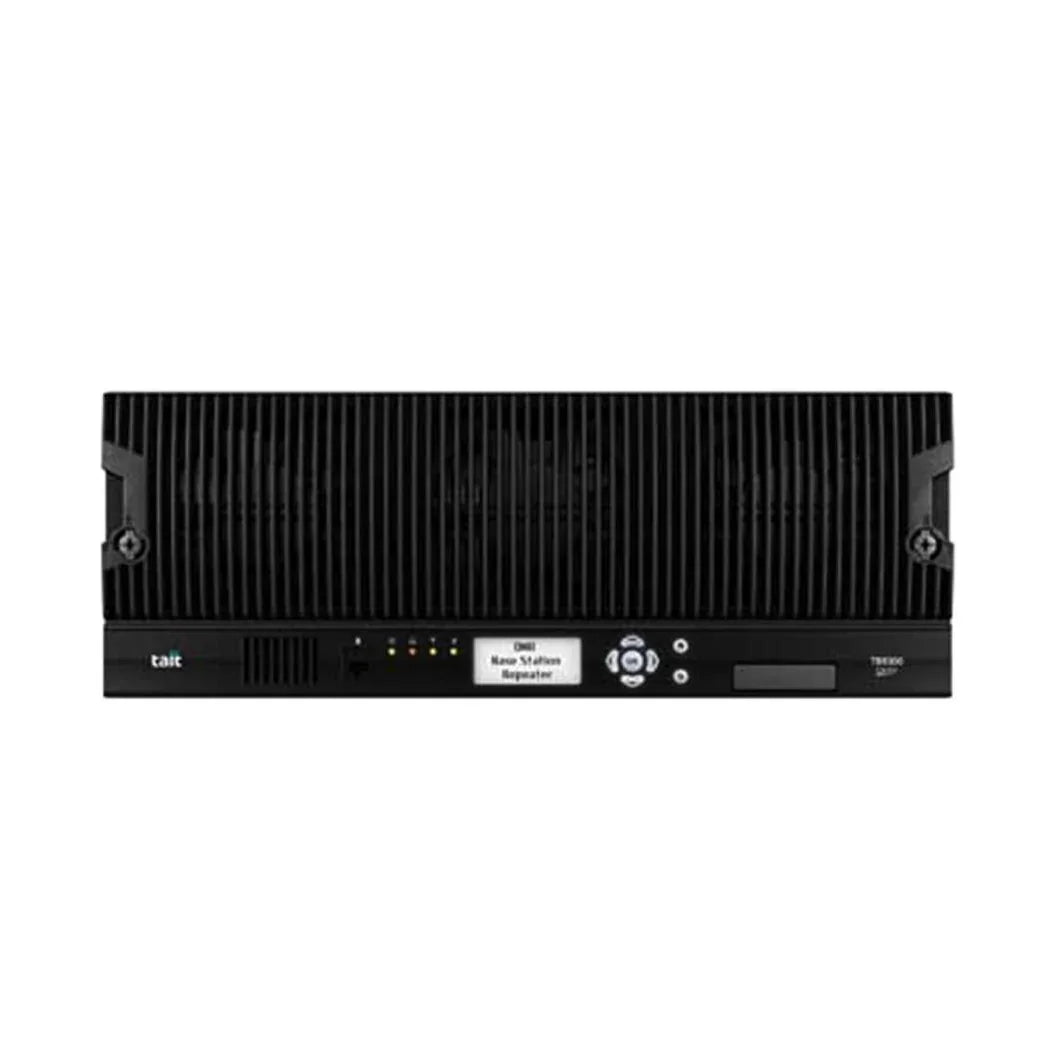
Right now, our practical route into IP-connected radio networking is the Tait TB9300, a trunked, IP-connected DMR Tier 2/3 base station that gives you native network linking, remote management, and a proven migration path from an existing analogue system. We don't stock third-party standalone RoIP gateway appliances for retrofitting older analogue repeaters, so if your setup genuinely needs one of those, we'll say so and point you toward the right specialist rather than pretend otherwise.
What We Handle
Network Design
Assessing whether your sites and connectivity genuinely suit IP linking before you spend a cent.
IP-Connected Hardware
Supply and installation of the Tait TB9300 and other digital base stations built for network linking.
RSM Licensing
Guidance through frequency and land mobile licensing so your network stays compliant.
Ongoing Support
Maintenance and servicing to keep a multi-site network reliable once it's live.


