
Public Radio Channels Frequently Asked Questions
Why Use PRS?
PRS radios are small, lightweight and powerful
PRS radios are perfect for keeping a group together, whether you're hiking, camping, at the marina, on a family road trip, at a busy event, or keeping track of the kids around the neighbourhood.
What is PRS?
New Zealand's Personal Radio Service is a short-range, licence-free, two-way voice radio service for general use
PRS is meant for direct, personal voice communication among two or more people, operating on the UHF CB band under a General User Radio Licence, meaning you don't need to apply for an individual licence to use it. In brief, PRS radios are an inexpensive and easy way to keep a team, family, or group in touch.
How many channels does PRS have?
New Zealand's PRS band has 80 channels, expanded from the original 40 in 2011
All PRS radios sold in NZ cover the full channel set, transmit in FM, and are limited to 5 watts output, whether handheld or vehicle-mounted. Typical direct (simplex) range varies from about 5 to 10 kilometres in urban areas to 20 kilometres or more in open countryside. From a good hilltop position, distances of 50 kilometres are achievable even with low-powered handheld equipment, since UHF is a line-of-sight technology and height matters more than raw power.
PRS really comes into its own when repeaters are used. Repeaters are installed on hills and retransmit signals received on one channel back out on a paired channel, extending coverage well beyond what a simplex signal could reach. Some are run by community groups, others by commercial operators, but many are free to use. In NZ, repeater pairs run on channels 1 to 8 (output) paired with 31 to 38 (input), and 41 to 48 (output) paired with 71 to 78 (input). Distances of 50 to 100 kilometres are commonly achieved via repeaters, even with handheld transceivers.
What equipment is available?
Both handheld and vehicle-mounted equipment is available for PRS
All PRS radios cover the full 80-channel band and can be used with repeaters. Vehicle-mounted units typically run off the vehicle's 12V supply with an external roof-mounted antenna, and put out the full 5 watt legal limit, so there's very little difference in raw range between a budget and premium mobile unit. Better units simply offer more useful features, such as automatic channel scanning, a signal strength meter, a frequency readout alongside the channel number, and CTCSS tone squelch to filter out unwanted chatter.
Handheld transceivers vary more widely in both features and price. The cheapest sets skip rechargeable batteries and external antenna or power connections, but for short-range use they're compact and get the job done. Mid-range and better handhelds typically include 5 watt output, a rechargeable battery pack and charger, CTCSS subtone, voice-operated transmit (VOX), and the ability to connect an external antenna and power source, which lets a handheld be run off a vehicle for extra range.
What are the different controls found on most PRS transceivers?
The core controls are straightforward once you know what each one does
- Channel select: switches between the available channels, either via a rotary knob or up/down buttons.
- On/off/volume: self-explanatory.
- Squelch or mute: adjust to the point where background noise stops. This allows silent monitoring of a channel; if someone transmits, the squelch is broken and you hear their voice. Loosen the squelch if signals are weak and you're missing calls.
- Simplex/duplex switch: leave in simplex if operating direct with no repeater. To use a repeater, select the appropriate repeater channel and switch to duplex.
- Scan: searches across the channel set for activity, stopping as soon as it finds a busy channel.
Other controls you may come across include CTCSS, memory channels, power output select, and VOX. None of these are essential for basic operation, and the radio's instruction manual will walk you through them.
For whom is PRS unsuitable?
The low cost of PRS radio (especially compared to a licensed commercial system) is attractive, but like anything cheap, it has real limitations
PRS radio will not reliably do the following:
- Long-distance backcountry communication. On the main roads, a PRS radio is fine. But in remote areas where genuine long-distance coverage is required, it's next to useless. For serious backcountry trips, New Zealand trampers and hunters can hire an HF radio through the volunteer Mountain Radio Service, which provides scheduled radio contact for people heading into remote terrain.
- Reliable coverage across an entire city. Five watts simplex isn't enough for citywide communication. Metropolitan coverage is possible via UHF repeaters, but these can be busy, interfered with, or switched off without warning. For serious business communication needs, it's worth talking to a specialist two-way radio provider who can supply a properly licensed system with dedicated repeater access.
- Privacy. PRS is a public, shared medium, and anyone with a compatible radio can potentially hear your conversation. CTCSS filters out unwanted chatter on your end, but it does not encrypt or make your transmission private. If confidential, interruption-free communication is required, a licensed private channel or a mobile phone is the better option.
Whether PRS suits your needs or you require a licensed, private commercial radio system, the team at Mobile Systems Limited can help you choose the right setup for your operation. Get in touch with our specialists.
Related posts
- September 24, 2023
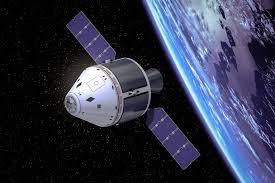
Questions and answers about low Earth orbit (LEO) satellites Q: What is a LEO satellite? An LEO satellite is a...

- May 31, 2017
Over how great a distance will these radios communicate? VHF radios usually operate in the 1 to 2 watt range...