
Cost to Install Radio in Truck: A Professional NZ Guide (2026)
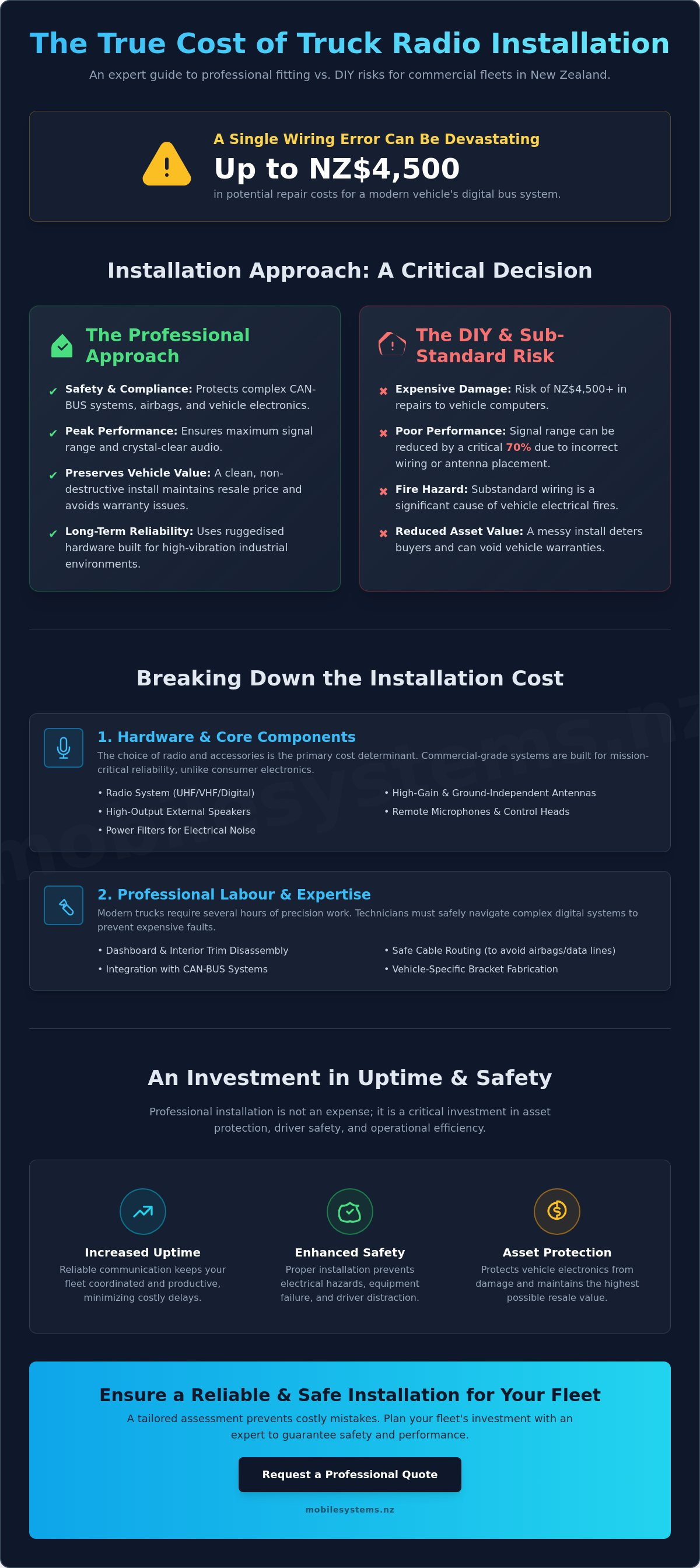
A single wiring error in a modern vehicle's digital bus system can lead to repair costs of up to NZ$4,500. While the initial cost to install radio in truck units varies based on your specific requirements, the financial risk of a sub-standard fitting often outweighs the perceived savings of a DIY approach.
A single wiring error in a modern vehicle's digital bus system can lead to repair costs of up to NZ$4,500. While the initial cost to install radio in truck units varies based on your specific requirements, the financial risk of a sub-standard fitting often outweighs the perceived savings of a DIY approach.
You likely understand the frustration of losing contact in remote New Zealand areas or the concern of seeing a cluttered dashboard. Maintaining clear, reliable communication while protecting your vehicle's resale value is a priority for any professional operator.
This guide explains the technical factors influencing installation pricing, from remote-head mounting to specialized antenna placement. You'll discover how to ensure your system meets current NZ standards and why expert integration is a critical investment for your fleet's safety and uptime.
Key Takeaways
- Understand how hardware choice and labor complexity determine the total cost to install radio in truck systems for commercial use.
- Learn the functional differences between Analog, Digital (DMR), and P25 technologies to select the right radio for your operational environment.
- Discover why strategic antenna placement and professional cable routing are essential for maintaining signal range and vehicle safety.
- Identify the significant risks associated with DIY installations, including potential damage to modern vehicle electronic bus systems.
- Gain insights into the information required for an accurate fleet installation quote to ensure long-term communication reliability.
Understanding the Cost Factors of Truck Radio Installation
Calculating the total cost to install radio in truck systems involves more than a simple hourly rate. It requires an assessment of the vehicle's electronic architecture and the specific communication needs of the business. A professional installation ensures that the hardware functions at peak performance without compromising the vehicle's existing safety systems or electrical integrity.
Professional communication systems rely on two-way radio technology, which operates on different frequencies and power levels compared to standard consumer electronics. This technical distinction is the primary reason why professional fitting is priced differently than a basic stereo swap.
To better understand this concept, watch this helpful video regarding the complexities of modern vehicle radio installations:
Communication vs. Entertainment Systems
Professional Vehicle-Mounted Two-Way Radios are built for high-vibration environments and mission-critical reliability. Unlike entertainment head units, these devices require dedicated high-current power feeds to handle transmission bursts. They don't just sit in a standard dashboard slot; they often require specialized mounting brackets or remote-head configurations to fit within modern, compact truck cabins.
Ruggedised hardware is essential for heavy-duty truck environments where dust and constant movement are common. While a consumer-grade radio might seem cheaper initially, it lacks the shielding and durability required for industrial use. Specialized mounting solutions also add to the final bill but prevent the radio from becoming a projectile in the event of a collision.
The Role of Labour in Professional Fitting
Modern trucks are sophisticated machines. They contain complex CAN-BUS data systems and integrated safety features like curtain airbags. A standard commercial truck installation typically requires several hours of precision work. Technicians must carefully route cables to avoid interference with the vehicle's digital systems, which can trigger expensive fault codes if handled incorrectly.
The total cost to install radio in truck assets is generally built upon three primary pillars:
- Hardware selection: The choice between basic UHF or advanced digital systems.
- Installation labour: The time required to safely disassemble dash panels and route wiring.
- Specialized accessories: High-gain antennas, custom brackets, and power management modules.
Choosing a "cheap" installation often leads to long-term issues. Substandard wiring can cause electrical fires or reduce your communication range by up to 70%. When managing a fleet, the investment in professional fitting pays for itself through increased uptime and the preservation of vehicle resale value. A tailored assessment from a qualified technician often prevents these costly mistakes before they happen.
Hardware Costs: Choosing Your Radio System
Hardware selection constitutes a significant portion of the total cost to install radio in truck fleets. The price of the equipment depends on whether your operation requires a basic UHF CB unit or a high-tier commercial transceiver. All hardware must comply with official radio equipment standards to ensure legal operation within New Zealand.
Selecting the correct components involves evaluating the environment where your vehicles operate. A standard 80-channel UHF radio is suitable for general public communication, but commercial fleets often require higher transmission power and private channels to avoid interference.
- Antennas: High-gain antennas are essential for flat terrain, while specialized ground-independent antennas are better for hilly regions.
- External Speakers: These improve audio clarity in high-noise truck cabins.
- Remote Microphones: These allow for ergonomic placement, ensuring the driver can communicate without reaching across the dashboard.
- Power Filters: These components eliminate electrical interference from the vehicle's alternator and electronic systems.
UHF vs. VHF: Which System Fits Your Industry?
The choice between UHF and VHF hardware impacts both the initial bill and long-term performance. UHF is the standard for most road transport due to its ability to penetrate urban structures and provide clear line-of-sight communication. However, forestry and rural transport sectors often prefer VHF because its longer wavelength better navigates dense foliage and rugged terrain.
Consulting a Vehicle Two-Way Radios: A Buyer’s Guide for Fleets helps you determine which frequency band aligns with your specific industry requirements. This prevents the common mistake of purchasing hardware that cannot provide the necessary coverage in remote areas.
Digital (DMR) and Advanced Features
Modern digital systems (DMR) offer superior audio quality and advanced data capabilities. While the hardware investment for digital units is typically higher than analog, the benefits include integrated GPS tracking and emergency "lone worker" buttons. These features are critical for maintaining safety standards in isolated New Zealand environments.
When calculating the cost to install radio in truck assets, consider the longevity of Tier 1 brands. These manufacturers provide better parts availability and firmware support than budget alternatives. Investing in high-quality hardware reduces the frequency of replacements and ensures your fleet remains compliant with evolving technical regulations.
A professional hardware consultation ensures your system is fit for purpose and built to last.
The Professional Installation Process: What You Are Paying For
Professional labor accounts for a significant portion of the total cost to install radio in truck assets because it involves technical calibration beyond simple physical mounting. A qualified technician ensures the system operates at peak efficiency while maintaining the electrical integrity of the vehicle's modern systems. This process prevents the common performance issues associated with amateur fittings.
The installation sequence follows a strict protocol to ensure long-term reliability. Technicians focus on four critical areas during the fitting process:
- Strategic Antenna Placement: Identifying the optimal ground plane on the truck's chassis to ensure a symmetrical radiation pattern and maximum range.
- Precision Cable Routing: Pathing coaxial cables away from high-voltage lines and moving parts to prevent signal degradation and physical wear.
- Power Management: Implementing direct-to-battery wiring with high-quality, weather-sealed fuses to provide stable voltage during high-power transmissions.
- System Calibration: Verifying the entire setup with specialized diagnostic equipment to confirm that all components are communicating correctly.
A tailored assessment of your vehicle's layout is often the first step in determining the most efficient installation path.
Antenna Tuning and VSWR Testing
Voltage Standing Wave Ratio (VSWR) is a critical measurement that indicates how much power is being reflected back into the radio instead of being radiated through the antenna. If this ratio is too high, it can permanently damage the radio's final power transistors. Professionals use antenna analyzers to tune the whip length specifically for the frequencies your fleet utilizes.
Poor antenna grounding is a frequent cause of reduced communication range. In trucks with fiberglass or composite cabs, technicians must install specialized ground-independent antennas or create an artificial ground plane. This technical step is essential for achieving the clear, long-distance communication required in rugged New Zealand terrain.
Noise Suppression and Interference Management
Modern trucks are filled with sensitive Electronic Control Units (ECUs) and digital sensors. Improperly installed radios can generate Radio Frequency Interference (RFI), which may cause dashboard warning lights or disrupt existing fleet tracking and GPS systems. Professional installers use ferrite beads and shielded wiring to isolate the radio's signal.
Eliminating "engine hum" or alternator whine is another benefit of professional fitting. Technicians identify the source of electrical noise and apply appropriate power filters to ensure your audio remains clear even when the vehicle is under heavy load. This attention to detail protects your vehicle's sensitive electronics while ensuring your communication remains crisp and professional.
The Hidden Risks and Costs of DIY Radio Installation
Attempting a self-installation might appear to reduce the initial cost to install radio in truck units, but the long-term financial risks often exceed the savings. Modern commercial vehicles are equipped with sensitive digital architectures where a single wiring mistake can lead to significant repair bills. Industry data indicates that correcting errors in a vehicle's digital bus system can cost up to NZ$4,500.
Electrical safety is the primary concern for any fleet operator. Professional installers use specific wire gauges and high-quality fusing tailored to the radio's current draw. DIY attempts often involve "piggybacking" off existing circuits, which can lead to overheated wiring or electrical fires. If a fire occurs and the cause is traced to non-compliant electrical work, insurance providers may decline the claim.
Warranty protection is another critical factor. Most vehicle manufacturers and equipment suppliers require professional fitting to maintain warranty validity. An amateur installation that interferes with the truck's Electronic Control Unit (ECU) or triggers fault codes provides a justification for manufacturers to void your coverage.
Safety and Vehicle Integrity
Modern truck dashboards are densely packed with HVAC ducting, wiring looms, and airbag modules. Drilling into these panels without specialized knowledge of the sub-structures can cause irreversible damage. A professional install prioritizes vehicle integrity, using existing mounting points or custom brackets to avoid permanent dashboard scarring.
Ergonomics also play a vital role in driver safety. Controls and microphones must be positioned so they don't obstruct the driver's view or require awkward reaching during operation. A clean, professional installation maintains the truck's resale value by ensuring the cabin remains tidy and the equipment is securely integrated into the interior design.
Regulatory Compliance in New Zealand
Radio Spectrum Management (RSM) governs the use of all radio equipment in New Zealand. While standard UHF CB radios operate under a no-fee General User Radio Licence (GURL), commercial operations often require private channels. These private frequencies allow for higher transmission power, up to 25 watts, but they require a specific commercial licence and type-approved hardware.
Professional technicians ensure your system stays within legal power limits and frequency tolerances. Operating non-compliant equipment can result in interference with emergency services or other commercial operators, leading to potential fines from RSM. For a system that meets all legal and safety standards, consider a Custom Two-Way Radio System Design & Installation assessment.
Selecting a qualified partner for your fleet ensures that your communication remains reliable without risking your vehicle's safety or legal standing. If you want to avoid the pitfalls of DIY fitting, contact our technical team for a professional installation quote.
Requesting a Quote: How to Plan Your Fleet Investment
To determine the final cost to install radio in truck assets, providing specific technical details is essential. Vague requests often lead to inaccurate estimates that don't account for the unique electrical requirements of your vehicle. An accurate quote relies on understanding the vehicle's make and model alongside your specific communication objectives.
When requesting a consultation, prepare to provide the following information:
- Vehicle Specifications: The year and model of the truck, as modern dashboard architectures require different mounting hardware and labor time.
- Operational Environment: Whether the vehicle operates in urban areas, dense forestry, or mountainous terrain.
- System Integration: Requirements for connecting the radio to existing fleet tracking systems or GPS units.
- Fleet Size: The number of vehicles requiring installation, which influences the logistics of the project.
A tailored assessment often prevents costly mistakes in hardware selection. By evaluating the total cost of ownership over the life of the vehicle, you'll find that professional installation reduces maintenance expenses and prevents premature equipment failure.
Assessing Your Coverage Needs
New Zealand's geography presents unique challenges for radio propagation. If your fleet operates across the Kaimai Ranges or the Southern Alps, a standard UHF setup might require high-gain antennas or repeater access to maintain connectivity. In contrast, local site coverage for a construction zone requires a different technical approach than nationwide transport logistics.
For truly remote operations where terrestrial radio signals are obstructed, integrating satellite phones or hybrid cellular boosters provides a necessary safety net. These systems ensure that your drivers are never out of contact, regardless of the terrain. Our technicians evaluate these variables during the quoting phase to ensure the proposed hardware meets your actual field requirements.
Partnering with Mobile Systems
Mobile Systems Limited provides a comprehensive approach to vehicle communications from our base in Mount Maunganui. We understand the demands of New Zealand industries, from heavy transport to rural contracting. Our mobile service vehicles allow for on-site installations, which is a significant benefit for large truck fleets that cannot afford the downtime of sending multiple vehicles to a workshop.
Choosing a partner with nationwide support ensures that your communication system remains functional throughout its service life. We don't just provide hardware; we deliver a managed solution that includes technical support and regulatory compliance. This professional oversight protects your investment and ensures your fleet operates within legal standards.
For an accurate assessment of your requirements, contact Mobile Systems for a professional consultation. Our team will provide a detailed breakdown of the cost to install radio in truck units based on your specific fleet needs and operational goals.
Securing Your Fleet's Communication Infrastructure
Investing in professional fitting ensures that your two-way radio system operates at peak performance while protecting your vehicle's sophisticated electronic systems. By prioritizing technical calibration and strategic antenna placement, you avoid the common pitfalls of signal degradation and electrical interference. The true cost to install radio in truck assets is a measure of long-term reliability and driver safety rather than just the initial labor fee.
As a Tait Communications Authorized Partner with nationwide mobile support vehicles, Mobile Systems Limited understands the specific demands of New Zealand's commercial transport systems. Our technicians focus on delivering clean, compliant, and durable installations that maintain your fleet's operational uptime. A tailored approach ensures your hardware is fit for purpose and compliant with all local radio regulations. This technical oversight prevents expensive repairs to digital bus systems and maintains the vehicle's resale value.
Ready to optimize your vehicle's connectivity? Request a professional radio installation assessment to ensure your fleet remains safe and connected across any terrain. A clear, reliable communication system is the foundation of efficient fleet management.
Frequently Asked Questions
How long does it take to install a two-way radio in a truck?
A standard professional installation typically takes between two and four hours to complete. The exact timeframe depends on the vehicle's dashboard complexity and the specific routing requirements for the antenna and power cables. More advanced setups involving remote-head mounting or integration with fleet tracking systems may require additional time for calibration.
Can I use my existing antenna for a new radio system?
You can only reuse an existing antenna if its frequency range matches the specifications of your new radio. However, older antennas often suffer from internal corrosion or cable degradation that can significantly reduce signal quality. A technician will conduct an SWR test to determine if your current hardware is safe to use without risking damage to the new transceiver.
What is the difference between UHF and VHF for truck communications?
UHF is the standard for most road transport because it penetrates urban structures and provides clear line-of-sight communication. VHF is preferred for forestry and rugged rural sectors as its longer wavelength navigates dense foliage and hilly terrain more effectively. This choice is a primary factor in the hardware component of the total cost to install radio in truck assets.
Do I need a license to operate a commercial radio in New Zealand?
Commercial operators require a specific license from Radio Spectrum Management (RSM) for private channels and higher transmission power. Standard 5-watt UHF CB radios operate under a General User Radio Licence (GURL), which doesn't require an application or fee. Professional installers ensure your equipment is programmed to comply with the legal standards for your specific industry.
Why is my truck radio making a buzzing noise when the engine is on?
Buzzing or humming is usually caused by electrical interference from the vehicle's alternator or electronic control units. This noise often indicates poor grounding or the absence of a dedicated power filter in the circuit. Professional installation resolves this by using shielded cabling and direct-to-battery wiring to isolate the radio from the vehicle's electrical noise.
Is it better to mount the radio on the dash or in the overhead console?
The optimal mounting location depends on the truck's cabin layout and the driver's ergonomic needs. Overhead consoles offer excellent visibility but require reinforced mounting to prevent vibration under heavy use. Dashboard mounts remain common, though many modern trucks favor remote-head installations where the main unit is concealed to save space while keeping controls accessible.
Can professional installation help with poor reception in rural areas?
Professional installation significantly improves rural reception through precise antenna tuning and optimal placement on the vehicle chassis. Technicians use specialized analyzers to ensure the Voltage Standing Wave Ratio (VSWR) is as low as possible, which maximizes radiated power. Correcting a poor installation can often restore lost communication range by up to 70% in remote locations.
Does a professional install include a warranty on the workmanship?
Qualified installers provide a warranty on their workmanship to ensure the system remains reliable under demanding industrial conditions. This coverage protects your investment against issues like loose connections, mounting failures, or cable wear. Choosing a reputable provider ensures that the labor portion of the cost to install radio in truck fleets is backed by technical support and long-term accountability.
Related posts

- June 27, 2026
Searching "commercial radio suppliers NZ" turns up broadcasting licences before real hardware. Here's how to cut through that, and what's...

- June 17, 2026
Did you know that fines for an expired Road User Charges (RUC) license in New Zealand can exceed $1,000 per...