

GST Inclusive. Discounts and Shipping calculated at checkout.
Pickup available from the Mobile Systems Showroom: 1/14 Portside Drive, Mount Maunganui. We will notify you when your order is ready for collection.
IECEx and ATEX certified for hazardous environments. Available across four frequency bands: VHF 136–174MHz, VHF 150–162MHz, UHF1 380–470MHz and UHF2 450–520MHz.
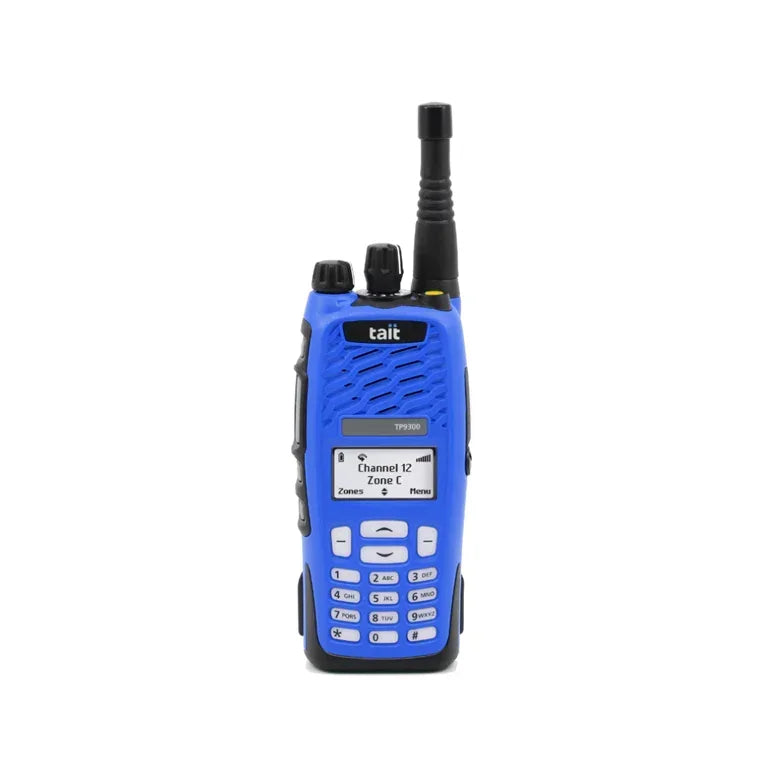
The Tait TP9361 IS is a multi-mode DMR portable built for teams working in explosive atmospheres, fuel depots, gas platforms, grain handling, dairy processing and underground mining. It carries full IECEx and ATEX certification, meaning every internal circuit is energy-limited so no spark or surface temperature can reach ignition level, even under a fault condition.
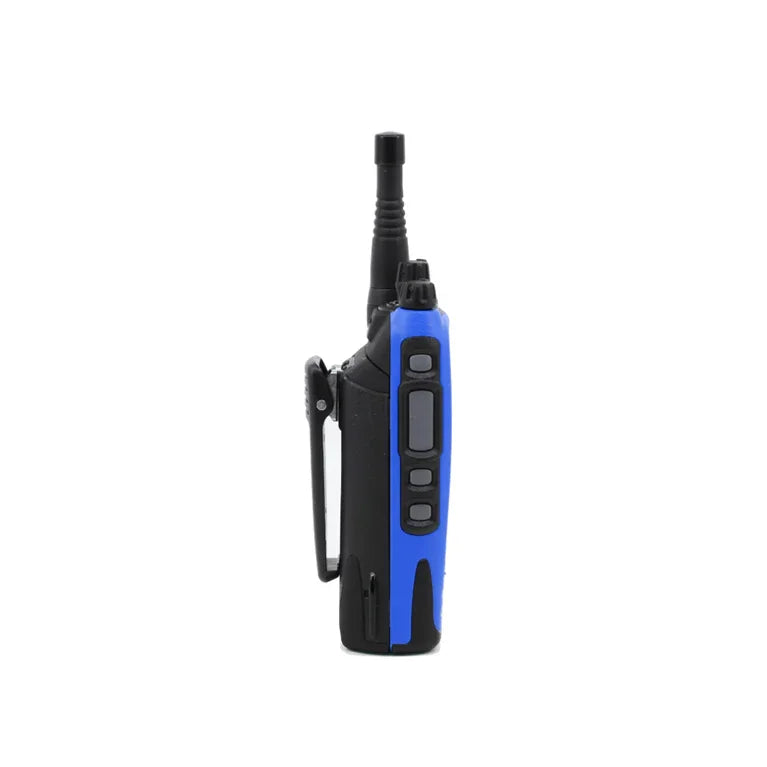
Built Tait Tough, the TP9361 supports conventional and trunked DMR, MPT 1327, and analogue FM in one device. The internationally recognised blue housing identifies it instantly as intrinsically safe equipment on any site.
The TP9361 IS is the same radio across all four bands. The right choice depends on your existing network, your RSM licence, and your site’s operating environment.
| Band | Frequency | Max Tx Power | Typical Use | Price From |
|---|---|---|---|---|
| VHF | 136–174MHz | 5W (IIA) / 1W (IIC) | Open terrain, rural, marine, forestry | $2,617 |
| VHF Narrow | 150–162MHz | 5W (IIA) | Specific VHF allocations, marine band | $2,585 |
| UHF1 | 380–470MHz | 4W (IIA) / 1W (IIC) | General commercial, in-building, industrial | $2,585 |
| UHF2 | 450–520MHz | 4W (IIA) / 1W (IIC) | NZ UHF CB, higher-frequency industrial | $2,585 |
UHF1 and UHF2 models are available with helical or whip antenna options. All bands are available with or without the Tier 3 trunking network key. Contact us with your site’s band, gas group and trunking requirements for an exact configuration and quote.
Two gas group ratings are available across the range:
If you are unsure which gas group applies to your site, your area classification under AS/NZS 60079 will specify it. We can help match the right certification to your site’s actual requirements.
Note: charger must be purchased separately. See the TP9 IS Vehicle Battery Charger.
Every accessory connected to an IS radio must carry matching certification, or the intrinsic safety of the entire unit is void. We stock certified options including the Sensear SM1P-EX headset, Tait’s SAVOX HC-2 skull microphone headset, and the TP93/94 IS Programming Adaptor.
Download the Tait Accessories Brochure
Which band do I need?
That depends on your existing network and RSM licence. VHF suits open terrain, rural and marine environments. UHF works better in and around buildings and industrial structures. Contact us with your site details and we will recommend the right band.
What is the difference between IIA and IIC?
IIA covers propane-type atmospheres (most NZ hazardous sites). IIC covers hydrogen and acetylene (the most demanding classification). IIC is also valid for IIA and IIB sites, but at lower transmit power (1W vs 4–5W).
Does this come with a charger?
No, the charger must be purchased separately. The TP9 IS Vehicle Battery Charger is available.
Can I use standard (non-IS) accessories?
No. Every accessory must carry matching IECEx or ATEX certification for the TP9361. Fitting a non-certified battery, antenna or headset voids the intrinsic safety of the entire unit.
Overview
An intrinsically safe 16 key VHF DMR portable radio, 136-174MHz, for hazardous environments.
Features
IS certified for hazardous environments
Man down alerts and GPS positioning
IP67 rated
Specifications
Tait TP9361 IS DMR Intrinsically Safe Portable Radio
IIA - 5W Rated Tx Power / None
Easy to purchase, quick shipping, thank you.
Excellent to deal with. Being able to get my battery from a new zealand company who actually had stock made the process so much easier!
Many thanks for the fast service.
They do what they say they do, easy to use and no extra gear. The main set is the master and needs to be used, just turn them on with charged batteries and they just work. We have tested them to about 400m but really only need them for up to about 100m max and they work really well, easy to hear everyone using them. Once they are on you just talk and listen, there are no buttons to push
We use the single ear so we can hear people not using the sets.
Excellent
Exactly what I asked for.
Great product. Does exactly what it’s intended to do. Just bolts into the fender. Fast delivery, even to rural areas.
Excellent service,shipping tracking was on point.
Overall excellent service to the Customer.
Product installed and working as a UHF base antenna.
Great product perfect for what I need and super fast delivery
Order delivered swiftly to my address and product works better than expected A+ I would order again.
Excellent service. Item arrived very next day. No issues
Veey happy with this product! Easy to install myself. First test of this CB was perfect...crystal clear!
We originally bought our GME TX6150 from Mobile Systems quite some time ago. When we needed a new battery they had one and it arrived in a couple of days. Great service.
5 star great works well i have 2 both drivers side and passenger side please with them both
Prompt service and friendly comms. Speedy delivery (over night courier).
The radios were well packaged, received un-damaged and presented well. I'm happy with the radios and find no fault with them so far.
perfect